5
NXDN™ OPERATION
5-2
Previous view
NXDN has a new “Common Air Interface” (CAI), the
name for over-the-air methods by which transceivers
and repeaters communicate. NXDN denes the next-
generation digital transceiver�
The NXDN system has two operating modes,
Conventional and Trunking� In a Conventional
system, you manually search for an empty channel�
In a Trunking system, the transceiver automatically
searches for an empty channel, and sends the
information to the target transceiver through
a repeater� In this way, the target transceiver
automatically selects the receive mode to reply to a
received call� In addition, a Control Channel repeater
is required�
If you use an NXDN transceiver, you can transmit
or receive an Individual Call, Group Call, Status
Message, Short Message, Call Alert call, and so on�
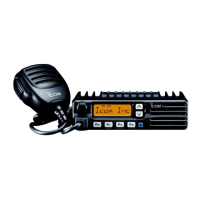
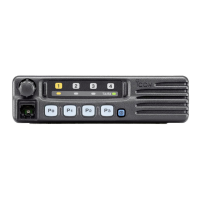
The IC-F1100D and IC-F2100D support the following
systems:
• NXDN Conventional operation
The NXDN Conventional system enables efcient
Conventional operation in the digital mode� To select
the Conventional Zone, see page 2-3�
• Multi-site Conventional operation
The Multi-site Conventional system can support
up to 16 sites (each site has one repeater) through
an IP network, and enables efcient Conventional
operation in the digital mode� To select the Multi-site
Conventional Zone, see page 2-3�
• Single-site Trunking operation
The Single-site Trunking system enables further
effective channel management by sharing a minimum
number of channels with a large number of users� To
select the Single-site Trunk Zone, see page 2-3�
NXDN™ system operation



 To Next Page
 Loading...