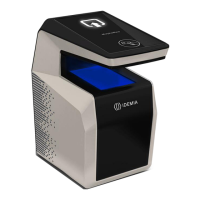
The MorphoWave SP terminal and the Controller are communicating according to one of the TCP/IP,
Wiegand, Dataclock or RS485 protocols:
The MorphoWave SP terminal sends User ID to the Controller
The Controller replies with its decision to the MorphoWave SP terminal (which displays access granted
or access denied depending on the answer)
The MorphoWave SP terminal sends an alarm signal to the Controller as soon as a malicious operation
is detected (terminal pulled out from the wall or opened for maintenance operations); refer the
paragraph dealing with anti-pulling and anti-tamper switches for more explanations.
The Controller is part of the global Access Control System of the secured area, which can provide useful
features such as manage:
Authorized user lists (i.e. for VIP),
Banned card lists (i.e. for lost user cards),
An access request log (who and when, access granted or denied...),
An event log (i.e. tamper detection, access control for evacuation of the building...).
The MorphoWave SP terminal is able to work alone, without Controller, but the protection level of the
secured area is lower.
An Alarm (3rd party product)
This element is connected to the MorphoWave SP terminal through a dry contact.
The MorphoWave SP terminal sends the command to activate the Alarm as soon as a malicious operation
(terminal pulled out from the wall or having its bottom cover opened out of maintenance operations) is
detected; refer the paragraph dealing with anti-pulling and anti-tamper switches for more explanations.
A Door Electric Latch or equivalent (3rd party product)
This element once activated opens the access. The Controller is the one which sends the command to
activate the latch if access is granted (i.e. if the individual's User ID is listed in the Controller Authorized
User List). Connection between these two elements is done through a dry contact.


 To Next Page