45
33
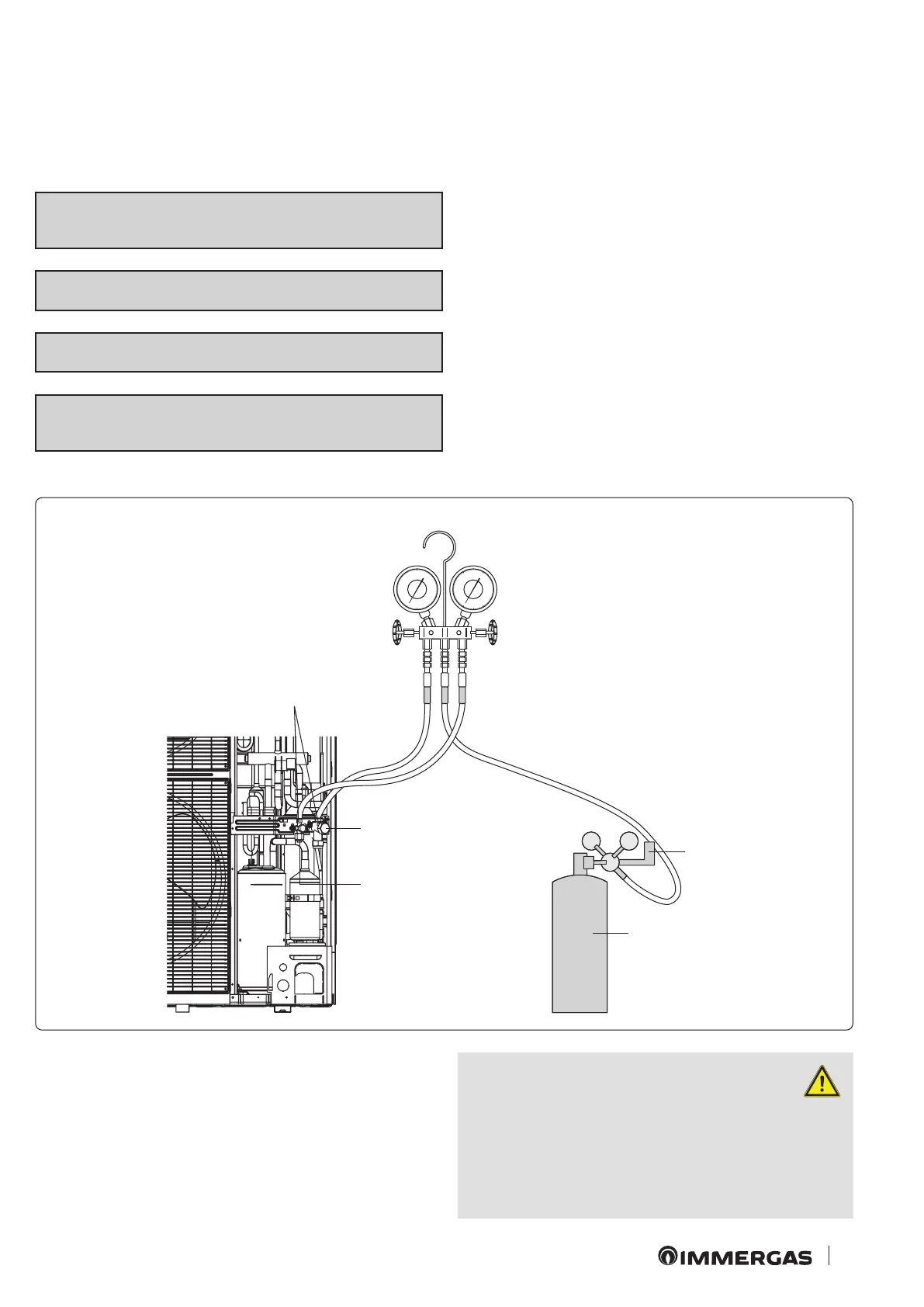
8.8 TESTING FOR REFRIGERANT GAS LEAKS.
- Use the manifold pressure gauge for R-32 to prevent the inow
of foreign substances and to withstand the internal pressure.
- Pressure test with dry oxygen-free nitrogen.
Apply pressure on the liquid side and gas side of the pipe with nitro-
gen gas at 4.6 MPa (46.9 kgf/cm
2
).
Applying a pressure higher than 4.6MPa could damage the pipes. Apply
pressure using the pressure regulator.
Keep it for at least 24 hours to see whether the pressure drops
Aer applying the nitrogen gas, check the pressure variation with the
pressure regulator.
If the pressure drops, check whether there are gas leaks
If the pressure has changed, use soapy water to nd out where the leak
is. Recheck the pressure of the nitrogen gas.
Maintain a pressure of 1.0 MPa before putting under vacuum and
again check for any gas leaks
Aer having checked the rst gas leak, keep pressure at 1.0 MPa to
check for further gas leaks.
- Make sure to use a solution for the recommended bubble test
to look for gas leaks. Soapy water could cause cracks in the
countersunk nuts or corrode the countersunk joints.
ATTENTION:
- injuries could occur when the joint
detaches on a high pressure side and
the gas comes into contact with your body.
Make sure to tighten the joint to prevent
these accidents.
Manifold pressure gauge
High pressure sideLow pressure side
Service coupling
Gas side pipe
Liquid side pipe
Nitrogen gas
Pressure
regulating valve
(mandatory)




 To Next Page