D-0134090-A – 2022/11
VisualEyes™ - Instructions for Use - EN Page 91
Performing test:
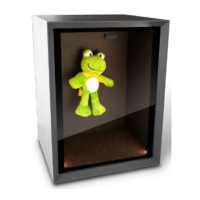
1. Have the patient relax his/her neck, open his/her eyes wide and fixate on the center dot in the 5-dot
pattern.
2. Turn the patient’s head to the right or the left. The 5-dot laser pattern will move with the head so they
are now located in a new position.
3. Instruct the patient to keep his/her eye on the center dot. When the head moves, the eyes should be
focused on the newly positioned center laser dot.
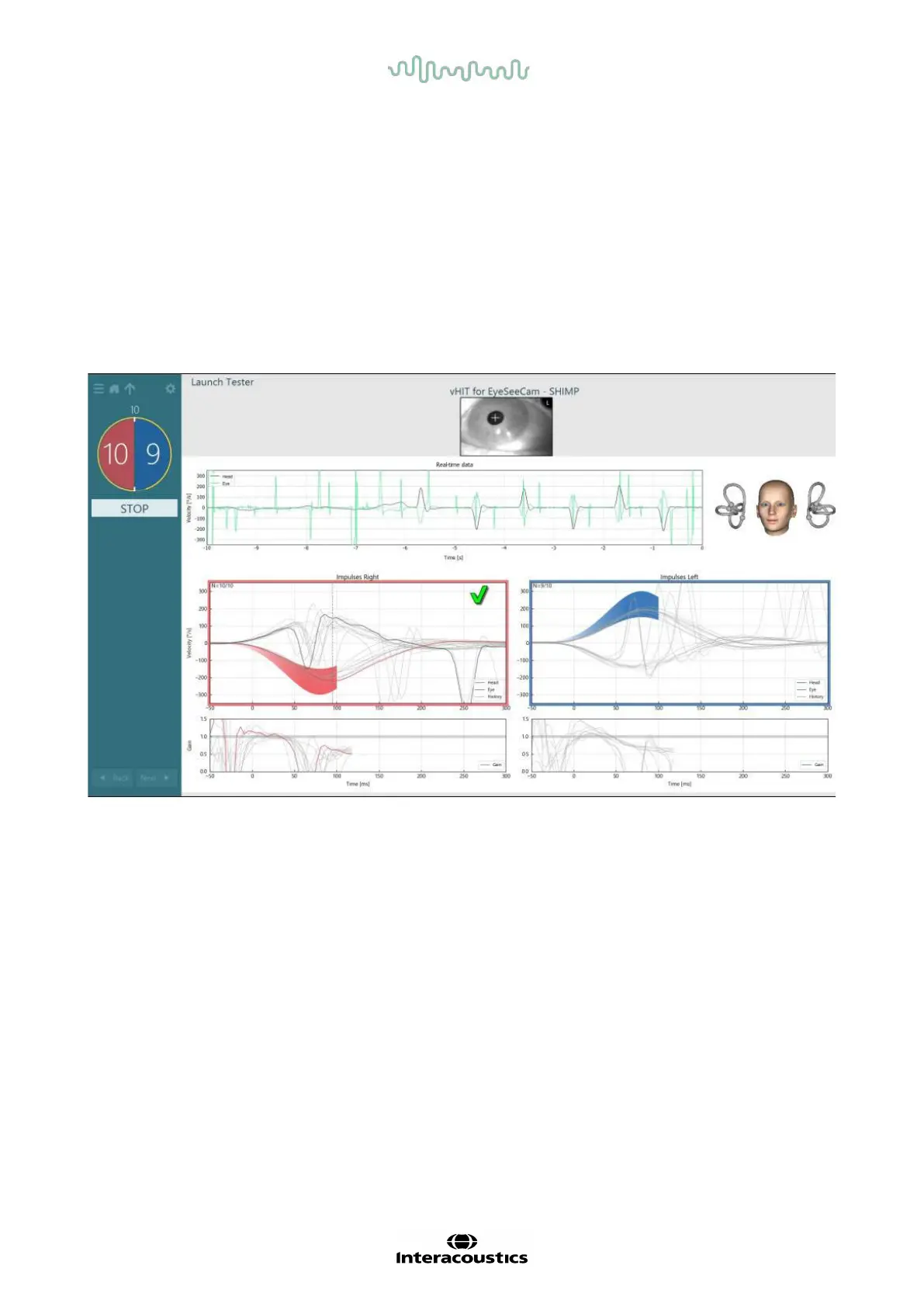
The VOR gains should be similar in the vHIT and SHIMP tests. However, the pattern of saccades generated
is different. vHIT rarely generates compensatory saccades in normal patients. In SHIMP testing, healthy
subjects will make a large anti-compensatory saccade at the end of the head turn (Figure 3.9-12). This is
referred to as a “SHIMP saccade”. This pattern is exactly opposite for impaired patients. An impaired VOR
system will lead to a catch-up saccade on the vHIT but no (or very few) compensatory SHIMP saccades.
Sample test and result screens are provided below (
Figure 3.9-12 and Figure 3.9-13).
Figure 3.9-12 Test screen for SHIMP test





 To Next Page