EasyManua.ls Logo

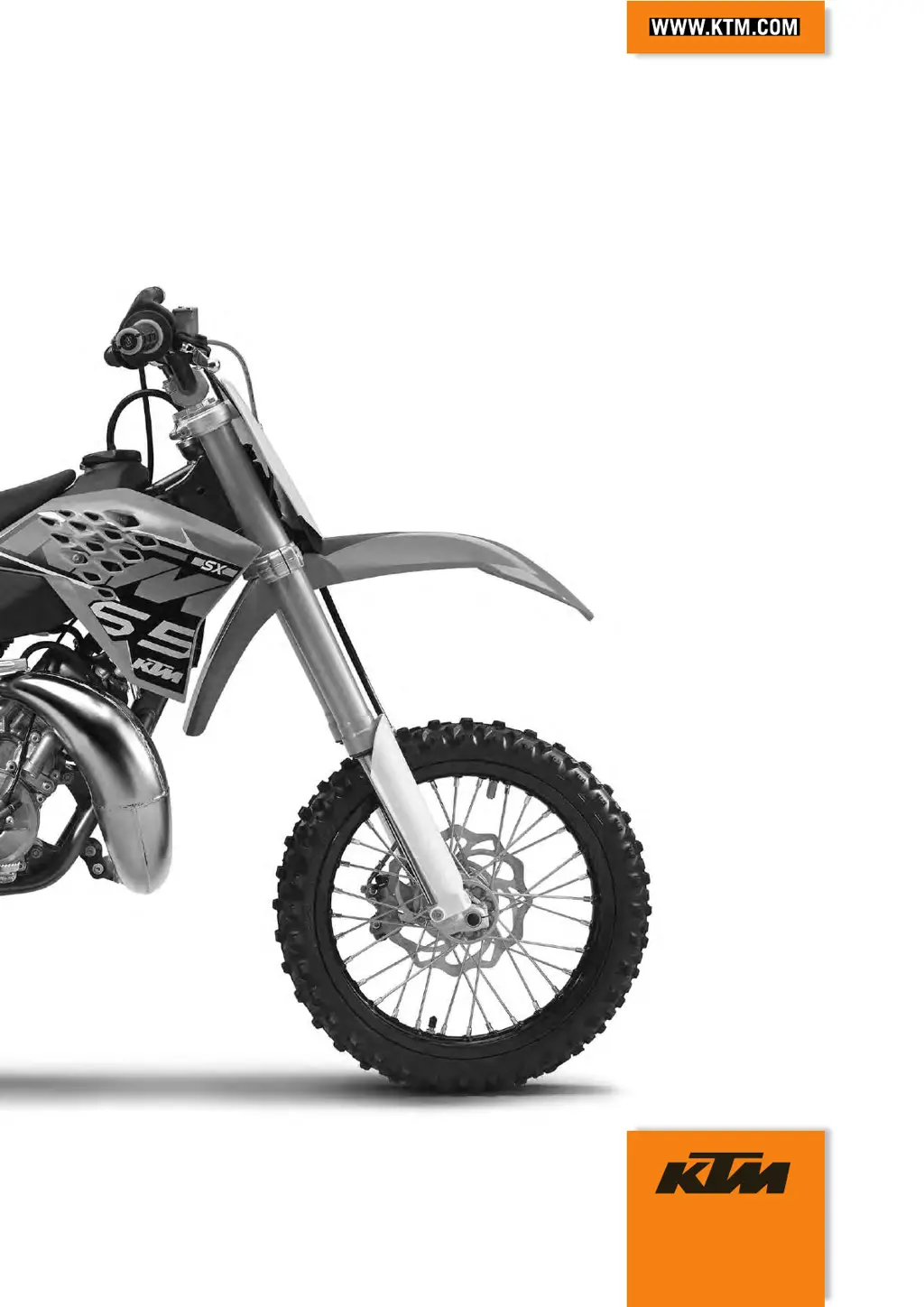
KTM 65 SX - User Manual

KTM 65 SX
91 pages
Print Icon
To Next Page IconTo Next Page
Loading...
OWNER'S MANUAL 2014
65 SX
Art. no. 3213028en

Table of Contents

Questions and Answers

  • K
    Kimberly PerkinsSep 7, 2025
    Why does my KTM Motorcycle engine have no power?
    • T
      Tara BatesSep 7, 2025
      If your KTM Motorcycle engine has too little power, the issue might stem from several causes. Check for an interrupted fuel feed by examining the fuel tank breather and cleaning the fuel tap, and ensure the carburetor components are properly set. A very dirty air filter can also be the culprit, so clean the air filter and air filter box. Inspect the exhaust system for leaks or deformation, and consider changing the glass fiber yarn filling in the main silencer. A fault in the ignition system could also be responsible, so check and adjust the ignition. Damaged diaphragm or reed valve housing, or noticeable wear, may also be the cause, so check the diaphragm and reed valve housing, and overhaul the engine if necessary.
  • M
    morganamandaSep 5, 2025
    What to do if KTM Motorcycle engine does not speed up?
    • D
      Daniel SmithSep 6, 2025
      If your KTM Motorcycle engine does not speed up, it could be due to the carburetor running over because the float needle is dirty or worn, so check/set the carburetor components. Loose carburetor jets can also cause this issue, so check/set the carburetor components. Finally, a fault in the ignition system might be the cause, so check the ignition system and adjust the ignition.
  • M
    marthacallahanSep 3, 2025
    Why does my KTM 65 SX Motorcycle engine stall or pop in the carburetor?
    • D
      Debra MooreSep 4, 2025
      If your KTM Motorcycle engine stalls or pops into the carburetor, it could be due to a lack of fuel, so turn the knurled screw on the fuel tap all the way counterclockwise and fill up with fuel. The engine might be taking in bad air, so check the intake flange and carburetor for tightness. Loose or oxidized connectors or the ignition coil can also cause this issue, so clean the plug-in connection and treat it with contact spray. Finally, check the cooling system for leakage and check the coolant level, as too little coolant can cause these symptoms.
  • R
    Rachel GonzalezSep 2, 2025
    Why does my KTM Motorcycle engine not idle?
    • D
      Donald JohnsonSep 2, 2025
      If your KTM Motorcycle engine won't idle, the idling jet might be blocked, so check/set the carburetor components. Also, adjusting screws on the carburetor could be distorted, so adjust the idle speed. A defective spark plug may also be the cause, so change the spark plug. Finally, a defective ignition system can prevent idling, so check the ignition coil and the spark plug connector.
  • B
    Bradley RoweAug 31, 2025
    What to do if my KTM 65 SX engine overheats?
    • E
      Ethan WyattAug 31, 2025
      If your KTM Motorcycle engine is overheating, start by checking the radiator fins and clean them if they are very dirty. Foam formation in the cooling system can also cause overheating, so drain and refill the coolant. Inspect the cylinder head and cylinder head gasket for any damage. A bent radiator hose should be replaced. Lastly, adjust the ignition, as an incorrect ignition point due to a loose stator can cause overheating.
  • A
    Amy JordanAug 29, 2025
    Why does my KTM Motorcycle engine have no idle?
    • S
      shellyfowlerAug 29, 2025
      If your KTM Motorcycle engine isn't idling, here are potential causes and solutions: * **Blocked idling jet:** The idling jet may be blocked. In this case, check/set the carburetor components. * **Distorted adjusting screws:** The adjusting screws on the carburetor might be distorted. If so, adjust the idle speed of the carburetor. * **Defective spark plug:** A defective spark plug can cause idling issues. Replace the spark plug. * **Ignition system malfunction:** There may be a problem with the ignition system. Check the ignition coil and the spark plug connector.
  • A
    Antonio ElliottAug 22, 2025
    How to fix KTM Motorcycle when engine turns but won't start?
    • B
      Bobby WhiteAug 22, 2025
      If your KTM Motorcycle engine turns but refuses to start, consider these potential causes and solutions: * **Operating error:** Review the correct engine starting procedure. * **Old fuel:** If the motorcycle has been sitting, old fuel in the float chamber might be the issue. Empty the carburetor float chamber. * **Fuel feed interrupted:** Make sure fuel is flowing correctly by checking the fuel tank breather, cleaning the fuel tap, and inspecting/adjusting the carburetor components. * **Spark plug condition:** A spark plug that's oily or wet can prevent starting. Clean and dry the spark plug, or replace it if needed. * **Incorrect spark plug gap:** An improperly gapped spark plug can also be the culprit. Adjust the plug gap to the recommended 0.60 mm (0.0236 in).

Summary

Safety Advice

Use Definition - Intended Use

Specifies that KTM sport motorcycles are for competitive use in closed areas, not public roads.

Safety Advice

General instructions for safe vehicle operation and importance of reading the manual carefully.

Degrees of Risk and Symbols

Defines risk categories (Danger, Warning, Caution) and associated symbols for hazard identification.

Safe Operation

Provides safety advice regarding impaired judgment and exhaust gas poisoning.

Protective Clothing

Emphasizes the importance of wearing proper protective clothing for injury prevention.

Important Notes

Service

Highlights the importance of correct service and tuning for optimal operation and longevity.

Preparing for Use

Advice on First Use

Guidance on child readiness, protective gear, tire patterns, riding behavior, and passenger rules.

Running in the Engine

Instructions for the engine break-in period, specifying performance limits.

Riding Instructions

Checks and Maintenance Measures When Preparing for Use

Pre-ride checks covering fluid levels, tires, controls, and general condition.

Starting

Procedure for starting the engine, including cold start and precautions.

Shifting, Riding

Guidance on shifting gears, throttle control, and clutch usage.

Braking

Advice on proper braking techniques, adapting to conditions, and avoiding brake failure.

Refueling

Detailed instructions and safety precautions for refueling the motorcycle.

Service Schedule

Service Schedule

Table outlining required maintenance tasks at different intervals (operating hours/annually).

Tuning the Chassis

Adjusting the Compression Damping of the Fork

Procedure for adjusting fork compression damping using the adjusting screw.

Adjusting the Rebound Damping of the Fork

Procedure for adjusting fork rebound damping using the adjusting screw.

Adjusting the Compression Damping of the Shock Absorber

Procedure for adjusting shock absorber compression damping.

Adjusting the Rebound Damping of the Shock Absorber

Procedure for adjusting shock absorber rebound damping.

Measuring Rear Wheel Sag Unloaded

Steps to measure the rear wheel's unloaded sag for suspension setup.

Checking the Static Sag of the Shock Absorber

Procedure to check the static sag of the rear shock absorber.

Checking the Riding Sag of the Shock Absorber

Steps to measure the riding sag of the rear shock absorber with rider.

Adjusting the Spring Preload of the Shock Absorber

Instructions for adjusting the spring preload on the rear shock absorber.

Adjusting the Riding Sag

Guidance on selecting and adjusting the spring rate for rider weight.

Service Work on the Chassis

Checking Play of Steering Head Bearing

Guidance on checking for play in the steering head bearing.

Adjusting the Play of the Steering Head Bearing

Procedure for adjusting the play in the steering head bearing.

Checking the Chain Tension

Guidance on checking the chain tension.

Adjusting the Chain Tension

Procedure for adjusting the chain tension.

Checking the Chain, Rear Sprocket, Engine Sprocket, and Chain Guide

Inspection of drive components for wear and damage.

Brake System

Checking Free Travel of Hand Brake Lever

Procedure to check and adjust the free travel of the front brake lever.

Checking Brake Discs

Instructions for checking brake disc thickness and for damage.

Checking Front Brake Fluid Level

Procedure to check the front brake fluid level and identify potential issues.

Adding Front Brake Fluid

Instructions for adding front brake fluid.

Checking the Front Brake Linings

Procedure to check the minimum thickness and condition of front brake linings.

Changing the Front Brake Linings

Procedure for changing the front brake linings.

Checking the Free Travel of the Foot Brake Lever

Procedure to check and adjust the free travel of the rear brake lever.

Checking Rear Brake Fluid Level

Procedure to check the rear brake fluid level.

Adding Rear Brake Fluid

Instructions for adding rear brake fluid.

Checking the Rear Brake Linings

Procedure to check the minimum thickness and condition of rear brake linings.

Changing the Rear Brake Linings

Procedure for changing the rear brake linings.

Wheels, Tires

Checking the Tire Condition

Guidance on checking tires for damage, tread depth, and age.

Cooling System

Checking the Antifreeze and Coolant Level

Procedure for checking antifreeze protection and coolant level.

Checking the Coolant Level

Detailed steps to check the coolant level in the radiator.

Refilling the Coolant

Instructions for refilling the coolant and ensuring proper bleeding.

Tuning the Engine

Carburetor - Adjusting the Idle Speed

Procedure for adjusting the engine's idle speed.

Service Work on the Engine

Checking the Gear Oil Level

Procedure to check the gear oil level.

Cleaning, Care

Storage

Troubleshooting

Technical Data

Engine

Specifications for the engine, including displacement, bore, stroke, and control.

Engine Tightening Torques

List of engine component tightening torques and required threadlockers.

Carburetor

Specifications for the carburetor, including type, jets, and needle position.

Fork

Specifications for the front fork, including damping, spring rates, and oil type.

Shock Absorber

Specifications for the rear shock absorber, including damping, spring rates, and sag.

Chassis Tightening Torques

List of chassis component tightening torques and required threadlockers.

Substances

KTM 65 SX Specifications

General IconGeneral
Engine Type1-cylinder, 2-stroke engine
Displacement64.9 cm³
Bore x Stroke45 mm x 40.8 mm
StarterKickstarter
Transmission6-speed
CoolingLiquid cooled
Rear SuspensionWP XACT Monoshock
Front BrakeDisc brake
Rear BrakeDisc brake
Front Brake Diameter198 mm
Rear Brake Diameter160 mm
Seat Height750 mm
Tank Capacity3.5 l
Weight (without fuel)53 kg
ClutchWet multi-disc clutch, Formula hydraulics
FrameChromium-Molybdenum steel
Front SuspensionWP XACT USD, Ø 35 mm
Fuel SystemMikuni TMX 24 carburetor

Related product manuals