Introduction
CoaDATA 501 – Operators Manual 2.1 Page 7
1.4 Measuring Principle
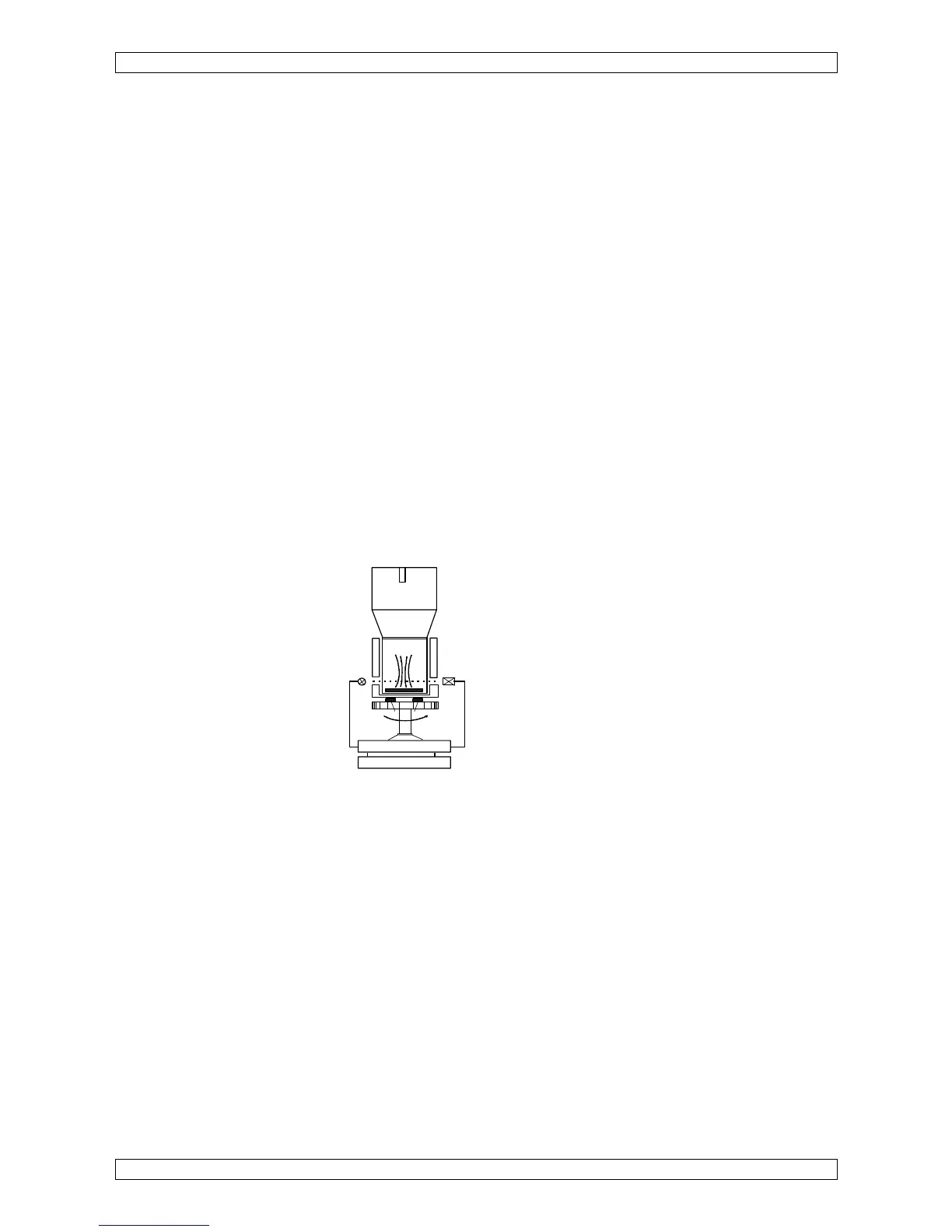
The analyzer operates according to the opto-mechanical measuring
principle. This measuring principle is especially suited for lipemic and/or
icteric colored samples as well as reagents with kaolin.
A light beam passes through the cuvette containing the test plasma onto a
photo detector. Any change in the intensity of the transmitted light, that is
light increase or decrease, is converted into an electric signal. Hence, even
the most unstable clot can be detected.
The period from adding the start reagent until clot formation is measured. It
then can be converted into the appropriate units (%, ratio, INR, mg/dl, g/l).
Once the start reagent has been added, the measuring channel is adjusted,
that is the lamp intensity automatically adjusts up or down depending on the
turbidity of the test sample. In this process the turbidity of the sample
plasma and the reagent are adjusted.
A mixer is located in the cuvette. During the measuring process the mixer
provides homogeneity of the reagent-plasma medium. At the same time a
small whirl emerges through the mixer movement which assures that even
the smallest fibrin clot is formed in front of the photo detector.
This stirring action combined with the optical measurement constitutes the
basic features of the patented "turbodensitometric measuring principle".
Figure 4 Measuring Principle
Test cuvette
Lamp
Detector
ELECTRONIC
DISPLAY
Stirrer - Motor
perm. magnet


 To Next Page