A
A
C
C
S
S
6
6
0
0
6
6
D
D
i
i
g
g
i
i
t
t
a
a
l
l
A
A
C
C
S
S
e
e
r
r
v
v
o
o
d
d
r
r
i
i
v
v
e
e
M
M
a
a
n
n
u
u
a
a
l
l
R
R
e
e
v
v
1
1
.
.
0
0
Tel: (86)755-26434369 36 Website: www.leadshine.com
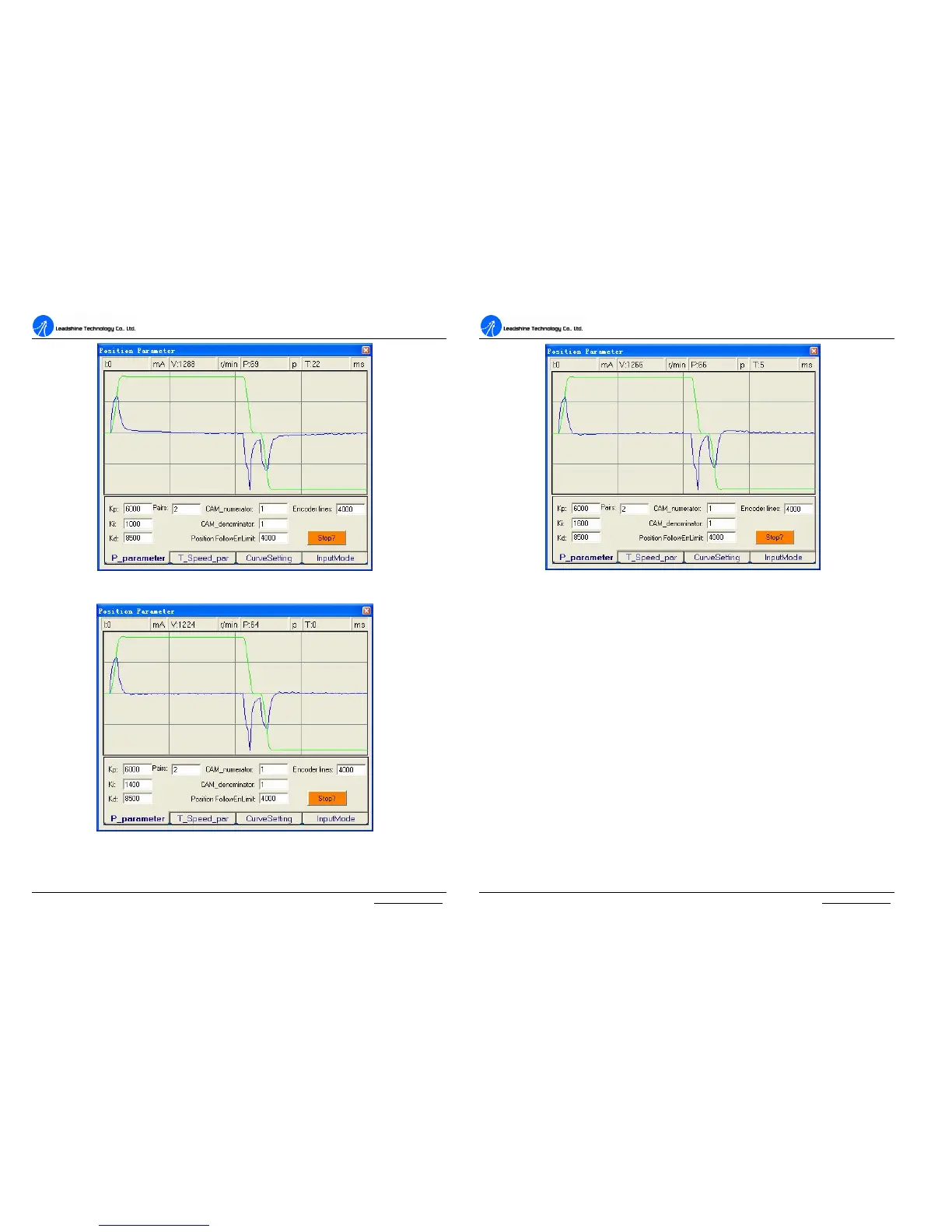
Figure 40: Position following error curve and velocity curve (Kp=6000, Ki=1000 and Kd=8500)
Figure 41: Position following error curve and velocity curve (Kp=6000, Ki=1400 and Kd=8500)
A
A
C
C
S
S
6
6
0
0
6
6
D
D
i
i
g
g
i
i
t
t
a
a
l
l
A
A
C
C
S
S
e
e
r
r
v
v
o
o
d
d
r
r
i
i
v
v
e
e
M
M
a
a
n
n
u
u
a
a
l
l
R
R
e
e
v
v
1
1
.
.
0
0
Tel: (86)755-26434369 37 Website: www.leadshine.com
Figure 42: Position following error curve and velocity curve (Kp=6000, Ki=1600 and Kd=8500)
Increasing Kp a little and reducing Ki to 1400 can achieve a faster response with
little overshoot, namely get a response close to Critically Damped response. See
Figure 43. Remember to download the parameter settings to the drive’s EEPROM
when you get a satisfying performance. You can also save them to a config file on
the PC harddisk then use these parameters for other drives. See detail in next
chapter.


 To Next Page