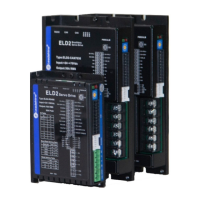
The Leadshine SMC6000 series motion controllers, including models SMC6480, SMC6490, and PMC6496, are advanced Ethernet-based general-purpose motion controllers designed for various applications. These controllers support 1 to 4 axes of motion control and can operate in standalone mode without a PC or as a slave in an Ethernet network. The controller number in the network has no limitation.
Function Description
The SMC6000 series utilizes an embedded microprocessor and FPGA to implement algorithms for multi-axis interpolation, pulse generation, acceleration/deceleration control, and processing of digital input/output in the hardware level. This ensures high-speed, high-precision, and stable features for motion control. The controllers can output a maximum 5MHz pulse and support up to 4-axes linear interpolation, 2-axis circular interpolation, continuous interpolation, and S-curve velocity profiles. Programming is simplified with support for multiple languages including Leadshine BASIC, G-Code, Visual Basic, and Visual C++. The SMC6000 integrates isolated I/O, D/A output, PWM output, encoder counter, and manual input in a single package.
The serial port COM1/COM2 and the RJ45 Ethernet port enable motion control or uploading/downloading configuration data. Programming or configuration to SMC6000 requires only one PC with an Ethernet interface or serial port. The SMC6000 also provides an optional touch screen for easy operation in the field. Its built-in ferroelectric memory can be used to store dynamic motion parameters during execution of motion programs, ensuring that these parameters are preserved in case of unexpected power-off.
Important Technical Specifications
The SMC6000 series offers various configurations depending on the model:
- Number of Controllable Axes: All models (SMC6480, SMC6490, PMC6496) support 4 axes.
- Pulse Output Frequency (MAX): All models support 5.0MHz.
- Position Range: -2,147,483,647 to 2,147,483,648 (32 BIT) for all models.
- Interpolation Cycle: 300 us for all models.
- General Purpose Digital Inputs:
- SMC6480: 24 inputs (8 isolated, 16 non-isolated).
- SMC6490/PMC6496: 32 inputs (16 isolated, 16 non-isolated).
- Digital Outputs:
- SMC6480: 24 outputs (8 isolated, 16 non-isolated).
- SMC6490/PMC6496: 32 outputs (16 isolated, 16 non-isolated).
- D/A Outputs: 2 channels, 0.07-4.45V, 8 bit for all models.
- Encoder Counter:
- SMC6480: -
- SMC6490/PMC6496: 4 channels, Max 4 MHz bandwidth, 32 bit counter.
- Manual Pulse Input:
- SMC6480: -
- SMC6490/PMC6496: 1 channel, Max 1MHz bandwidth.
- PWM Output: 2 channels, Max 1MHz bandwidth, duty-cycle 0-100%, 32-bit resolution for all models.
- Flash Memory: 32M Bytes for SMC6480, 4M Bytes for SMC6490/PMC6496.
- Ferroelectric Memory: - for SMC6480, 32K Bytes (optional) for SMC6490/PMC6496.
- Network Interface: 10M/100M Ethernet for all models.
- Serial Port: RS-232, 2 D-Shell 9-pin connector for all models.
- USB Disk Interface: USB 1.1, 12Mbytes/s for all models.
- External Power Supply: 24VDC, 1100mA for all models.
- Operating Temperature: 0-50°C for all models.
- Storage Temperature: -20-80°C for all models.
- Size:
- SMC6480: 208mm*116mm*42mm.
- SMC6490/PMC6496: 186mm*147mm*42mm.
- Programming: G Code, BASIC, VB/VC library for all models.
Usage Features
- Connectivity: The SMC6000 series offers flexible connectivity options including Ethernet, serial ports (COM1/COM2), and USB disk interface. The Ethernet connection allows the controller to be integrated into a network, enabling remote control and data exchange.
- I/O Configuration: The controllers feature a mix of isolated and non-isolated general purpose digital inputs and outputs, providing flexibility for various sensing and actuation needs. The isolated I/O helps prevent electrical interference.
- Control Signals: The SMC6000 can control 4 axes stepper/servo motors. It provides differential control signals (PUL and DIR) for stepper drives and can be configured for CW/CCW signal in the demo software.
- End Limit and E-Stop Inputs: The controllers support end limit inputs (EL+, EL-) to define axis movement range and protect the machine. An Emergency Stop (EMG) input is available to stop all axes immediately when activated, enhancing safety.
- Encoder Input: The SMC6490 and PMC6496 models accept differential encoder input, which includes channel A signal EA, channel B signal EB, and Z index signal EZ. These inputs are used for pulse counting.
- PWM Output: The SMC6000 provides two channels of 32-bit PWM outputs with isolation, suitable for applications requiring precise analog control.
- D/A Output: The SMC6480 provides 2 channel 8-bit D/A output with a voltage follower, with an output range of 0.07-4.45V.
- Proximity and Photoelectric Sensor Connections: The manual includes diagrams for connecting OMRON TL-Q5MC2 proximity sensors and RG150-8 photoelectric sensors, illustrating common usage scenarios.
- Relay Connections: The controller supports connecting to a mechanical relay, with a diode recommended to be parallel to it to bypass inductive voltage generated when it is switched off.
Maintenance Features
- Wiring Notes:
- Ensure the power supply voltage is 24VDC and polarity is correct.
- Use normal RJ45 cable for network connections via Router or HUB. If a direct connection to PC is needed, an RJ45 crossover cable is required.
- Study the pin assignment and interface circuit in the manual to ensure correct connections.
- Power Supply: The controllers require a 24VDC regulated power supply. The recommended power supply current rating is 1100mA. The internal power supply for SMC6490/PMC6496 is non-isolated but the inside circuit is powered by internal isolated power supply.
- Troubleshooting: The manual provides a troubleshooting guide for common issues:
- Motor not move: Check drive's command type, demo software settings, connections between drive and motion controller, and for alarms.
- Controller can output pulse but motor not move: Check for interference source, current/power equipment, twisted pair and ground wiring, and limit resistor between motion controller and drive.
- Motor can be controlled but motor vibration or position overshoot is big: Check drive settings, acceleration/deceleration time, and interference coupled into encoder or origin signal. Ensure shielding of cable is grounded.
- End limit input not work: Check limit sensor and signal.
- Big voltage ripple on DA output: Check if DA output is reference to AGND.
- Ethernet communication port not work: Check Ethernet cable, exchange transmitting and receive wire, and power-off before connecting Ethernet cable to controller.
- Safety Items:
- Read the manual carefully before trying to install the motion controller into your system.
- Ensure proper understanding of electronics and mechanics.
- Before running or executing any motion program, make sure the axes will not impact anything.
- It is recommended to uncouple the motor from the load before you are familiar with Leadshine motion controller.
- Ensure that the power supply voltage does not exceed the controller's input range.
- Double check connections and make sure the power lead polarity is correct.
- Never connect AGND or GND to EXGND. Otherwise, electronic interference will couple into the internal circuit.
- The VDD output is 5V, which is different from other Leadshine controllers.

 Need help?
 General

 To Next Page