03-09-05 34
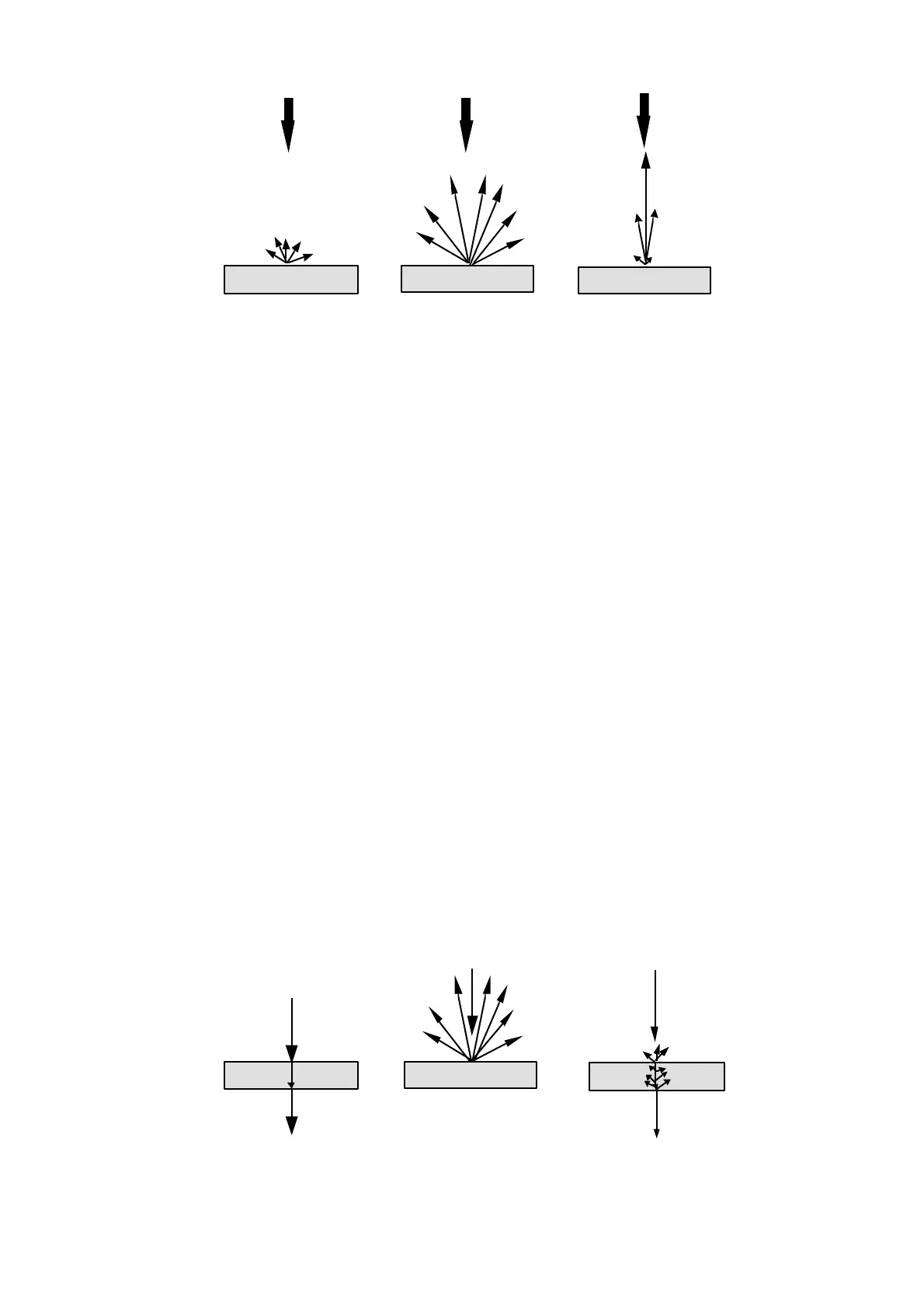
Black material General group
Shiny material
Figure 26: Illustration of reflection
Advise For extremely shiny materials like molten metal (magnesium with
protection gas or coated zinc plates very close to the bath) without any skin or
oxide on the surface it may be necessary to tilt the SLS sensor somewhat to get
enough light in the direction of the receiving optics consult LMI Technologies.
Note that some material ages optically, e.g. car paint or uncured rubber. Compare
an absolutely fresh sample from the extruder measured immediately and after 15
minutes a great difference will be noticeable.
5.1.1.4 Transparent materials
Transparent materials cannot be measured since no light is scattered on the
surface (e.g. glass). Transparent materials like coolant oil or water on a surface
will add roughly half the thickness of the oil or water layer (given by the
refraction index) to the thickness or position data.
Advise: The compensation for the layer thickness is roughly 50% of the actual
transparent layer thickness. (For oil and water layers).
5.1.1.5 Semitransparent materials
The semitransparent material will scatter enough light to produce a stable
measurement, but there will also be a penetration of light into the material and a
contribution from internal reflections (as well as background reflections). The
result is a position reading that is below the actual surface. The ”offset” value
depends on the degree of transparency. In many situations the offset is small and
constant and can be calibrated for.
A method to measure this offset is to stick a thin strip of adhesive paper to the
surface and scan the material (the thickness of a paper is approximately 0.1 mm).
Transparent
Reflective
Semi transparent
Figure 27: Light behaviour on transmission material



 To Next Page