27
Material drying
Generally, once the wood is
sawn it must be dried.
It is possible to use undried
wood in some construction,
but only keeping in mind a 7%
shrinkage in width and height.
While most wood shrinks some
0.4% in length, this amount can
usually be ignored. In order
to avoid rot, you should not
enclose undried wood in a way
that makes it hard for air to
circulate. One further tip is not to
drive two nails into undried wood
next to each other as the board
will probably crack in the middle
when it dries out. Drive one nail
and wait with the second until
the wood has dried.
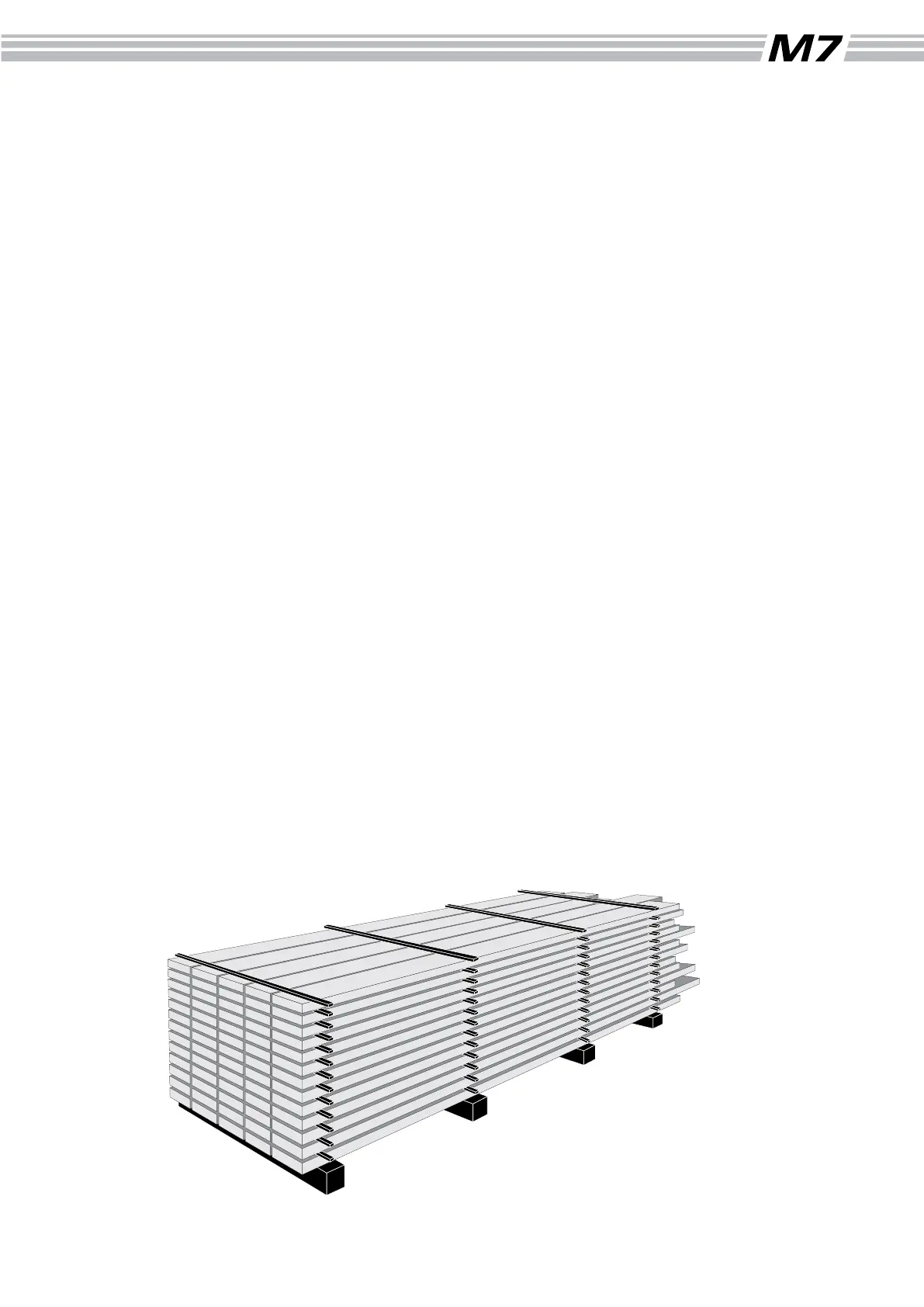
be the same thickness (1x1”
or 1x2”) and dry. You can get
material for these by making an
extra cut when trimming your
boards.
Place your rst row of boards on
the support logs, leaving about
an inch between them. Then
place a spacer on the boards
above each support log. It is
important to place the spacers
exactly over each other to keep
the boards from warping or
bending.
The higher you pile the boards,
the better pressure there is on
the lower boards. Place roong
or some material over the top,
but leave the sides and ends
open. Put a weight of some
sort on top of the upper row to
put pressure on those planks
as well.
If the wood is to be used for ne
carpentry it ought to be stored in
a heated facility several weeks
before use, or be dried in a kiln
or other kind of wood drier.
One example when you ought to
use undried wood is building log
structures. In such a situation,
a heavy wall is a plus, as is
the possibility that the logs still
can be shaped when they are
pressed against each other.
In most cases, however, the
wood must be dried. If this is not
done, there is a danger it will be
damaged by dry or fungal rot.
The best time for outdoor drying
is in the spring. At that time the
relative humidity in the air is
comparably low meaning that
the wood will dry quicker.
Cut some supportive blocks
(5x 5”) in t he l eng t h t hat
corresponds to the width of
your pile. Place these at regular
intervals as shown below on dry,
level ground free of growth. The
spacing should not exceed 1 m
(app. 1 yd) and should lie level
and in line with each other.
Cut spacers or drying sticks
in the same length as the
supportive blocks. They should
Begin by halving and quartering
the log. When sawing the boards
out of the quarters, you turn
the log 90° between each cut.
Sometimes it is best to cut from
below as this allows you to raise
the log beds to the same height
throughout.



 To Next Page