PAGE 10 STOVE INSTALLATION (CONT.)
ALCOVE INSTALLATION REQUIREMENTS
Whenever the stove is placed in a location where the ceiling height is less than 7' tall, it is considered an
alcove installation. Because of the reduced height, the special installation requirements listed below
must be met.
¥ Chimney connector and chimney must be one of the following types:
¥ DURAVENT model DVL with DURA-PLUS chimney
¥ AMERI-TEC model DCC with model HS chimney
¥ SECURITY model DP with SECURITY model ASHT or S2100 chimney
¥ GSW model Super Chimney Twenty-One connected directly to appliance
¥ SELKIRK METALBESTOS model DS connector with model SSII chimney
¥ I.C.C. Excel 103HT Chimney with Ultrablack HP Double-Wall connector
¥ Standard Masonry Chimney with any one of the above listed connectors
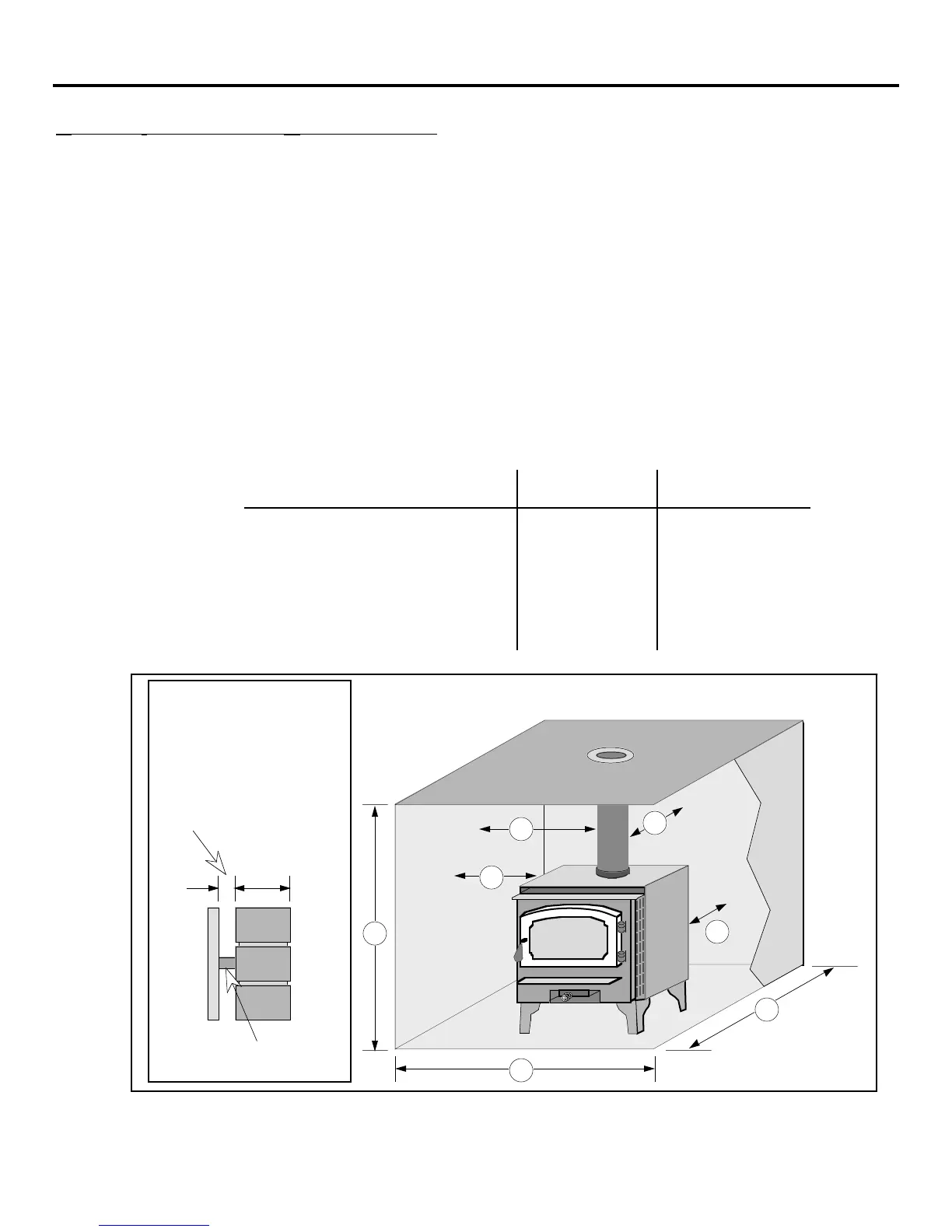
¥ Alcoves are classified as combustible or non-combustible. Non-combustible alcoves must have
walls and a ceiling that are 3 1/2" thick of a non-combustible material (brick, stone, or concrete).
This non-combustible material must be spaced and ventilated at least 1" off of all combustible
materials (walls, ceiling, etc.) to allow air to move around the non-combustible walls and ceiling.
All other alcoves are considered combustible. The clearances below must be met:
Minimum Clearance
(See the illustration below)
Combustible
Alcove
Non-Combustible
Alcove
A Sidewall to stove
13" 6"
B Backwall to stove
9" 2"
D Connector to sidewall
21 1/2" 14 1/2"
E Connector to backwall
11 1/2" 4 1/2"
G Maximum depth of alcove
48" 48"
H Minimum width of alcove
49 5/8" 35 5/8"
J Minimum height of alcove
84" 6" above stove top
A
E
D
B
H
G
J
Non-combustible alcove
construction (on walls
and ceiling) - see the
explanation above.
3 1/2" thick
non-combustible
material
Combustible
materials
1" Min.
Ventilated
air space
Non-combustible
reinforcer


 To Next Page