PAGE 26 OPERATING YOUR APPLIANCE (CONTINUED)
A WORD ABOUT WOOD (CONTINUED)
Constructing a Wood Shed
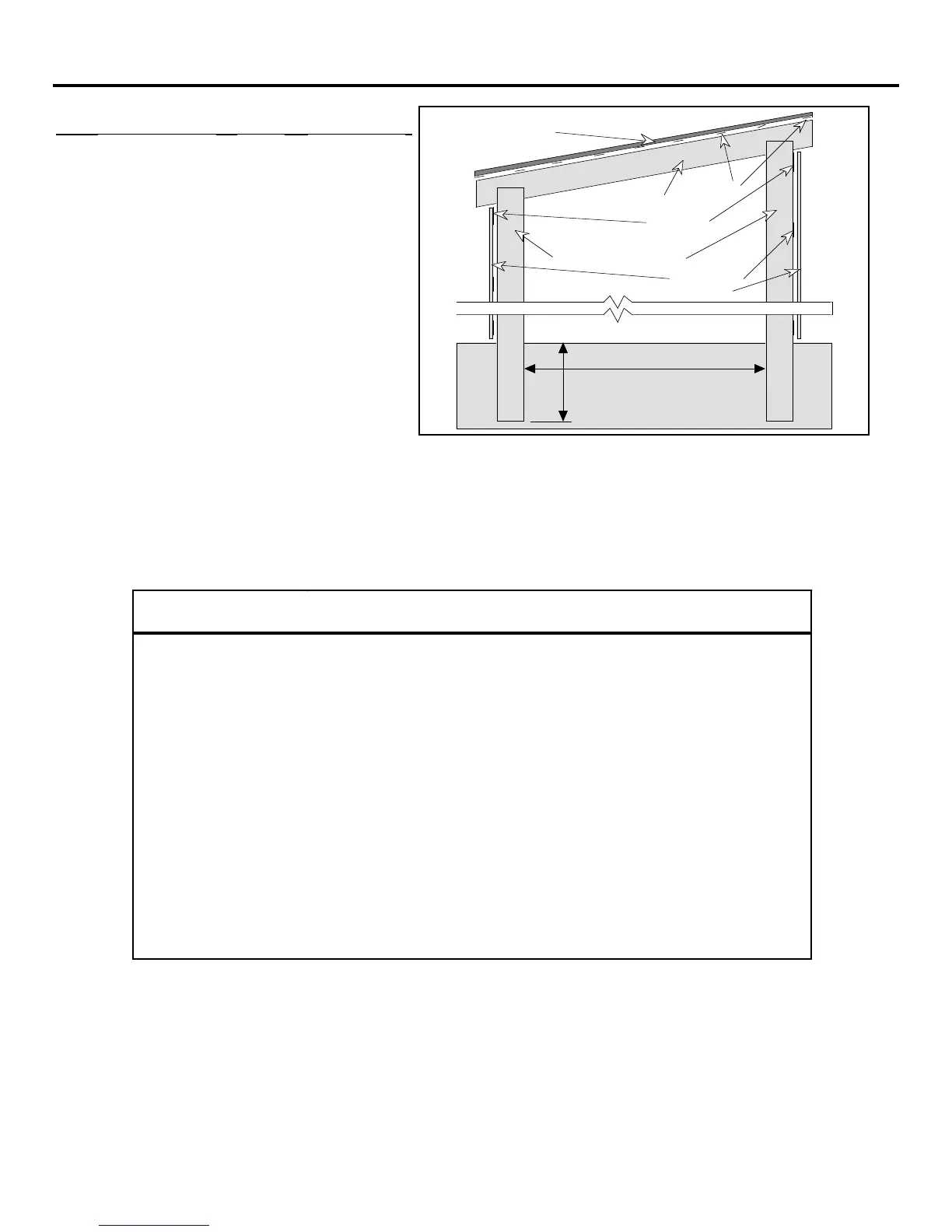
The drawing to the right details the
construction of an inexpensive wood shed
that will promote drying, increasing the
heat output from your wood.
3' Depth
8' Width
Sheet Metal Roofing
2x4 Purlins
4x4x2 Posts Spaced 8' Apart
2x6x12 Rafter
Siding and Girts
(Optional)
2x8x8' Girder
What Type of Wood is Best
Choosing the kind of firewood to burn in your appliance depends on what is available to you.
Softwoods, such as pine or fir ignite and burn quicker, but require more frequent loadings and are less
suited for overnight burns. For longer burns, with less frequent loadings, we recommend harder woods
such as oak or maple. The chart below details the BTU (heat) output of the various species. Note the
higher BTU output of the harder woods. The best arrangement is to have softwoods for starting and
immediate heating and hardwoods for overnight and sustained burns.
SPECIES
(20% moisture)
LBS./CORD
(Approximate)
BTU's/CORD
(Approximate)
Hours per Cord at 40,000 BTU's per Hour
(Approximate)
ALDER 2540 19,050,000 476
APPLE 4400 33,000,000 825
ASH 3440 25,800,000 645
BIRCH 3040 22,800,000 705
CEDAR 2060 15,450,000 386
COTTONWOOD 2160 16,200,000 405
DOGWOOD 4320 31,725,000 793
ELM 2260 16,950,000 423
FIR, DOUGLAS 2970 22,275,000 556
HEMLOCK 2700 20,250,000 506
MAPLE 3200 24,000,000 600
OAK, RED 3680 27,600,000 690
OAK, WHITE 4200 31,500,000 787
PINE 2250 16,875,000 421
REDWOOD 2400 18,000,000 450
SPRUCE 2240 16,800,000 420
How to Buy Wood
Wood is sold by the cord (4' wide by 4' high by 8' long). Buy wood in the spring and summer, when
prices are lower and it will have plenty of time to dry. If buying in winter, have the wood moisture
tested (test several pieces). You will receive up to 25% more heat from a cord of dry wood than from
wet or green wood. Rotate your wood so as to allow for the maximum drying time for all pieces.
Don't Burn Wood Scraps, Garbage, Paper, Wax Logs, Coal, Etc.
Wood scraps from construction are typically chemically treated, making them difficult to burn and
dangerous due to emitting chemicals. The same holds true for garbage, solvents, driftwood containing
salt, cardboard, and colored paper. Coal and wax impregnated logs burn especially hot, creating a
possible safety hazard. In addition, all the aforementioned items may create excessive creosote.


 To Next Page