These systems are usually proprietary and do not oer the user
the chance to modify the software code itself.
Sensors
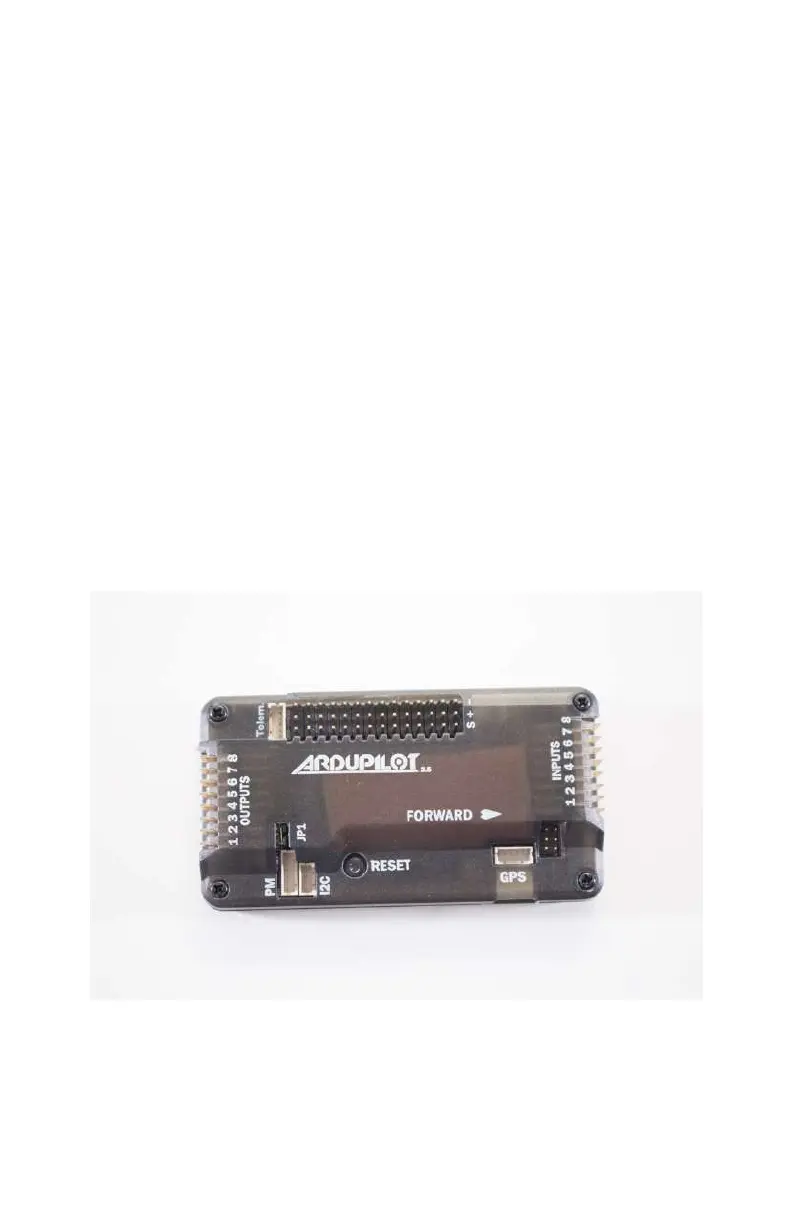
The heart of the flight controller is the inertial measurement unit
(IMU); see Figure 4-1. This unit contains a suite of sensors to
help the flight controller monitor the activity of the aircraft. The
most typical sensors include an accelerometer, gyroscope, and
barometer. These measure the acceleration and rate of rotation
of the aircraft, and the air pressure (which can often be con-
verted to the aircraft’s altitude). These three sensors provide all
the data that the autopilot needs to keep the aircraft stable in
the air.
Additional sensors are also used outside of the IMU for
advanced functionality. These include GPS receivers, magneto-
meters, optical
flow sensors, and air speed sensors. As time
moves forward, we will see even more sensors introduced into
flight controllers to help with tasks such as Sense and Avoid,
computer vision, and artificial intelligence (AI).
Figure 4-1. This flight controller has a built-in IMU and ports for
external sensors.
80 Make: Getting Started with Drones



 To Next Page