Martindale ET4000 / ET4500 Data handling
58
6 Data handling (ET4500 only)
6.1 Memory organization
Measurement results together with all relevant parameters can be stored in the
instrument’s memory. After the measurement is completed, results can be saved to the
flash memory of the instrument, together with the sub-results and function parameters.
6.2 Data structure
The instrument’s memory place is divided into 4 levels each containing 199 locations.
The number of measurements that can be stored into one location is not limited.
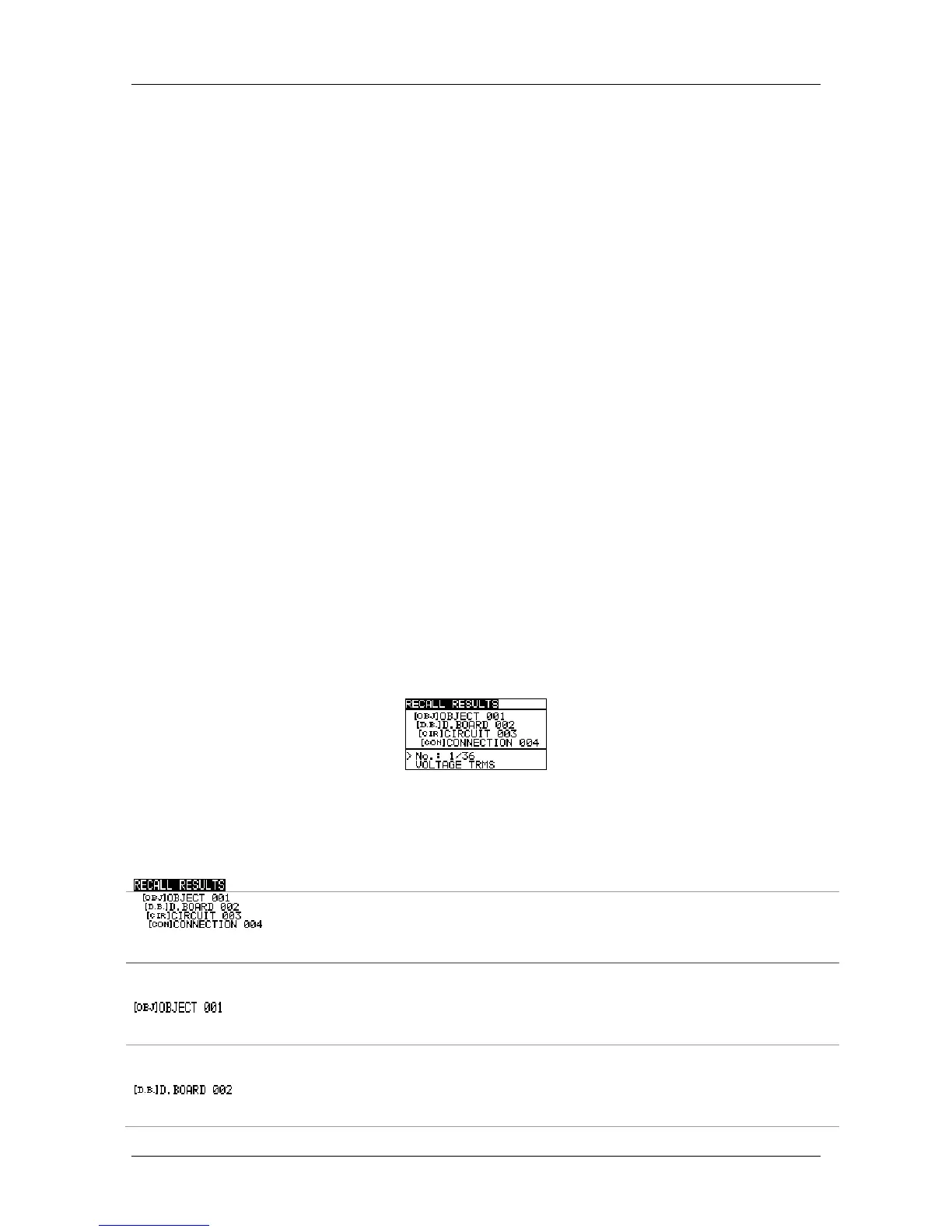
The data structure field describes the location of the measurement (which object,
distribution board, circuit and connection) and where it can be accessed.
In the measurement field there is information about the type and number of
measurements that belong to the selected structure element (object and distribution
board and circuit and connection).
The main advantages of this system are:
Test results can be organized and grouped in a structured manner that reflects
the structure of typical electrical installations.
Customized names of data structure elements can be uploaded from the ET-link
PC program.
Simple browsing through structure and results.
Test reports can be created with few or no modifications after downloading
results to a PC.
Figure 6.1: Data structure and measurement fields
Data structure field
Memory operation menu
Data structure field
1
st
level:
OBJECT: Default location name (object and its
successive number).
001: No. of selected element.
2
nd
level:
DISTRIBUTION BOARD: Default location name
(distribution board and its successive number).
002: No. of selected element.



 To Next Page