Equipotential bonding.
An equipotential bonding point is provided on the rear panel of the appliance for independent earth (not fitted to US models).
(GND) connection for safe working when testing components.
For your safety when testing oven components.
Before testing it is essential that you familiarize yourself with the rules and hazard warnings in this chapter and follow the
instructions given.
Eligibility of personnel for testing oven components.
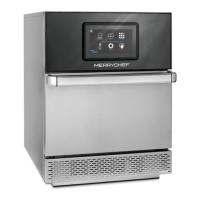
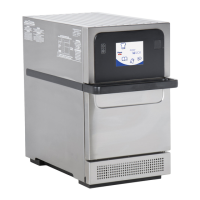
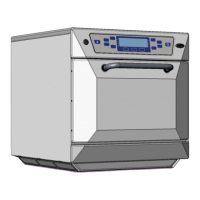
Only qualified personnel from an authorized service company are permitted to test components of the microwave
combination oven.
Moving heavy loads.
WARNING
Risk of injury from lifting incorrectly
When lifting the appliance, the weight of the appliance may lead to injuries, especially in the area of the torso.
▪ Use a forklift truck or pallet truck to place the appliance in the installation position or to move it to a new position.
▪ When shifting the appliance into the correct position, use enough people for the weight of the appliance when lifting
it (value depending on age and gender). Observe the local occupational safety regulations.
▪ Wear personal protective equipment.
Sharp-edged sheet-metal parts.
WARNING
Risk of cuts from sharp-edged sheet-metal parts
Working with or behind sharp-edged sheet-metal parts may result in cuts to hands.
▪ Exercise caution.
▪ Wear personal protective equipment.
Hot surfaces.
WARNING
Risk of burns from high temperatures inside the cavity and on the inside of the appliance door
▪ You may get burnt if you touch any of the interior parts of the cooking chamber, the inside of the appliance door or
any parts that were inside the oven during cooking.
▪ Before starting servicing and repair work, wait until the cooking chamber has cooled to below 50°C / 122°F or use the
‘Cool-down' function to cool the cooking chamber.
▪ Wear personal protective equipment.
Live components.
DANGER
Risk of electric shock from live parts
When the appliance is not connected to an equipotential bonding system, there is a risk of electric shock from touching live
parts. When the covers of the microwave combination oven are removed, there is a risk of electric shock from touching live
parts.
▪ Make sure that any work on the electrical system is performed solely by a qualified electrician from an authorized
customer service office.
Before removing the covers:
▪ Switch the appliance off and disconnect the plug from the wall socket.
▪ Turn off the isolator switch to disconnect fixed wired appliances and lock-off.
▪ Take protective measures at every power switch to ensure that the power cannot be switched on again.
▪ Always discharge the high voltage capacitors before working on the appliance using a suitable Capacitor
Discharge Tool, see section 2.15 ‘Process for discharging the capacitor.
▪ Make sure that the appliance is de-energized.
▪ Make sure that the electrical connections are intact, secure and all equipment panels are re-fitted before you
reconnect the appliance to the power supply.
▪ Before putting the appliance back into operation, make sure that the appliance, including all metallic accessories, is
connected to an equipotential bonding system.


 To Next Page