17
Installation
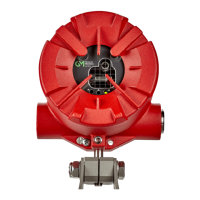
FL500 UV/IR Flame Detector
US
3.2.2 Environmental Factors
WARNING!
Do NOT install the device in an area where temperatures will be more than 185°F (85°C).
Failure to obey this warning can result in serious injury or death.
The operating temperature range for the device is -67°F to 185°F (-55°C to 85°C). For outdoor instal-
lations or other areas that are exposed to intense, direct solar radiation, the device may reach
temperatures well above specifications.
Make sure that the device is in an area where ice, dirt, or debris cannot collect on the optical window.
If ice, dirt, or debris collects on the optical window, a COPM Fault occurs.
To maintain the device enclosure's IP66/IP67 and Type 6P ingress ratings, use a nonhardening
sealant to install stopping plugs on conduit/cable entries that are not used.
3.3 Mounting
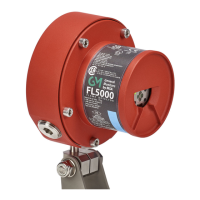
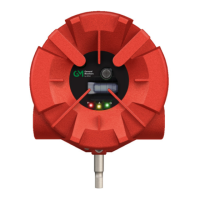
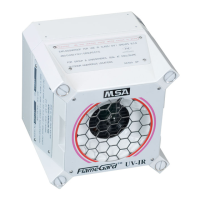
Use the mounting bracket (PN 71370-1) and hardware to install the device on a wall, pole, or other
surface. The design of the mounting bracket lets you adjust optical alignment while keeping the device
in a fixed position.
To attach the mounting bracket to drywall, install at least two fasteners to the stud behind the drywall
to give support for the weight of the device. The recommended fastener is a 3-in. #12 screw.
Use the dimensions shown in Figures 10 through 14 to install the device correctly. Make sure that the
device:
• Is in a location where personnel and objects cannot cause a blockage of the field of view
• Is in a location that is convenient for visual inspection and cleaning
• Is in a location where ice, dirt, or debris cannot collect on the optical window
• Points downward to prevent dust and moisture from collecting on the optical window
General Monitors does not recommend the use of cable shoes or crimps on any junction
box or housing wiring terminals. Poor crimping can cause a bad connection when
temperature variations occur.



 To Next Page