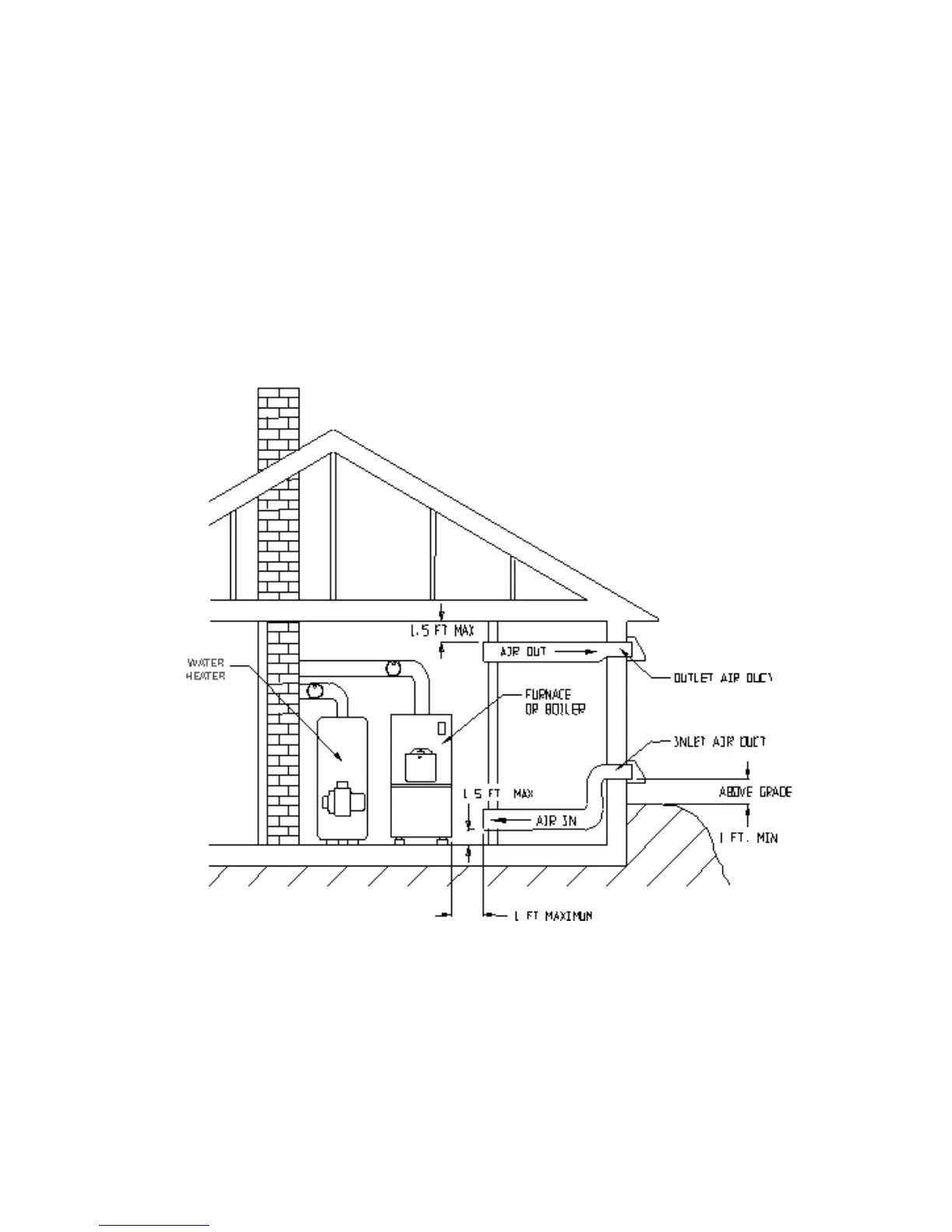
The incoming cold air is confined to the furnace room. Therefore, the residence occupants are less
susceptible to drafts. Cool outdoor air will be tempered by the ambient temperature of the furnace
room before it enters habitable spaces.
Noise levels may be reduced.
The furnace will be less susceptible to combustion spillage and back-drafting in low draft situations
reducing odor and smoke. Moderate amounts of smoke and fumes will be contained and expelled
safely outdoors.
Incomplete combustion of any carbon-based fuel may produce deadly carbon monoxide. Ventilation
may dilute any carbon monoxide produced under abnormal operating conditions.
Adequate air for combustion will help maintain the proper air-fuel ratio. Appliances, which are burning
fuel rich, will produce soot and burn excessive fuel. A 1/8 inch thick deposit of soot on the surface of
the heat exchanger is equivalent to 1 inch of fiberglass insulation.
Modern efficient oil burning appliances tend to be physically smaller than are their predecessors are.
As a result, hot surfaces such as those on flue connectors are not as high off the ground or floor as
they used to be. A separate furnace room with a “child proof” door is an important safety precaution.



 To Next Page