52
NO. OF
SEGMENTS
TISSUE
HALF–TIME
DISPLAY AS SEEN BY DIVER
MULTIPLE TISSUE TRACKING
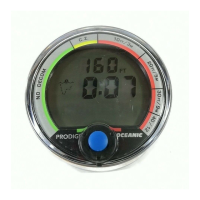
The PRODIGY tracks twelve tissue compartments with halftimes rang-
ing from 5 to 480 minutes. The TLBG always displays the controlling com-
partment (that is the only one important at that time). Think of the TLBG
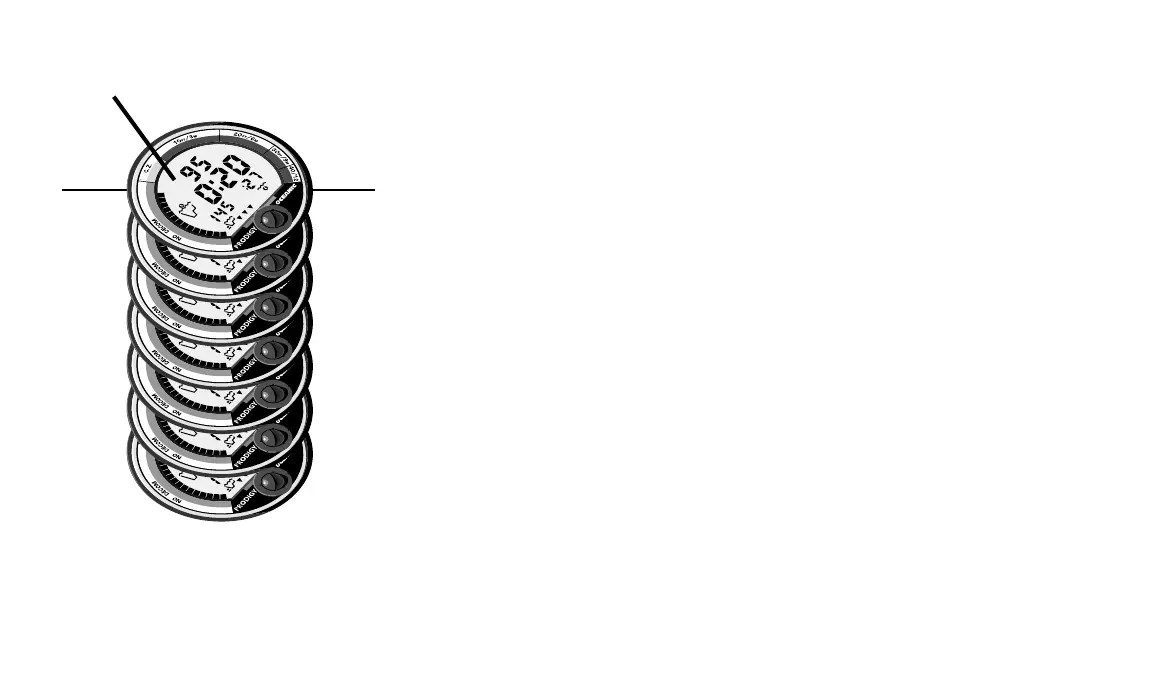
as twelve separate transparent displays laid on top of one another (Fig. 33).
The tissue compartment that has filled up fastest is the only one the viewer
can see from the top.
At any particular point, one tissue compartment may be absorbing
nitrogen, while another that was previously higher may be off-gassing.
Figure 34 illustrates the point at which one compartment “hands over”
control to another at a different depth. Though two tissues were controlling
the diver at different depths, the TLBG remains the same because it displays
only the highest loading of the 12 compartments.
As time goes on, or you reach a new depth, there may be sufficient off
gassing of the tissue compartments to reduce the overall number of bar graph
segments. The TLBG display that was recorded at the end of the dive will be
displayed in the Dive Log mode.
REPETITIVE DECOMPRESSION DIVING
The decompression model used by the PRODIGY is based on the no-
decompression multilevel repetitive dive schedules successfully tested by Dr.
Ray Rogers and Dr. Michael Powell. These tests did not include repetitive
Fig. 33 – Think of the 12 tissues
as overlaid clear displays
showing only the maximum bar
graph reading reached
®
FT
®
FT
®
FT
®
FT
®
FT
®
FT
®
FT
20
15
14
40
13 80
12
120
160
11



 To Next Page