Troubleshooting
37
11.2 Troubleshooting table
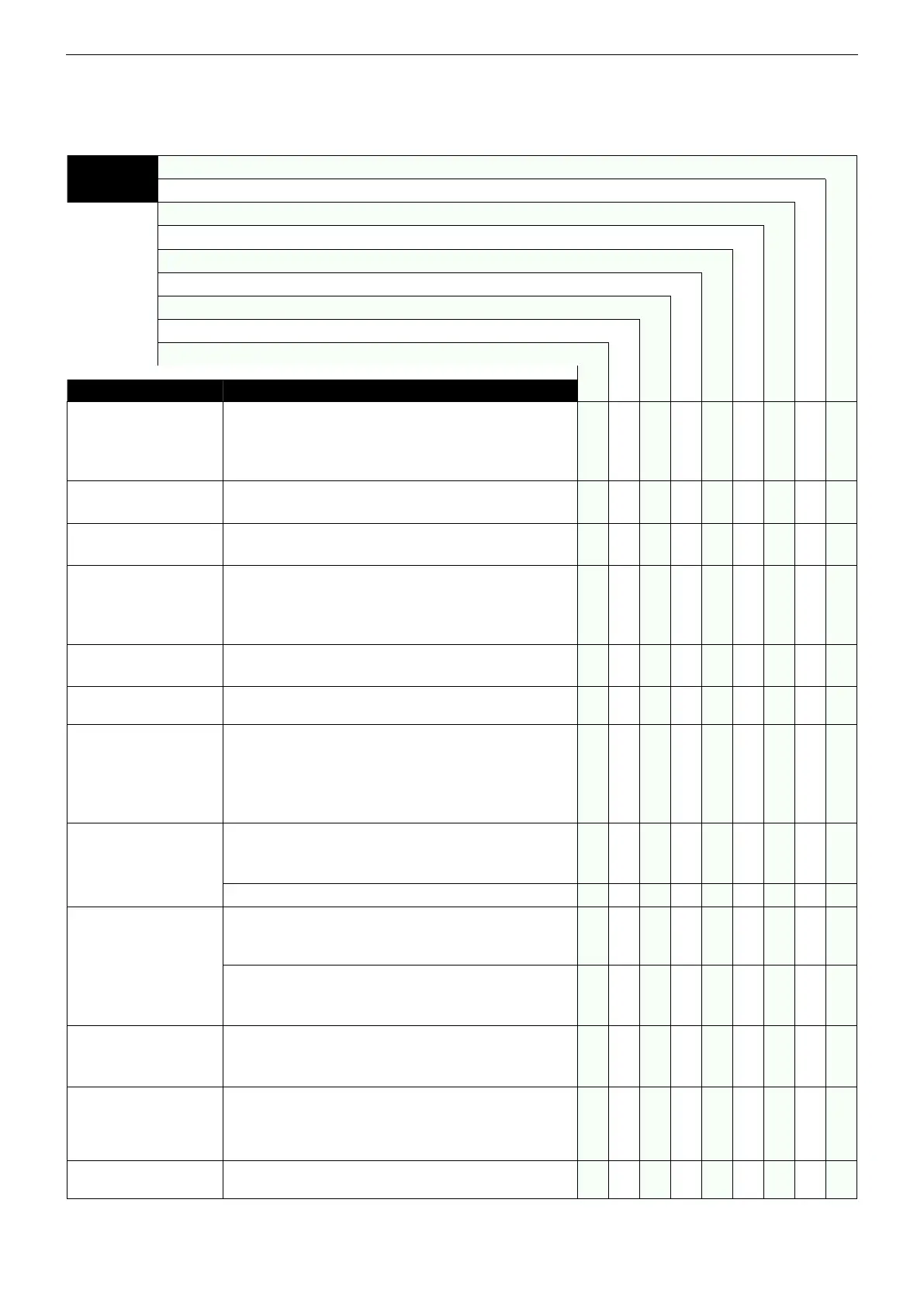
* In the case of welding errors without any error (Err) indication, refer to the following table to search for their
causes..
●
Wire runs into the base metal
Distribution box (Input
protection device)
• Switch is not ON. (Tripping of circuit breaker)
• Blown fuse.
• Tripping of circuit breaker.
• No phase.
• Cable is disconnected or severed.
• Loose connections.
• Switch is not ON.
• Tripping of circuit breaker.
Gas cylinder Gas
regulator
• Main cock is not open.
• Gas nearly runs short.
• Insufficient flow rate setting.
• Loose connections.
• Loose connections
• Hose is damaged.
Motor (8A) fuse
(on the front panel)
• Size of the wire for feed roller/SUS tube is wrong.
• Crack, clogging or breakage at the feed roller.
• Insufficient fastening of pressure rod.
• Accumulation of wire powder at SUS tube inlet.
• Fuse for voltage detection wire is blown.
• Cables (for power and torch switch) are severed.
• Loose connection to the wire feeder.
• Signs of dropping impact
• Torch cable is bent at an acute angle or coiled.
• Tip/liner is worn, clogged, distorted or has wire with
wrong wire size.
• Torch cable is bent at an acute angle or coiled.
• Tip/nozzle/insulation tube: Loose connection
• Loose connection of the torch body to the connec- tor
fittings.
• Cross section area is too small.
• Loose connection.
• Poorly energized base metal.
• Improper welding conditions, such as welding cur-
rent/voltage, torch angle, welding speed, wire extension
length.
• Wrong wavelength control.
Base metal surface
and wire extension
• Attachment of oil, dirt, rust or painting film.



 To Next Page