REYMSA COOLING TOWERS, INC.
www.reymsa.com
40
C.3. WATER TREATMENT AND WATER CHEMISTRY
The Closed Circuit Fluid Cooler requires a water treatment program to ensure the efciency of the system
operation, extending its service life. A qualied water treatment company should design a specic program
for the tower best operation.
A Closed Circuit Fluid Cooler is part of a carefully engineered heat exchange system. Any lm or deposit
which forms on the waterside heat exchange surface reduces the heat exchange efciency of the system.
System reliability can be sharply reduced by maintenance shutdowns required for removal of waterside
deposits, replacement of spray pump shaft seals damaged by suspended particles in the water, or repairs
required by waterside corrosion failures.
A water conditioning program must always address the following areas to maintain system reliability:
▪ Suspended solids
▪ Scale formation
▪ Microbiological contamination
▪ Corrosion
▪ Air Contamination
For optimal heat transfer and tower operation, the water chemistry of the recirculating water should be
maintained within the guidelines listed in Table C-3.
Table C-3: Water chemistry guidelines
WATER CHEMISTRY GUIDELINES
CHARACTERISTIC CONCENTRATION
pH 6.5 - 9
Hardness (as CaCO
3
) 30 - 500 ppm
Alkalinity (as CaCO
3
) 500 ppm máx.
TDS (Total Dissolved Solids) 1500 ppm máx.
Chlorides (as Cl) 450 ppm máx.
Silica (as SiO
4
) 180 ppm máx.
Sulfates (as SO
4
) 250 ppm máx.
Phosphates (as PO
2
) 15 ppm máx.
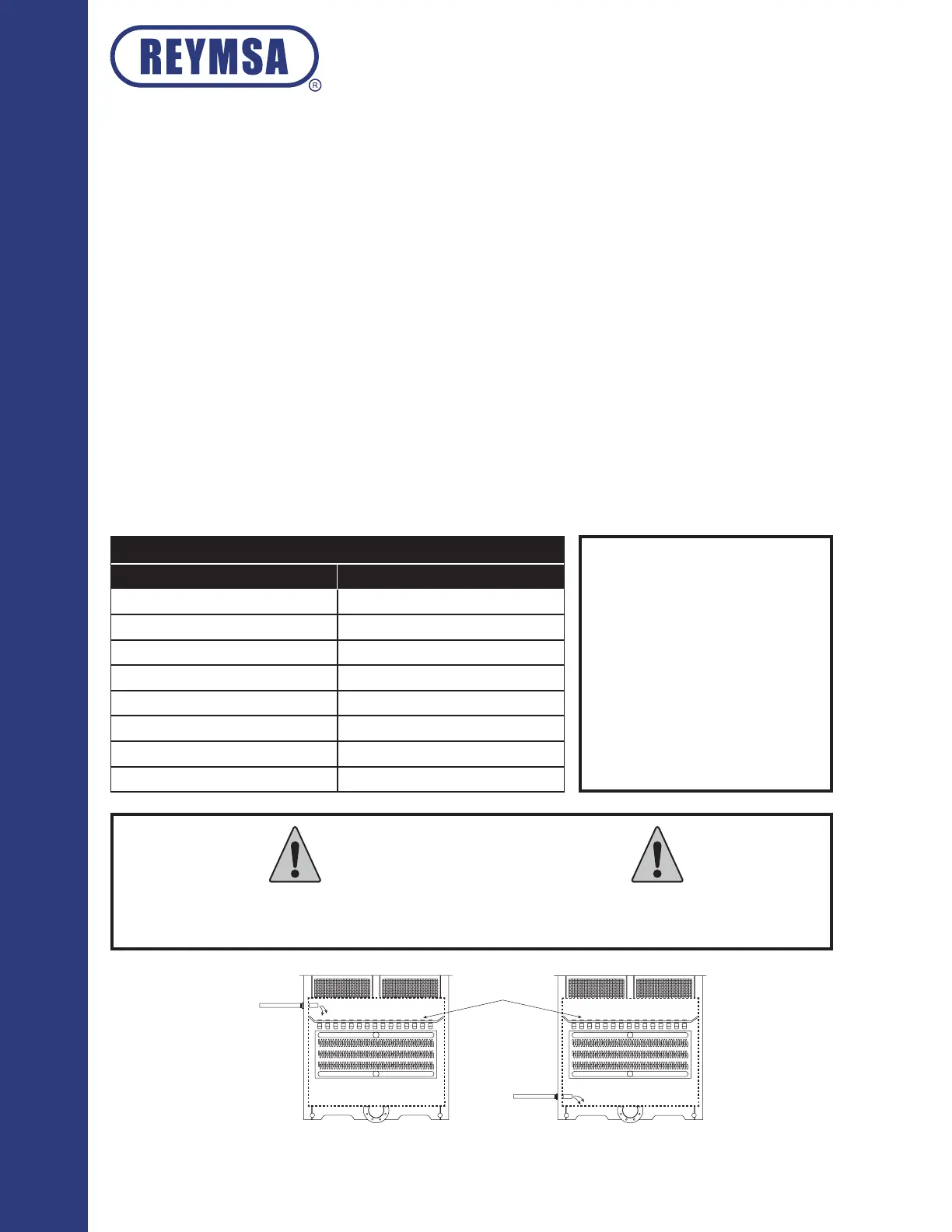
The chemical treatment supply connection is not factory installed. This connection must be installed
on the basin (below the copper coil) to dilute the chemicals in the water. Direct exposure of the
copper coil to the chemicals may accelerate corrosion.
CAUTION
Chemical treatment
supply
Water Distribution Pan
Chemical treatment
supply
INCORRECT
CORRECT
Figure C-7: Chemical treatment connection installation.
Note
Risk of scale will be greatly reduced
by following this guidelines.
These values do not represent the
chemical resistance of FRP.
Operation


 To Next Page