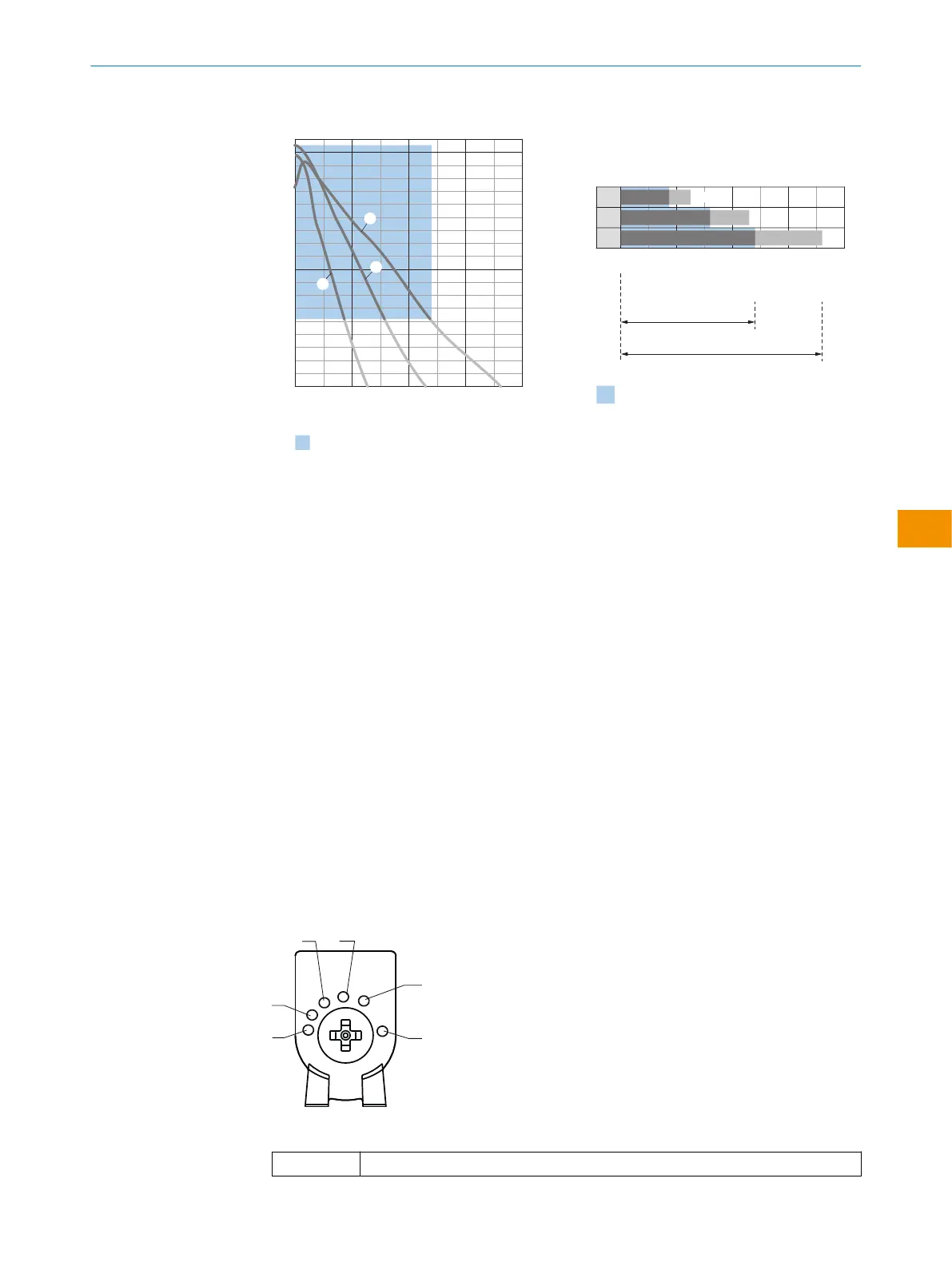
WLx4SP-xxxxxx30xxx, WLx4SP-xxxxxx20xxx, chemical-resistant reflectors:
0
100
10
1
Operating reserve
Distance in m (feet)
2
(6.56)
1
(3.28)
3
(9.84)
Recommended sensing range for
the best performance
4
(13.12)
3
1
2
Figure 11: WLx4SP-xxxxxx30xxx, WLx4SP-
xxxxxx20xxx, chemical-resistant reflectors
1
PL10F Chem
2
PL20 Chem
3
P250 Chem
3
1
2
0
Distance in m (feet)
2
(6.56)
1
(3.28)
3
(9.84)
4
(13.12)
0
0
0
1.6 2.3
0.85
1.25
2.4 3.6
Recommended sensing range for
the best performance
D
C
A B
Figure 12: WLx4SP-xxxxxx30xxx, WLx4SP-
xxxxxx20xxx, chemical-resistant reflectors
A Sensing range min. in m
B Sensing range max. in m
C Maximum distance range from
reflector to sensor (operating
reserve 1)
D Recommended distance range from
reflector to sensor (operating
reserve 3.75)
blue Recommended sensing range for
the best performance
Without setting option:
After alignment, place a non-transparent object into the path of the beam. Check the
function as described in table 5. If the digital output fails to behave as described in
table 5, check the application conditions.
6.4
Configuration
WLG4SP-xxxxxx2x
Setting the operating mode for different objects
You can choose between various operating modes for different detection objects using
the Teach-Turn adjustment:
Table 8: MultiMode operating modes (object modes)
1
Highly-transparent objects
OPERATING INSTRUCTIONS
80282151N09/2024-03-12 | SICK O P E R A T I N G I N S T R U C T I O N S | WLG4S
41
Subject to change without notice
en






 To Next Page