EasyManua.ls Logo

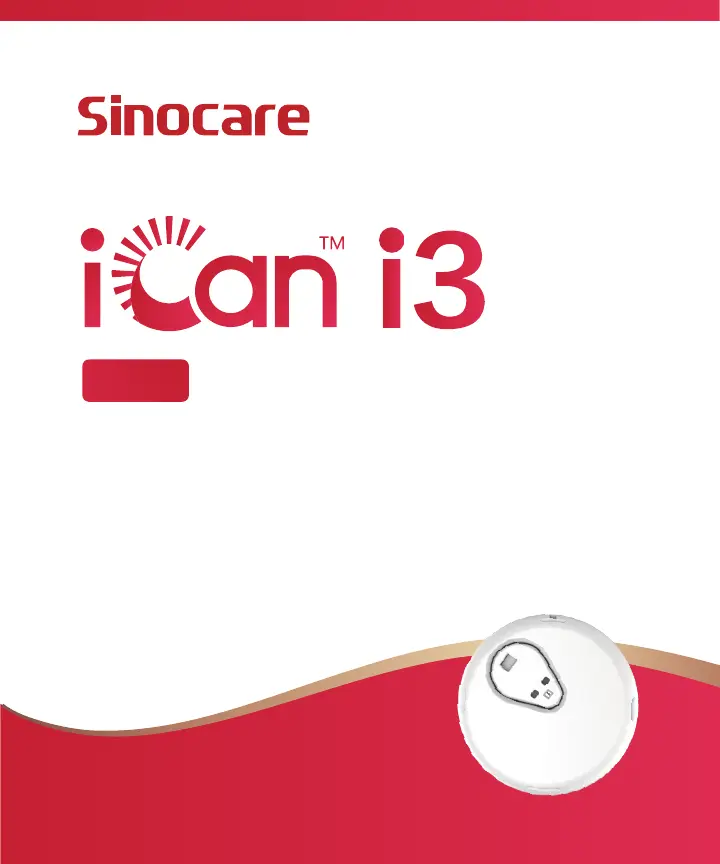
Sinocare iCan i3 - User Manual

Sinocare iCan i3
101 pages
Print Icon
To Next Page IconTo Next Page
Loading...
CGM User Guide
1 LEGAL DISCLAIMER
User Guide
CGM

Other manuals for Sinocare iCan i3

Questions and Answers

  • T
    Thomas BruceSep 8, 2025
    Why does Sinocare iCan i3 show 'Low' or 'High'?
    • T
      terri49Sep 8, 2025
      The system is working as it should. Use your Blood Glucose Meter and treat your high or low blood glucose. When your result is between 36 and 450 mg/dL your iCan i3 CGM will display your result instead of Low or High.
  • D
    Danielle AndersonSep 12, 2025
    What to do if Sinocare iCan i3 applicator is stuck?
    • M
      marshalljaySep 12, 2025
      Gently pull the applicator up until you see adhesive tape. Using your finger or thumb, hold the edge of the tape and gently rock the applicator back, away from your body. Do not try to reuse the applicator.
  • P
    pfletcherSep 12, 2025
    What to do if Sinocare iCan i3 sensor not working after water?
    • K
      Kimberly KellerSep 13, 2025
      If the issue is not resolved after 1 hour, stop the session, remove the sensor, and insert a new sensor to start a new session.
  • B
    Brian MartinezSep 14, 2025
    What to do if Sinocare iCan i3 sensor breaks?
    • A
      Andre RogersSep 15, 2025
      If a sensor tip breaks off under your skin and you cannot see it, do not try to remove it. Contact your HCP. Also seek professional medical help if you have symptoms of infection or inflammation (such as redness, swelling, or pain at the insertion site).
  • E
    Erin WalkerSep 16, 2025
    What to do if Sinocare iCan i3 insertion site is still not relieved?
    • R
      Ronald MorganSep 17, 2025
      If you notice pain, swelling, redness, discharge, or any obvious signs of lymphangitis, such as enlarged local lymph nodes or fever, at the insertion site after removing the sensor, you should contact your healthcare professional immediately. If you have any doubts or questions, please consult your doctor or other healthcare professional.

Summary

LEGAL DISCLAIMER

IMPORTANT SAFETY INFORMATION

Getting started with iCan Continuous Glucose Monitoring System (CGM)

Resources

Section 1: System Overview

System Description

Details the components and general functionality of the iCan i3 CGM system.

Intended Purpose

Specifies the intended use and target population for the iCan i3 CGM device.

User Safety

Covers essential safety information including contraindications, warnings, and precautions.

Section 2: Start Your Sensor

Prepare the Sensor

Lists all necessary items and preparations before starting the sensor insertion process.

Choose a Site

Provides guidance on selecting an appropriate and comfortable location for sensor insertion.

Pair Your Sensor with the Transmitter

Explains the process of connecting the sensor and transmitter via Bluetooth to the mobile app.

Apply Your Sensor

Step-by-step instructions on how to correctly apply the CGM sensor to the skin.

Sensor Warmup

Describes the required waiting period after sensor insertion before receiving readings.

Section 3: Understand Your iCan i3 CGM Results

Home Screen Overview

Introduces the main interface of the iCan CGM APP, showing key glucose data.

Glucose Information

Explains how to interpret sensor glucose results, trend arrows, and graphs.

Events

Explains how to log events like insulin, diet, or exercise to track their impact on glucose.

Alerts

Details the different types of alerts, their meanings, and how they are delivered to the user.

Section 4: Treatment Decisions

Talk with your Healthcare Professionals (HCPs)

Emphasizes consulting healthcare providers for personalized diabetes management and alert settings.

When to Use Your Blood Glucose Meter

Provides guidance on when to rely on a traditional blood glucose meter for treatment decisions.

Using Your CGM for Treatment Decisions

Explains how to leverage CGM data and trend arrows to make informed treatment choices.

Section 5: End a Session

End Your Sensor Session

Details how the sensor session automatically ends or can be manually stopped by the user.

Remove a Sensor

Provides instructions on how to safely remove the used CGM sensor from the skin.

Start New Sensor Session

Guides users on initiating a new sensor session after removing the old one.

Attachment A: Troubleshooting

Sensor Issues

Addresses common problems related to sensor insertion, irritation, or malfunction and their solutions.

Attachment B: Security and Air Travel

Security Check

Provides advice on how to navigate airport security with CGM components without damage.

Attachment C: Take Care of Your CGM

Maintenance

Covers routine maintenance and handling of CGM components for optimal performance.

Storage and Transport

Details the recommended temperature and humidity conditions for storing and transporting the CGM.

Attachment D: Technical Information

Device Performance Characteristics

Presents data on the iCan i3 CGM's accuracy and performance metrics from clinical studies.

Attachment E: Label Symbols

Attachment F: Alerts Vibrations and Sounds

Glucose Alerts

Details the types of glucose-related alerts, their descriptions, and how they are communicated to the user.

Glossary

Sinocare iCan i3 Specifications

General IconGeneral
Device TypeBlood Glucose Meter
ModeliCan i3
DisplayLCD
Sample TypeCapillary Whole Blood
Measuring Range20-600 mg/dL
Test Time5 seconds
Power Source2 x AAA batteries
Operating Temperature10-40°C (50-104°F)
Sample Volume0.6 μL
Automatic Shut-off3 minutes

Related product manuals