145
Excessive loads and/or under inflation cause tire overloading and, as a result abnormal tire flexing occurs. This
situation can generate an excessive amount of heat within the tire. Excessive heat may lead to tire failure. It is
the air pressure that enables as tire to support the load., so proper inflation is critical. The proper air pressure
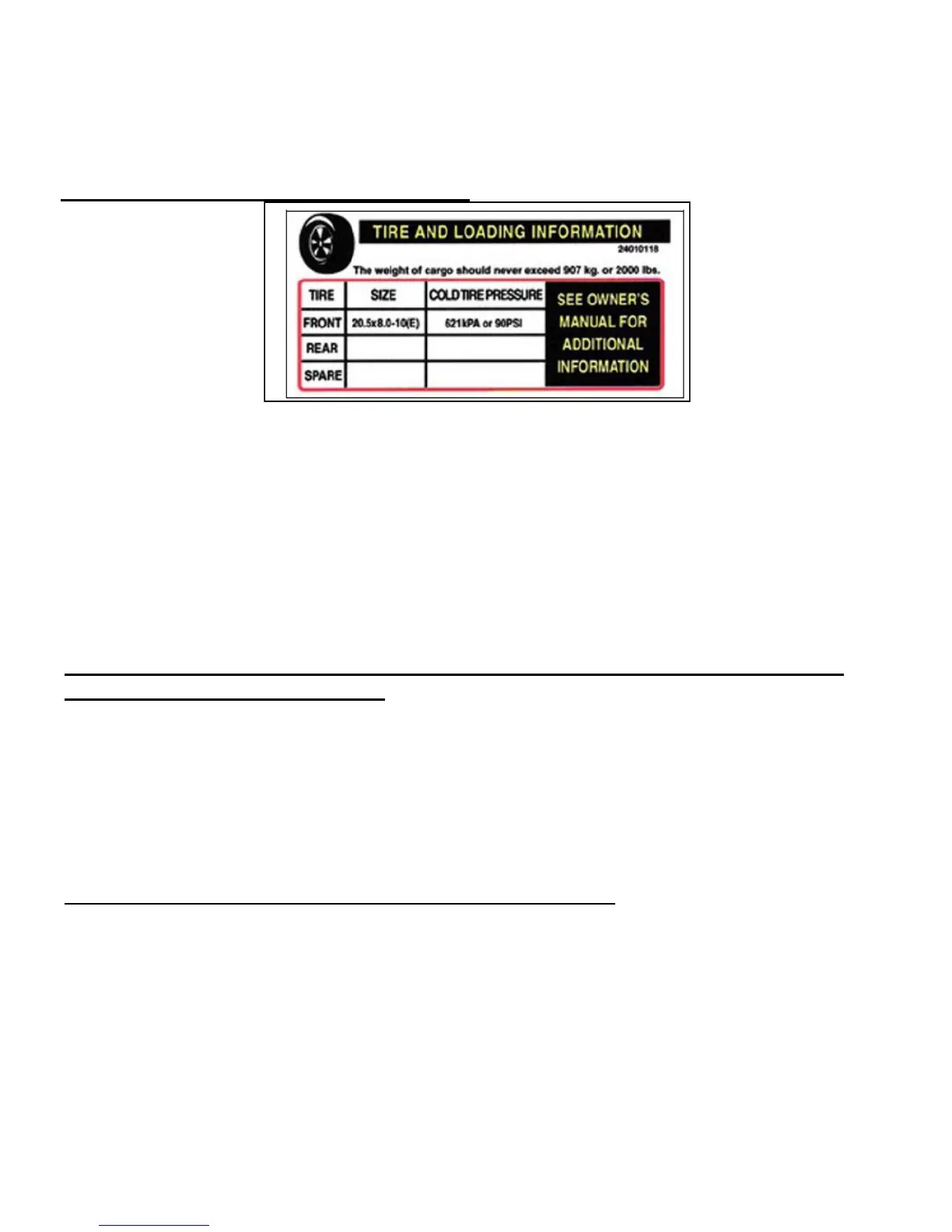
may be found on the
1.1.1 Trailers 10,000 Pounds GVWR or Less
Tire and Loading Information Placard-Figure 1
1. Locate the statement, “The weight of cargo should never exceed XXX kg or XXX lbs.” on your vehicle’s
placard. See figure1-1
2. This figure equals the available amount of cargo and luggage load capacity
3. Determine the combined weigh of luggage and cargo being loaded on the vehicle. The weight may not
safely exceed the available cargo and luggage load capacity.
The trailer’s placard refers to the tire information placard attached adjacent to or near the trailer’s VIN
(certification) label at the left front of the trailer.
1.1.2. Trailers Over 10,000 LBS. GVWR (Note: These are not required to have a tire
information placard on the vehicle
1. Determine the empty weight of your trailer by weighting the trailer using a public scale or other means.
- This step does not have to repeated
2. Locate the GVWR (Gross Vehicle Weight Rating) of the trailer on your trailer’s VIN (certification) label.
3. Subtract the empty weight of your trailer form the GVWR stated on the VIN label. That weight is the
maximum available cargo capacity of the trailer and may not be safely exceeded.
1.2. Steps for Determining Correct Load Limit-Tow Vehicle
1. Locate the statement, “ The combined wright of occupant and cargo should never exceed XXX LBS., ‘ on
your vehicle’s placard
2. Determine the combined weight of the driver and passengers from who will be riding in your vehicle.
3. Subtract the combined weight of the driver and passengers from XXX Kilograms or XXX LBS.
4. The resulting figure equals the available amount of cargo and luggage capacity. For example. If the “XXX”
amount equals 1400 LBS. and there are five 150 LB. passengers in your vehicle, the amount of available
cargo and luggage
capacity is 650 LBS. (1400-750 (5X150) = 650 LBS. )
5.Determine the combined weight of luggage and cargo being loaded on the vehicle. That weight may not
safely exceed the available cargo and luggage capacity calculated in step #4
6. If your vehicle will be towing a trailer, load from your trailer will be transferred to your vehicle. Consult the
tow vehicle’ s manual to determine how this weight transfer reduces the available cargo and luggage capacity
of your Vehicle.



 To Next Page