Need help?
Do you have a question about the Stratus ftServer 2600 and is the answer not in the manual?
Describes redundant components for continuous operation and software features.
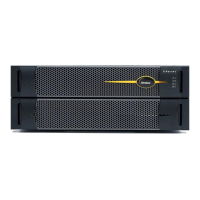
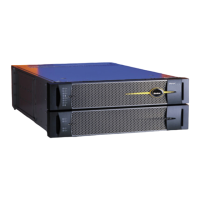
Details the rack-mounted structure, CPU-I/O enclosures, and front panel components.
Lists customer-replaceable units for easy component maintenance and replacement.
Explains low-level power for monitoring and remote access when system is off.
Covers powering the system on, off, and handling hangs via the power button.
Provides step-by-step instructions for orderly shutdown in Windows and Linux.
Introduces hardware malfunction monitoring, reporting, and initial troubleshooting steps.
Explains the system's status indicators and buttons for diagnostics.
Summarizes overall system status via LEDs on the front panel.
Details specific LEDs within the CPU-I/O enclosures for component status.
Describes LED indicators for hard disk drive status and troubleshooting.
Explains status LEDs for Ethernet and VTM ports.
Describes status LEDs for the modem assembly.
Details status LEDs for the Power Distribution Unit (PDU).
Lists common problems with internal SAS disk drives and their solutions.
Lists common problems with the DVD drive and their solutions.
Guides on using the NMI button to create memory dump files for diagnostics.
Covers unpacking, checking, storing, and repacking CRUs.
Outlines steps before replacing CRUs and general safety precautions.
Details ESD precautions and general guidelines before starting component replacement.
Step-by-step guide for removing and installing CPU-I/O enclosures.
Instructions for upgrading or replacing system memory modules (DIMMs).
Procedures for installing and replacing PCI adapters, including riser assemblies.
Guides on removing and installing internal hard disk drives.
Instructions for replacing DVD drives, modem assemblies, and power distribution units.
 General
| RAID Support | RAID 0, 1, 5, 10 |
|---|---|
| Network | 2 x 1GbE ports |
| Power Supply | Dual redundant hot-swappable power supplies |
| Form Factor | 2U rack-mountable |
| Operating System Support | Windows Server, Linux |
| Availability Features | Fault-tolerant hardware with continuous availability, automated failover |

 To Next Page