3.7.5.5 Open Drain Signals
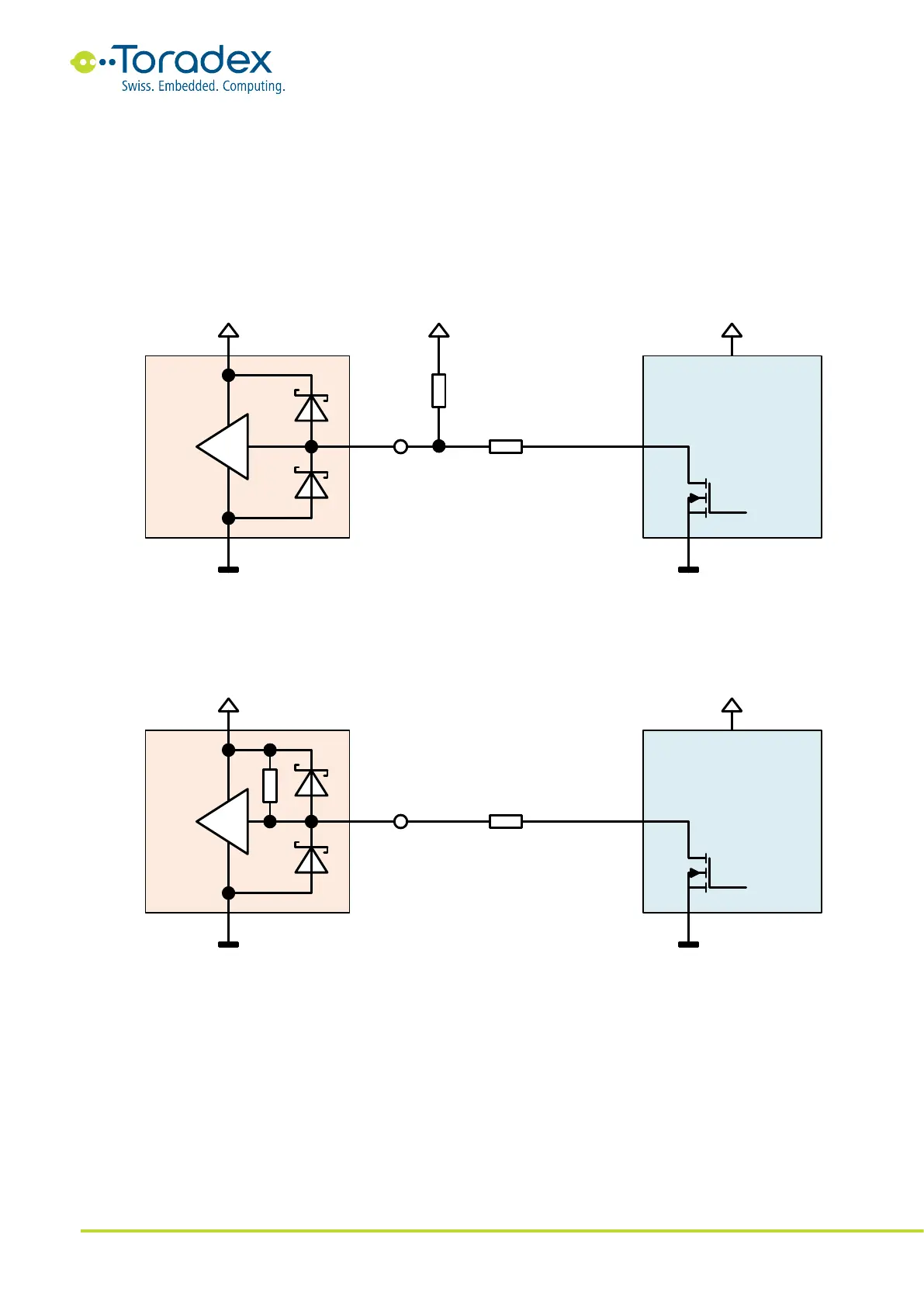
When using open-drain signals, it is crucial to use the correct voltage domain for the pull-up
resistor. In Figure 34, the peripheral rail is used, and therefore backfeeding occurs. By using the
same voltage domain for the pull-up resistor as the input side, backfeeding is eliminated. When
using a computer module, using the IO rail might not be feasible. In this case, it might be
necessary to use a power rail that switches off together with the on-module IO rail. One option for
switching such a rail is using a free module GPIO. Make sure the GPIO is low by adding a pull-
down resistor on the carrier board.
Figure 44: Correct pull-up rail for open-drain signals
Most SoC pins feature configurable internal pull-up resistors. If the pull-up value is strong enough,
a good solution is to use these resistors instead of external ones. The internal pull-up resistors are
perse on the correct IO rail and therefore are not backfeeding.
Figure 45: Using internal pull-up resistor



 To Next Page