VAMP Ltd
Motor protection relay
Technical Description
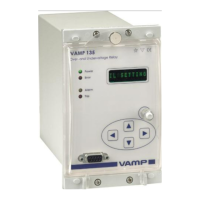
VAMP 150
VM150.EN005 Vamp 24h support phone : +358 (0)20 753 3264
1
Table of Content
1. Introduction ............................................................................3
1.1. Application ..........................................................................3
1.2. Main features.......................................................................3
2. Functions .................................................................................5
2.1. Principles of the numerical protection technique.........5
2.2. Relay protection functions ................................................7
2.2.1. Overcurrent protection I>, I>>, I>>> (50/51)..........7
2.2.2. Stall protection I
st
> (48) ...........................................11
2.2.3. Thermal overload stage T> (49M) .........................13
2.2.4. Unbalance protection I2> (46) ..............................16
2.2.5. Incorrect phase sequence protection I2>> ........17
2.2.6. Undercurrent protection I< (37).............................18
2.2.7. Sensitive earth-fault protection I
0
>(50/51N) ........18
2.2.8. Frequent start protection N> (66)..........................20
2.2.9. Arc fault protection (option) ArcI> (51L>), ArcI
0
>
(51NL>) ......................................................................22
2.2.10. Circuit-breaker failure protection CBFP (50BF) ...24
2.3. Measurement functions of the relay..............................25
2.4. Output relay and blocking functions.............................25
2.4.1. Output relay matrix .................................................26
2.4.2. Blocking matrix .........................................................26
2.5. Communication ................................................................27
2.5.1. PC port ......................................................................27
2.5.2. Remote control connection ..................................27
2.6. Disturbance recorder .......................................................28
2.7. Self-supervision...................................................................29
3. Application examples .........................................................30
3.1. Using the alarm of T> stage for restart inhibition ..........30
3.2. Trip circuit supervision .......................................................32
4. Connections .........................................................................34
4.1. Digital input ........................................................................34
4.2. Auxiliary voltage................................................................35
4.3. Output relays .....................................................................35
4.4. Serial communication connections ...............................35
4.5. Current transducer............................................................35
4.6. Arc protection ...................................................................36
4.7. Block diagram ...................................................................37
4.8. Connection diagram .......................................................38
5. Technical data .....................................................................39
5.1. Connections ......................................................................39
5.1.1. Measuring circuitry ..................................................39
5.1.2. Auxiliary voltage ......................................................39
5.1.3. Digital input...............................................................39
5.1.4. Trip contacts (T1 and T2).........................................40
5.1.5. Alarm contacts (A1...A3) and IF............................40


 To Next Page