The system coolant fluid must be analyzed by a competent fluid-treatment specialist before start up to establish the inhibitor
and antifreeze solution requirement and evaluated at regularly scheduled intervals throughout the life of the system to
determine the pattern of inhibitor depletion. The fluid complexity and variants of required treatment programs make it
extremely important to obtain the advice of a competent and experienced fluid-treatment specialist and follow a regularly
scheduled coolant-fluid system-maintenance program.
Fluid chemistry varies greatly as do the required additives, called inhibitors, that reduce the corrosive effect of the fluids on
the piping systems and components. The chemistry of the coolant fluid used must be considered, because some sources may
contain corrosive elements that reduce the effectiveness of the inhibited formulation. Sediment deposits prevent the
formation of a protective oxide layer on the inside of the coolant system components and piping. The coolant fluid must be
treated and circulating through the system continuously to prevent the buildup of deposits and/or growth of sulfate reducing
bacteria. Proper inhibitor maintenance must be performed to prevent corrosion of the system. Consult fluid manufacturer for
testing and maintenance of inhibitors.
Commercial-grade coolant fluid is generally less corrosive to the common metals of construction than water itself. It will,
however, assume the corrosivity of the coolant fluid from which it is prepared and may become increasingly corrosive with use
if not properly inhibited.
Vertiv recommends installing a monitored fluid-detection system that is wired to activate the automatic-closure of field-
installed coolant-fluid supply and return shut-off valves to reduce the amount of coolant-fluid leakage and consequential
equipment and building damage. The shut-off valves must be sized to close-off against the maximum coolant-fluid system
pressure in case of a catastrophic fluid leak.
The secondary circuit should be filled with particulate free coolant (see suggested specification below) treated with suitable
corrosion inhibitors and biocides for the cooling application. Failure to use proper water treatment can result in decreased
system performance and reliability due to corrosion, scaling, fouling, and microbiological growth and may invalidate the unit
warranty.
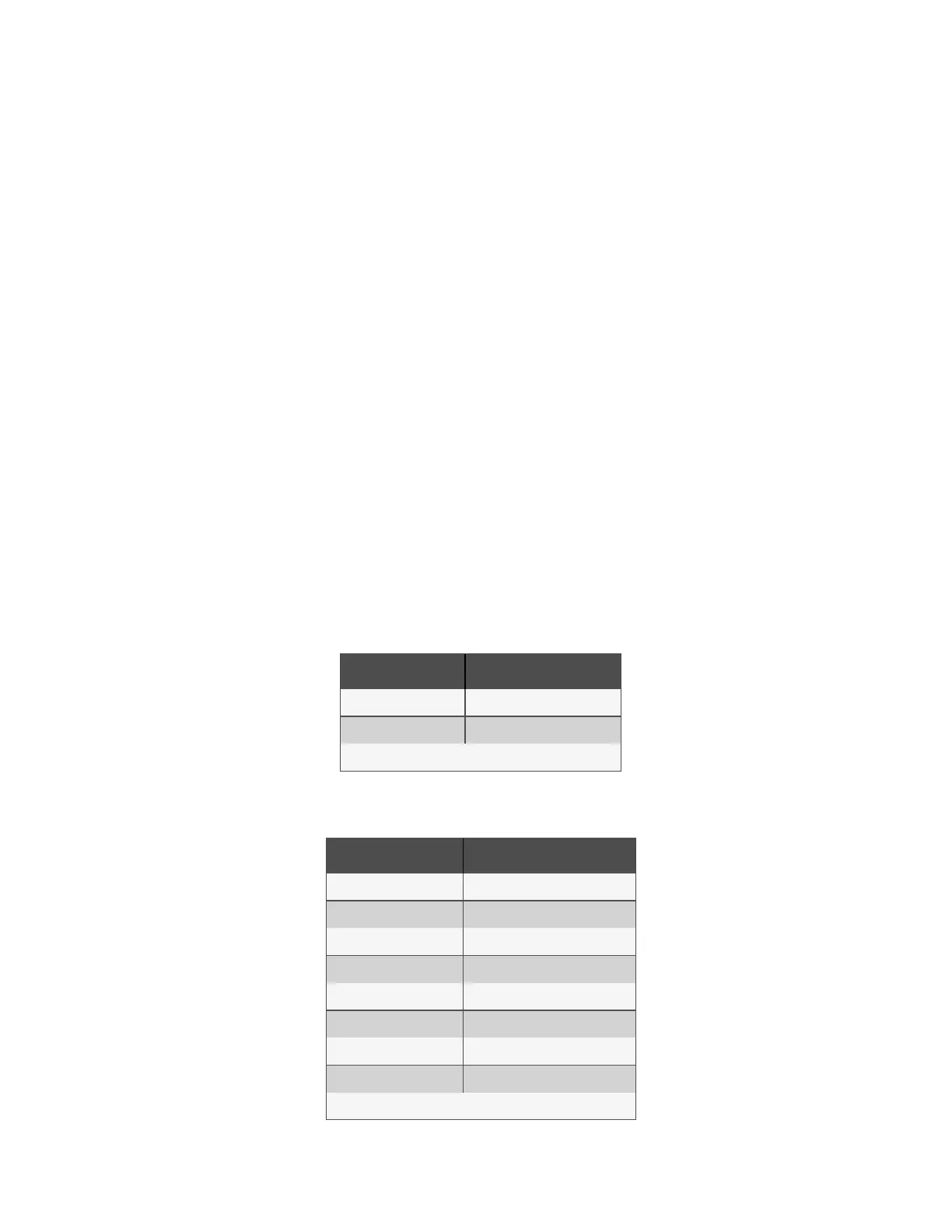
Property Value
Conductivity < 15μS/0.4 in. (1 cm)
pH 6 to 8
Source: SL-70625 section 5.5.5
Table 7.6 Deionized Water Specification
Property Value
Cadmium (Cd) < 10 µg/33.8 fl. oz. (1 L)
Copper (Cu) < 10 µg/33.8 fl. oz. (1 L)
Iron (Fe) < 10 µg/33.8 fl. oz. (1 L)
Lead (Pb) < 10 µg/33.8 fl. oz. (1 L)
Manganese (Mn) < 10 µg/33.8 fl. oz. (1 L)
Nickel (Ni) < 10 µg/33.8 fl. oz. (1 L)
Zinc (Zn) < 10 µg/33.8 fl. oz. (1 L)
Chloride (Cl) < 2 µg/33.8 fl. oz. (1 L)
Source: SL-70625 section 5.5.5
Table 7.7 Mineral Content
7 Secondary Fluid Circuit
Requirements
Proprietary and Confidential ©2024 Vertiv Group Corp. 71
Vertiv™ CoolPhase CDU Installer/User Guide


 To Next Page