10.1.2 High Head Pressure
Compressor head pressure is monitored with a pressure-sensor switch. (One SPDT pressure switch is
used) for the compressor in the unit.
If head pressure exceeds 400 psig (2785 kPa), the switch opens the compressor contactor and sends an
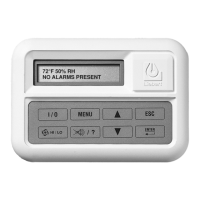
input signal to the control. The high head pressure condition is acknowledged by pressing the Alarm
Silence button on the wall box, which will clear the alarm if the high head pressure condition no longer
exists. If the compressor is Off for 1 hour, the control goes into a special cold start mode. In the cold start
mode on a call for cooling or dehumidification, the liquid line solenoid valve (LLSV) is energized. If the high
pressure switch does NOT trip within 10 seconds, the control returns to normal operation of monitoring
the high head pressure switch for three occurrences in a 12 hour period. It is a rolling timer, and after the
third high head alarm occurs and is acknowledged by the user, it will lock Off the compressor.
If while in the cold start mode, the high head pressure switch DOES trip within 10 seconds of the activation
of the LLSV, the control does not annunciate the alarm. The control will turn Off the LLSV and delay 10
seconds. The control will permit this occurrence two more times or a total of three times. If on the fourth
try, the high head pressure switch trips within 10 seconds, the control will annunciate the alarm, turn Off
the LLSV, wait for the user to acknowledge the alarm and hold the compressor Off for 3 minutes, the
length of the normal short cycle control. The control will permit this occurrence three times. On the third
occurrence, the control will lock the compressor Off until the control power is reset.
Air-Cooled Systems
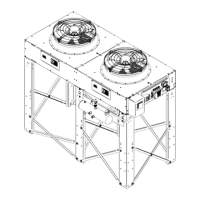
Check for power shut Off to the condensing unit, condenser fans not working, defective head pressure
control valves, closed service valves, dirty condenser coils and crimped lines. Also, make sure that when
the compressor contactor is energized, the side switch on the contactor closes to energize the control
circuit on the condensing unit.
Water/Glycol/ Systems
Check water regulating valves. Verify water/glycol flow (i.e., pumps operating and service valves open). Is
water tower or drycooler operating? Is the coolant temperature entering the condenser at or below design
conditions? Is AUX relay (terminals 70 & 71) operating during cooling to turn on the drycooler?
10.1.3 Humidity Level
The humidity level alarm may be activated under the following conditions:
• High: The room return air humidity exceeds the pre-set high humidity alarm set point. Is the
unit set up for dehumidification? Check DIP switch.
• Low: The room return air humidity decreases to the low humidity alarm set point. Is the unit
setup for humidification? Check DIP switch.
• High and Low Humidity (simultaneously): The simultaneous display of two alarms results in
loss of the humidity input signal. DASHES WILL BE DISPLAYED IN THE HUMIDITY READING
DISPLAY. Under these conditions, the control system deactivates both humidification and
dehumidification. Check for a disconnected cable or failed sensor.
NOTE: Check for proper setpoints. Does the room have a vapor barrier to seal it from outdoor
humidity? Are doors or windows open to outside air?
Vertiv | Liebert Mini-Mate2—5 ton User Manual| 72



 To Next Page