CARBON
MONOXIDE
"CO"/
LOW-CO
GENERATORS
IMPORTANT
INFORMATION
DESCRIPTION
Carbon monoxide
"CO"
is
a component of engine
eXhaust.
It
is
a colorless, tasteless,
odorless,
lighter than air poisonous
gas
that
can
kill
you
without
any
warning.
CO
poisoning
is
one
of
the
major
safety
risks
associated
with
boating. It
is
a
threat that must not
be
underestimated.
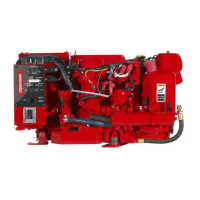
Westerbeke
Low-CO
generators
are
designed
to
reduce
normal
levels of
CO
in
the
engine exhaust
by
approximately
99%.
Several standards
for
CO
have
been
published, expressed
in
parts
per million
"ppm"
and
hours
of
exposure:
Regulator
CO
ppm
Exposure
Hours
EPA
9
8
ACGffi.
25
8
EPA
35
1
NIOSH
35
8
OSHA
50
8
ACGffi
125
0.5
NIOSH
200
0.0
NIOSH
1200
0.0
(IDLH)
1200
ppm
is
the
so-called
IDLH
concentration·
IMMEDIATELY
DANGEROUS
TO
LIFE
AND
HEALTH.
A city
in
California characterizes
the
effect
of
CO
concentration this
way:
Parts
per
Million
Responses
25
Permissible exposure
level,
no
apparent
toxic
symptoms.
100
No
poisoning for long period.
Allowable
for several hours.
200
Should not
be
exposed above
this
level
for any period of
time. A
possible
mild frontal
headache
in
two
to three hours.
Even though the
generator
normally
produces
very low
levels
Westerbeke Low-CO
generators
are
designed
to
reduce
normal levels
of
CO
in
the
engine exhaust
by
approximately
99%.,
an exhaust
leak
of untreated
exhaust
would
be
extremely dangerous. For this
reason
it
is
extremely
important
to
install a
CO
detector
near
the
generator
and
to
be sure it is always
turned
on
and
functioning
properly.
If
this
detector sounds,
do
not
tum it
off,
assuming
it
is
a false
signal.
You
can not taste,
smell,
or
otherwise
detect
CO.
Leave
the detector
on,
tum off
all
engines
and
generators,
evacuate the boat
leaving
ports
and
hatches
open,
and
seek
professional help.
As
soon
as
CO
leaves
the
exhaust
outlet,
the
level
is
subject
to
dilution
in
the
open
air.
The closer a
person
is
to
the
exhaust outlet, the higher
the
concentration
of
CO.
In
a closed
space,
such
as
the
engine
compartment,
the
boat,
or underneath a stem
swim
platform,
concentrations
will
potentially rise
to
the
undiluted level
emanating
from
the
exhaust system
due
to a lack of
fresh
air
to
dilute
the
exhaust
gas.
Therefore,
one
should never
rely
on
dilution of
the
eXhaust
to
provide a margin of
safety.
Westerbeke
Low-CO
generators
achieve
an
approximate
99%
reduction of typical
CO
by
precise
control
control of
the
engine's air/fuel ration coupled
with
after treatment
in
a
special catalyst.
CO
emissions
are
not
the
same
for
every
model because
each
engine is
different.
Also,
certain
fuel
system components are
commonized
aeross
several
engine
models
being adequate
for
some
and
extra-adequate for
others,
thus
producing different
CO
levels
for
different
models.
The fuel system which
accomplishes
the
required
precise
air/fuel ratio control
is comprised of
many
different
components:
purchased
sub-assemblies,
machined
castings,
sensors, electronics and
others.
Because of
the
extreme
level
of
CO
reduction,
any
variability
in
the
functioning of
any
these
components
can and will
cause
variability of
the
CO
output.
CO
concentration also
varies
with
load.
Usually,
but not
always,
the
worst
case
CO
concentration
occurs
at
maximum
load.
IV
INSPECTION
The catalyst is critical to
optimizing
CO
levels.
Any
water
intrusion into
the
engine's exhaust
system
will
likely
quickly
compromise
the
proper
operation
of
the
catalyst.
Westerbeke's exhaust system installation instructions
dated June
2016 Revision 4 must be adhered to.
NOTE:
Water
intrusion
is
not a
product
defect
and
is
not
covered
under
warranty,
neither
Westerbeke
s normal
product
warranty
nor
the
emissions
specific
warranty
mandated
by
various
regulating
authorities
such
as
EPA
andCARB.
Maintenance of
any
components
affecting
the
flow
of air
into
the engine or
the
flow
of
fuel
to
the
engine
is
critically
important. Fuel
filters,
air
filters,
flame
arrester
screens
MUST
be
properly
maintained.
Inspection of
the
catalyst
at
the
prescribed intervals is
critically
important.
The
exhaust
elbow
is
removed
by
loosening
the
metal
clamp
to
provide a
view
of the
output
surface of
the
catalyst.
Any
visual
irregularity
of
the
nonnal
flush,
honeycomb
appearance
is
most
likely
a result of
water
intrusion. The
cause
of
the
irregularity
must
be identified
and
addressed.
If
there
is
irregularity,
the
catalyst
and
sealing
gasket must
be
replaced. The
water
injected
exhaust
elbow
casting
must
be
inspected
also
for
corrosion
and
replaced
as
needed.
Upon
careful reassembly of
the
catalyst,
new
sealing
gasket,
and
exhaust
elbow,
check
for
the
presence
of
CO
while
the
engine
is
running.
This
must
be
performed
with
a
CO
analyzer.




 To Next Page