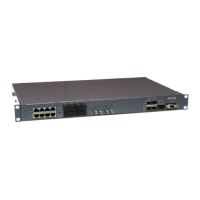
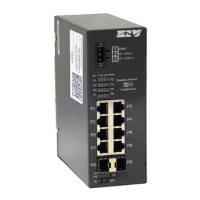
SW3
GIGABIT/FAST ETHERNET SWITCH TYPE SW3 (DIN) 43/122
USER GUIDE - M0SW3D1905Iv04 - V04 May 2019
Q in Q (Double tagging):
• S-TAG type. This parameter allows the user to set up the ‘ethertype’ field to be used
in the service tag or provider, and which allows to identify that a frame includes
double tagging. The default value is 0X88A8 according to the standards.
5.5 VLAN CONFIGURATION
A Virtual Local Area Network (VLAN) can be defined as a series of devices connected in a
network which belong to one Local Area Network, even though they are connected in
different interconnection units, remote geographical zones, different floors of a building or
even different buildings. In other words, a VLAN is a network with logical groups which are
physically independent.
Each VLAN is distinguished from the rest by a specific identifier, usually called a VLAN tag,
which is specified in standard IEEE 802.1q. The tag allows several VLANs to share
resources, including switching devices such as the SW3, or links between switching units,
with the guarantee that the traffic from each VLAN will reach the correct destination.
The fact that in relation to the equipment, the definition of the VLAN and assigning of the
ports to each one is done based on configuration parameters offers great flexibility, as it is
possible to alter the topology of the VLANs without having to make changes to the
infrastructure.
The SW3 offers two different operation modes that cannot be used simultaneously,
regarding the Level 2 switching operation. These modes are:
Standard operation, that is, one or more independent switches with individual
assignment of each Ethernet interface to one of the VLAN configured.
Operation as a switch PVLAN (RFC 5517). In this case, it is necessary to identify the
Primary VLAN and the different Secondary VLANs. Interfaces keep being assigned
individually to different VLANs.
Default behaviour is to operate as a standard switch.
An enable object is provided to activate PVLAN function.


 To Next Page