SW3
GIGABIT/FAST ETHERNET SWITCH TYPE SW3 (DIN) 47/122
USER GUIDE - M0SW3D1905Iv04 - V04 May 2019
Private VLAN:
The PVLAN operation is configured in this section. PVLAN allow the user to employ a
single IP address range for a whole L2 domain while keeping privacy among different
VLANs.
PVLAN defines three types of VLAN: Primary, Isolated and Community. To these three
standard types, a fourth special type called Isolated Community has been added.
There are five behaviours for the interfaces: Promiscuous, Isolated, Community, Isolated
Community and Trunk. The first four are for the four types of VLAN indicated, whilst the fifth
allows the operating space to include more than one device.
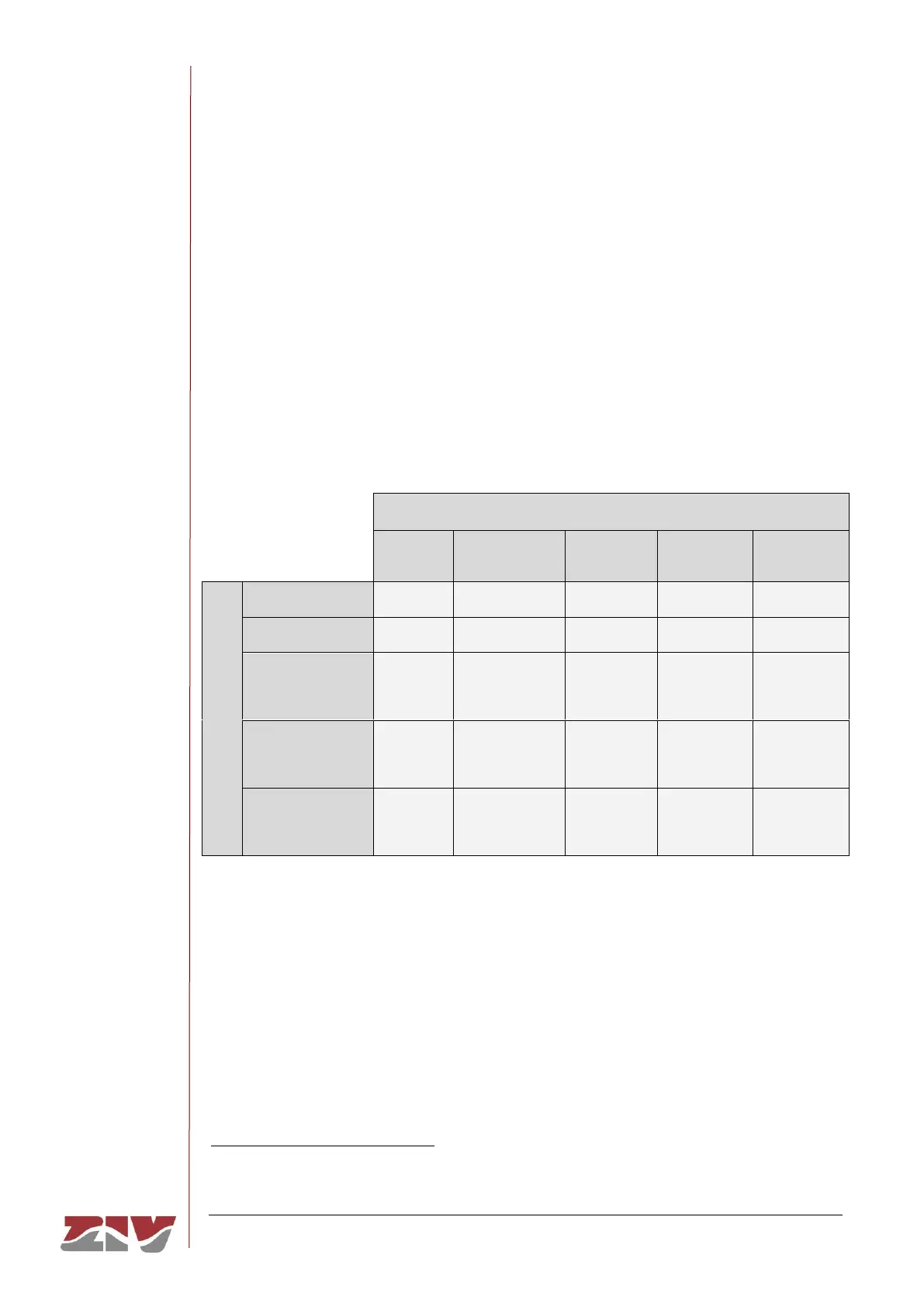
The traffic which can flow between all these ports are conditioned by the behaviour
assigned to the following table.
The VLAN definition operates in the usual way, each one having its own IP address, mask,
etc. It is necessary to register all the vlan that will be used in the device, even those that are
desired to be processed only at level 2 or in transit.
User has special fields to identify Primary VLAN, Isolated and Isolated Communities, see
FIGURE 23. Any VLAN defined different from selected ones for Primary, Isolated or one of
the Isolated Communities will be considered to be Community.
Each Edge port behaves accordingly to which VLAN is included. Trunk ports are configured
selecting Trunk function to them.
Traffic received from a Trunk will be denied if it belongs to an Isolated Community VLAN. It will only be permitted if it
belongs to the primary VLAN.


 To Next Page