EasyManua.ls Logo

Zoeller MEDIUM X2 - User Manual

Zoeller MEDIUM X2
63 pages
Print Icon
To Next Page IconTo Next Page
Loading...
Operating manual
MEDIUM X2
MEDIUM X4

Table of Contents

Questions and Answers

  • E
    Edward BrownAug 20, 2025
    How to troubleshoot a decrease in power or operating speed in Zoeller Industrial Equipment?
    • K
      Kelsey DrakeAug 20, 2025
      If you notice a decrease in power or operating speed, several factors could be the cause. First, verify the engine speed, ensuring one loading cycle lasts approximately 22 seconds. Next, check the hydraulic oil tank level and top up the oil to the recommended level if it's too low. Also, inspect the oil for excessive foam. If foam is present, consider using the recommended oil type, changing the oil, and replacing seals. Check connections and tighten them if necessary.
  • B
    Brandi ShermanAug 22, 2025
    Why is my Zoeller MEDIUM X2 hydraulic installation making loud noises?
    • C
      Christy WilsonAug 22, 2025
      Loud noises in the hydraulic installation can stem from several issues. Start by checking the oil level with retracted cylinders and top up if necessary. Air or water in the hydraulic oil can also cause noise, so bleed the system or replace the oil if needed. Inspect the suction hose in the tank for leaks, tightening screw connections or replacing the hose if necessary. Finally, check for vibrating hoses and tighten the fastening clamps, using appropriate washers like rubber if needed.
  • J
    Jasmine JonesAug 25, 2025
    What to do if the compaction mechanism on my Zoeller MEDIUM X2 Industrial Equipment doesn't start after pressing the START button?
    • L
      Linda AllenAug 25, 2025
      If the compaction mechanism fails to start, first ensure that the emergency STOP hasn't been activated; if it has, unlock it. Next, check the supply voltage, ensuring it's not too low (U
  • E
    elizabeththompsonAug 26, 2025
    Why is the hydraulic oil in my Zoeller Industrial Equipment too hot?
    • J
      jimenezmichelleAug 26, 2025
      If the hydraulic oil is overheating, it could be due to a damaged hydraulic pump, which should be replaced by a service center. Another potential cause is using the wrong type of oil or old oil. In this case, check the oil viscosity and purity, and replace it if necessary.
  • G
    Gabriel CarpenterAug 27, 2025
    Why is the compaction mechanism on my Zoeller MEDIUM X2 moving very slowly?
    • W
      William GonzalesAug 28, 2025
      A slow-moving compaction mechanism can arise from several causes. It could be due to a damaged hydraulic pump, which should be replaced by a service center. Check for leaks in the hydraulic system and ensure the hydraulic components are tight. Verify that you're using the correct oil type and that the oil is not old; replace it if necessary. If the installation is too cold, bring it to operating temperature.
  • J
    Juan JonesAug 29, 2025
    What causes hydraulic oil leaks from the tank in Zoeller MEDIUM X2?
    • J
      Jason Snyder DVMAug 29, 2025
      Hydraulic oil leaks from the tank can occur due to several reasons. Check for a loose closing plug or a damaged seal and tighten the plug or change the seal accordingly. Also, inspect the ventilation filter to ensure it is tight. Finally, verify that the oil level is not too high by checking it with retracted cylinders and drain some oil if necessary.
  • B
    benderthomasAug 31, 2025
    Why is hydraulic oil appearing on the hoses of my Zoeller Industrial Equipment?
    • S
      Sherri ParkerAug 31, 2025
      If hydraulic oil is appearing on the hoses, it's likely due to loose screw connections, so tighten them. Alternatively, the hoses may be damaged, in which case they should be replaced.
  • D
    daviserikaSep 3, 2025
    What should I do if pressing the button on the manual control of my Zoeller MEDIUM X2 does not start the function?
    • E
      ewolfeSep 3, 2025
      If pressing the button doesn't initiate the function, begin by checking the electrical installation to ensure there is sufficient controlling voltage (more than 20V) and that the button is not damaged. Also, check the solenoid valves for damage or jamming.
  • T
    Tony BennettSep 4, 2025
    Why is hydraulic oil leaking from the valves in my Zoeller MEDIUM X2?
    • J
      josehicksSep 4, 2025
      If hydraulic oil is leaking from the valves, it could be due to leaky closing screws, so try tightening them. Alternatively, the control valves themselves may be leaky, requiring replacement of the seals and possibly the valve itself.
  • B
    Brandi RomeroSep 6, 2025
    What to do if the compaction mechanism on my Zoeller MEDIUM X2 Industrial Equipment stops at one of the 4 end positions in automatic or semi-automatic mode?
    • C
      Cindy GibsonSep 6, 2025
      If the compaction mechanism stops at one of the four end positions, start by cleaning the limit switches and check for a short to ground. Also, check the LEDs in the control box. If the issue persists, the electronic control system may be defective and require replacement.

Summary

Guide

Symbols Used in this Manual

Explains symbols used in the manual for orientation and important information.

Vehicle Identification Data

Rating Plate

Details information on the RCV rating plate, including type, serial number, and production date.

Safety Instructions

Terms of Use

Defines the intended purpose and authorized operators for the refuse collection vehicle.

Improper Use

Lists forbidden materials and conditions for operating the RCV.

Residual Risks During Operation

Outlines potential hazards and risks that may occur during vehicle use despite precautions.

General Safety

Provides general safety rules and requirements for operating the RCV.

Operational Safety

Emergency Stop Button

Explains the function and location of emergency stop buttons for immediate mechanism shutdown.

Release Button

Describes the function of the release button for freeing trapped individuals and its interaction with the emergency stop.

Emergency Response Procedures

Provides step-by-step instructions for responding to emergency situations involving the vehicle.

Additional Safety Instructions

Offers further safety advice, including visibility, lighting, and handling power failures.

Health and Safety Issues

Personal Protective Equipment

Details required personal protective equipment (PPE) for various work scenarios.

Warning Labels

Technical Data

Dimensions, Masses and Additional Information

Lists key technical specifications and documents provided with the vehicle.

Noise

States the noise level testing standard and where obtained values are located.

Hand-Arm and Whole Body Vibrations

Reports on vibration measurements for arms, hands, and whole-body exposure.

Vehicle Components and Controls

Main Components

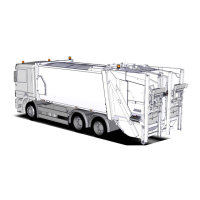
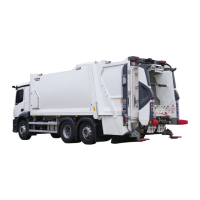
Identifies and illustrates the primary components of the refuse collection vehicle.

Terminal

Details the components and functions of the ZCS terminal in the driver's cab.

Control Panels

Illustrates and describes the left and right control panels on the vehicle.

Lowering the Tailgate

Explains the procedure and safety requirements for lowering the tailgate using dual-hand controls.

Safety Devices

Describes various safety features like warning labels, footboards, and camera systems.

Operating Instruction

Operating Hazards

Lists specific hazards and safety requirements during the operation of the refuse collection vehicle.

Emergency Actions During Operation

Outlines emergency procedures, including the use of stop, release, and signal buttons.

Start

Provides a step-by-step guide for starting the vehicle engine and body operations.

End of the Workday

Details the procedure for safely parking and shutting down the RCV at the end of the workday.

Loading

Describes the four stages of the waste loading process, including compaction.

Travelling

Advises on setting the compaction mechanism for long drives.

Bulky Waste Collection

Explains how to temporarily use the mounting frame for bulky waste collection.

Discharging

Explains the process of unloading waste from the vehicle.

Safety During Unloading

Lists critical safety instructions to be followed before and during the unloading process.

Unloading Mode - Outside Control Elements

Details operating the tailgate and pushing wall using outside controls during unloading.

Additional Equipment

Shovel and Broom Handle

Describes how to attach and use shovels and brooms on designated handles.

Hydraulic Oil Level Monitoring

Explains how the terminal indicates hydraulic oil level or filter status.

Axle Load Signalling

Describes how axle load status is displayed on the terminal and its effect on body functions.

Liquid Drainage Valve

Explains the function of drainage valves for collecting liquid waste.

Additional Working Lights

Explains how to operate additional working lights on the tailgate or body.

Inspection Door Ladder

Details how to unfold and use the folding ladder for accessing the inspection door.

Handle Heating

Explains the operation of handle heating for the tailgate in cold conditions.

Hydraulic Installation Covers

Describes the purpose and maintenance of hydraulic installation covers, especially for CNG systems.

Maintenance

Maintenance Safety

Outlines essential safety precautions and general rules for performing maintenance work.

Residual Risks During Maintenance

Identifies potential non-obvious hazards during maintenance, such as oil jets or system failures.

Test of Warning Signals

Instructs on checking the proper functioning of various auditory and visual warning signals.

Maintenance Plan

Provides a detailed schedule of maintenance actions and responsible persons for everyday tasks.

Table of Consumables

Lists applications, quantities, specifications, and viscosity for hydraulic oil and grease.

Cleaning

Recommends daily cleaning procedures for the tailgate and body.

Hydraulic Installation

Provides information on the vehicle's hydraulic system.

Notes on Hydraulic Oil

Provides critical safety notes and information regarding hydraulic oil handling and contamination.

Mixing Hydraulic Oils

Warns against mixing different types of hydraulic oils and recommends compatible types.

Checking the Hydraulic Oil Level

Explains how to check and refill the hydraulic oil level, emphasizing cylinder retraction.

Hydraulic Oil Change

Details the procedure for changing hydraulic oil, including filter replacement.

Lubrication

Describes the process of lubricating vehicle components.

Central Lubrication System

Describes the optional central lubrication system, its components, and filling procedure.

Fuses

Lists fuses located in the battery box/driver's cab and their rated currents.

Lifter

Technical Data of Lifters

Provides hydraulic and electrical technical data for lifters as per EN 1501-5 standard.

Dismantling of the Mounting Frame

Outlines the steps for removing the mounting frame with the lifter for bulky waste collection.

Possible Faults

Error Message at Terminal

Explains how error messages and operating conditions are displayed on the terminal.

System Errors

Describes system errors detected by the electronic security system during self-diagnosis.

Messages on Operating Conditions and Errors

Details messages related to operating conditions and error causes shown on the terminal.

Troubleshooting

Presents a table of faults, their causes, rectification methods, and responsible persons.

Contact

Annex - Safety Test

Zoeller MEDIUM X2 Specifications

General IconGeneral
Horsepower0.5 HP
Phase1
Motor Housing MaterialCast Iron
Discharge Size1.5 in NPT
Switch TypeAutomatic