T720 Series Microscope
AmScope Proprietary Page 43 of 46
Light Bulbs-Caution
1. Turn off the microscope when not in use to preserve the life of the bulb.
2. Never touch a light bulb directly, especially when it’s turned on.
a. The light bulbs can get hot enough to burn skin. Wait until the bulb has cooled
completely before handling it.
b. The oil from your skin will create a hot spot on the bulb which will damage the
glass, dramatically shortening the life of the bulb.
c. When changing light bulbs cover skin with cloth or paper to handle the bulb.
This will protect both you and the bulb.
3. Hot bulbs will not damage the microscope. AmScope’s microscopes are designed
specifically to handle the heat output of the model’s bulb.
Lighting-Types
Tungsten
Tungsten light bulbs are the most economical, providing a reliable
source of light. They burn hotter than the other bulbs, but are the best
option for certain microscopes.
Fluorescent
Fluorescent bulbs burn cooler and brighter than tungsten bulbs. The
bulbs are more expensive than tungsten, but
last longer.
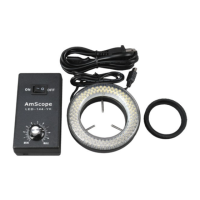
LED
LED light bulbs burn the coolest of all the bulbs and last the longest.
The bulbs are also the most expensive. Depending on use, LED
lights should last about 40,000 hours.
Halogen
Halogen light bulbs produce the most amount of light. The light is
very white and concentrated; the bulbs can get very hot and must be
cooled regularly. Depending on use, halogen light bulbs can last
anywhere from 1 week to 6 months.
Fiber Optic
Fiber optical lighting uses a system of flexible transparent fibers
made of plastic or glass. The light is transmitted between the two
ends of the fiber, allowing for greater illumination in confined spaces.



 To Next Page