68 IMGT30017EN
6A.6 SAFE STOP BOARD
Introduction
For the detailed description and operating instructions refer to:
O P E R A T I N G I N S T R U C T I O N S S A F E T Y F U N C T I O N : “STO”SAFE TORQUE OFF FOR GT3000 INVERTER
Number Rev. Date
MIM046 14 09/01/08
The "EC Declaration of Conformity" shall apply providing that all the operating conditions described in this document are complied with.
6A.6.1 Identification procedure for the safety function
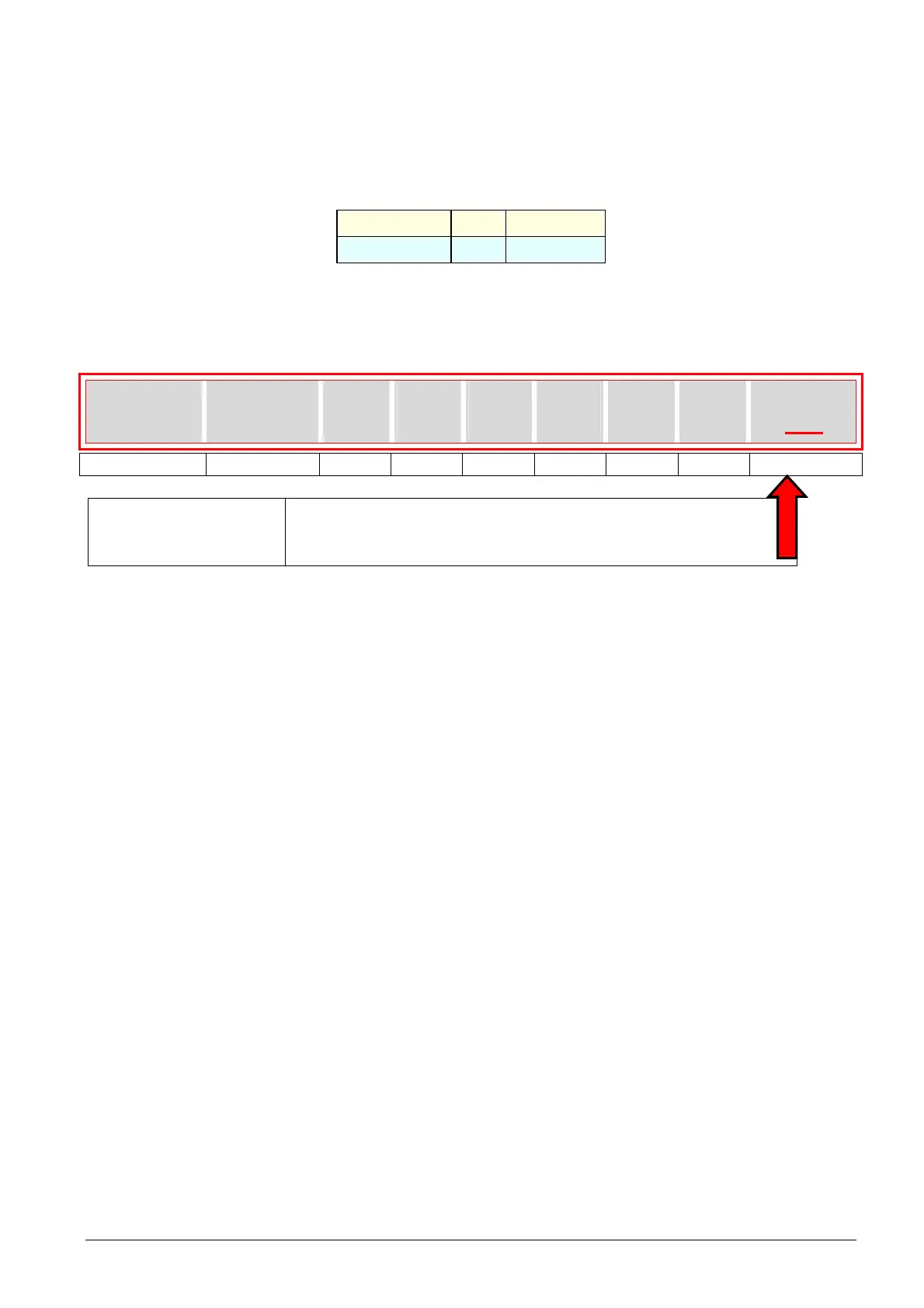
The components related to the function are installed inside the drive in our works and the presence of the same in the drive is identified by the
suffix “70” of the identification code of the drive.
SVGT 166 F E N F N N
70
1,2,3,4 5,6,7 8 9 10 11 12 13 14,15
Suffix
(Special options)
Absent (standard drive)
21= Bus DC supply with internal precharge
70= SAFE TORQUE OFF Function
6A.6.2 Application field
The STO safety function has been conceived to ensure the "SAFE TORQUE OFF" function with inverter-supplied asynchronous motors.
If the STO function is enabled, no rotating field is generated in the motor connected to the inverter.
The safety function is activated by two independent channels, which feature a different technology.
The first channel de-energizes – by a safety relay – the electronic devices (drivers, photocouplers, optical fibres, buffers), which send control
pulses to the power section; in these conditions, even if the regulation electronics generate control pulses, the power section would no longer
move the connected motor.
The other channel prevents both pulse generation by the microprocessor and pulse propagation to the control section.
With reference to the block diagram below, safety relay RL1 has two contacts (open/closed), which are mechanically connected in such a way
that they cannot be opened or closed at the same time even in case of failure (e.g. open/closed glued contacts). The NO (Normally Open)
contact powers the drive, while the NC (Normally Closed) contact ensures signalling for monitoring the state of the safety function by an
external system.
The activation state of the second channel is signalled by a digital output of the micro, which controls the rl2 relay.
6A.6.2.1 Safety functions and relevant levels
The "STO" safety function has been designed to prevent the unexpected start-up of the motor. A motor, when off, can be put in the state of
"SAFE TORQUE OFF" by the “STO” safety function. In this condition, also in the absence of a galvanic separation between motor and
inverter or network and inverter, some mechanical works can be performed on the actuator.
Warning!!
In the "SAFE TORQUE OFF" state the motor’s terminals are not isolated from the mains and therefore they could be live!
The “STO” function has been designed to prevent the unexpected start-up of the motor, and not to stop it: if activated while the
motor is revolving, it will be stopped in an uncontrolled way. If an uncontrolled stop is not desired, complete a stop sequence before
enabling the “STO” function.
A motor in the "SAFE TORQUE OFF" state may not generate any torque. In order to stop a revolving motor with a load torque
applied to the axis, install a mechanical brake.
There is a residual risk: in the event of a simultaneous failure of two IGBTs, the motor may have – up until the activation of the
drive/fuse protection devices – a small rotation angle (360°/2P, with P = number of couples of poles in brushless motors, a tooth
pitch in induction motors) even if the "SAFE TORQUE OFF" function is enabled.
The STO function:
complies with EN 60204-1:2006, paragraph 5.4 "Devices for switching off for prevention of unexpected start-up", but does not
comply with paragraph 5.3 "Devices for isolation and switching";
fits for the stop function according to categories 0 - 1 in accordance with EN 60204-1, paragraph 9.2.2.;
can meet the safety requirements of the harmonized standard UNI EN 954-1:1998 categories 3 or 2, as regards the restart block
according to the configuration mentioned in paragraph 2.2.


 To Next Page