WARNING
The device must not be stacked/collocated or in combination with other devices. If the
device is operated close to or with other devices, you must check that the device is
working properly in this arrangement.
2.5 Laser
2.5.1 Optical hazards caused by laser emission
Lasers are classified in accordance with their potential for danger. The most dangerous class is
class 4 (the least dangerous class 1).
WARNING
The device is a class 4. That means that direct and even scattered laser radiation from
the device can cause serious damage to the eyes if it is operated improperly.
The protection measures described below must be strictly observed.
It is particularly important that all persons in the room in which the laser is operated put
on appropriate eye protection while the laser is in operation.
For fundamental rules on the handling of laser devices, you should refer to the international
standard EN 60825. It is complemented by national regulations providing general protection from
dangerous laser radiation. Their purpose is to protect operating personnel and patients during
medical applications.
Please follow specific national regulations that may be valid for your location.
It is highly recommended that you follow the rules specified below:
1. A laser protection officer should be appointed in writing, having at least the following
responsibilities:
• monitoring of laser operation,
• supporting the user on safe operation issues and necessary protective measures,
• cooperating with expert personnel on occupational safety in fulfilling their tasks,
including information about important laser radiation protection issues.
2. Laser area
During operation, the area where the maximum permissible radiation level may be
exceeded, i.e. the so-called laser area must be delineated and marked with a laser
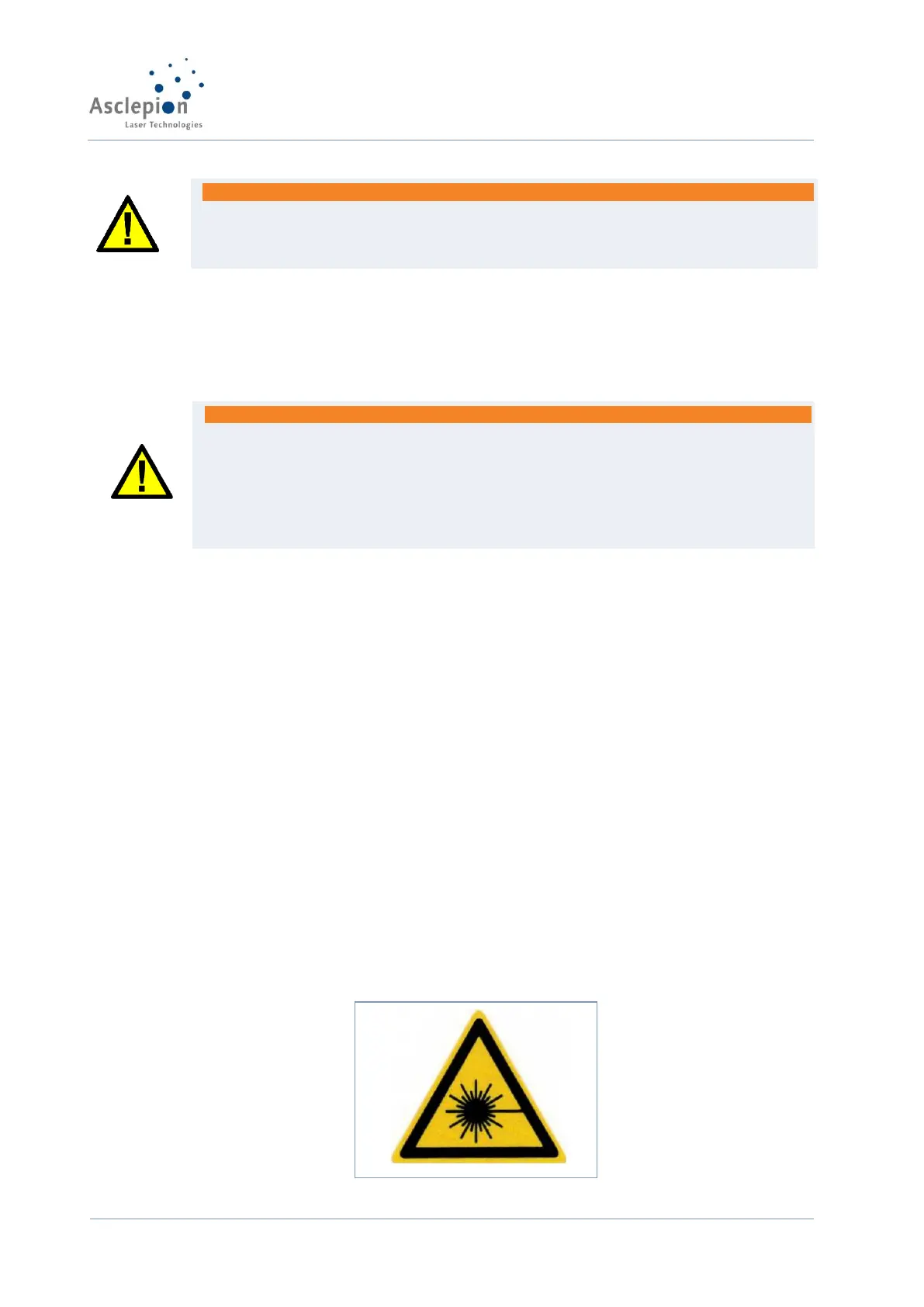
warning sign. The laser area is the room in which the laser is used. Warning lights and a
yellow triangular laser warning label must be provided at all access points.
Figure 1: Laser warning label (European)


 To Next Page