Need help?
Do you have a question about the Avidyne IFD550 and is the answer not in the manual?
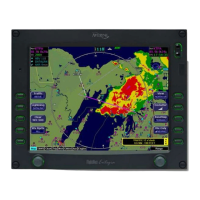
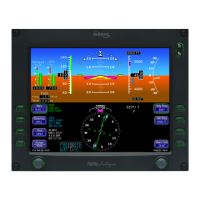
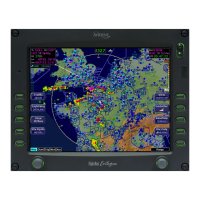
Describes the intended purpose and capabilities of the Avidyne IFD5xx series of equipment.
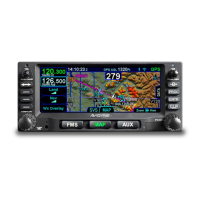
Details the Avidyne IFD540 as a GPS, VHF Communication, and VHF Navigation transceiver.
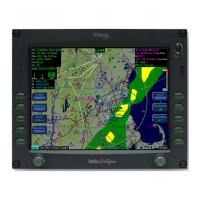
Explains the IFD510, noting the absence of an internal VHF transceiver and differences in bezel layout.
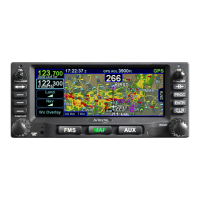
Describes the IFD550, highlighting its GPS, VHF Communication, and VHF Navigation capabilities.
Lists the various functions supported by the Avidyne Integrated Flight Display (IFD) system.
Explains how to power the IFD unit on and off, including the manual power down procedure.
Details the step-by-step process the IFD follows during its startup sequence.
Describes the various database currency states that may be observed at startup.
Explains the VHF system's communications and navigation receiver capabilities and frequency display.
Details the IFD's capacitive touch screen technology and its hybrid touch design.
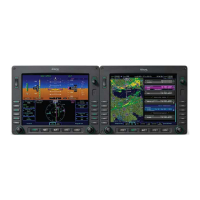
Discusses how two IFDs can work together, covering data sharing and keyboard convenience mode.
Describes the Synthetic Vision (SynVis) page display, including TVV/FPM and horizon line indicators.
Explains how obstacles are depicted in the SynVis scene with threat bubbles based on proximity and altitude.
Details how terrain awareness is indicated by hatched hatched indications on SynVis and map pages.
Explains FLTA alerting triggered by projected imminent impact with terrain or obstacles.
Describes how flight plans are depicted in the SynVis scene during approaches and deviation indicators.
Covers the Flight Plan (FPL) tab, including basic concepts, flight plan rows, and coloring.
Details the process of creating a new flight plan, including automatic origin population.
Explains the Direct-To function for navigating to waypoints not currently in the flight plan.
Describes how to enter and intercept radials using the FMS Course function.
Explains how to add a holding pattern to any waypoint that has a fix terminated leg.
Details how to select and fly published approaches, including Vectors-to-Final and visual approaches.
Describes the map's formats, views, controls, and the next leg depiction on the map.
Explains how to graphically alter a flight plan by touching and dragging legs or waypoints on the map.
Covers interfacing with datalink weather receivers and details associated weather products.
Details how traffic information is displayed, including basic and ADS-B directional traffic symbols.
Describes the graphical representation of aircraft height above terrain and obstacles shown as colored overlays.
Explains the Terrain Awareness and Warning System (TAWS-B) functions like PDA, EDR, and NCR.
Covers displaying geo-referenced Jeppesen charts and airfield diagrams, including hot links to charts.
Provides control and display of system audio features like radio volume and squelch settings.
Details the available calculators, including Air Data, Fuel Planner, Weight, and Trip Planners.
Explains how to create, edit, select, and use electronic checklists within the IFD system.
Provides capabilities to tailor the IFD's look and feel, including display and control preferences.
Controls whether the IFD issues visual and/or aural alerts for various events.
Manages Bluetooth and WiFi capabilities, including network setup and device connections.
Controls the appearance and behavior of the IFD front panel display, including touch screen and brightness.
Manages the appearance and behavior of the FMS, including VNAV settings.
Allows high configurability of the IFD moving map, including map layers and orientation.
Provides access to software status, datalink status, GPS status, and database status pages.
Explains how to select the Nav Source for depicted data on the moving map.
Describes the OBS (Omni Bearing Selector) mode for waypoint course setting.
Provides shortcuts for typical FMS actions on the FPL tab based on flight state.
Details the settings for transition altitude and level alerts and manual/automatic configuration.
Guides on selecting and flying published approaches, including Vectors-to-Final and visual approaches.
Explains how the IFD provides vertical navigation during descent operations via VNAV.
Details the four levels of CAS message alerting: Warnings, Cautions, Advisories, and Notices.
Lists critical system warnings that require immediate action or attention.
Details system cautions requiring immediate attention and proper recovery maneuvers.
Covers various system failures like Loss of IFD, Display, Bezel Controls, Touchscreen, and GPS.
Explains how to start and exit maintenance mode for configuration, updates, and log downloads.
Describes the process for updating nav, chart, obstacle, and terrain databases via USB.
Provides instructions for pairing a remote Bluetooth keyboard with the IFD.
Offers guidance on safely cleaning the IFD touch screen display using recommended solutions.
 General
| Display Type | LCD |
|---|---|
| SBAS | Yes |
| COM Transceiver | Yes |
| NAV Receiver | Yes |
| Airways | Yes |
| GPS Receiver | Built-in |
| ADS-B | Yes |
| Operating Temperature | -20°C to +55°C |
| Storage Temperature | -40 to +70 °C |
| Interface | ARINC 429, RS-232, USB, Ethernet |
| Navigation Databases | Jeppesen |
| Certification | TSO-C146c |

 To Next Page