
 Need help?
Do you have a question about the Avidyne Entegra and is the answer not in the manual?
Describes the system's redundancy features and dual-databus architecture for reliability.
Explains how to access and use the full-page electronic checklist on the MFD.
Guides on entering the intended flight plan into the FMS during ground operations.
Explains how to perform Com radio tuning and Transponder code input using the keyboard.
Recommends setting autopilot target bugs before takeoff using keyboard controls.
Guides on how to lean the engine for best power or best economy using the SYS page.
Covers various FMS operations including modifying flight plans and creating routes.
Recommends maximizing FMS and autopilot NAV/VNAV mode combination for workload reduction.
Explains Synthetic Vision as a situational awareness aid for terrain, obstacle, and traffic.
Details how SV-TA provides awareness of terrain through hatched indications on SynVis and map pages.
Guides on ensuring the approach is entered, active, and correctly set for autopilot coupling.
Details how precision approaches are flown using FMS as the primary Nav source.
Explains non-precision approaches, recommending VS mode for controlled descents.
Describes SBAS approaches (LPV, LNAV/VNAV) as preferred options with vertical guidance.
Guides on flying published missed approaches, including coupled and ATC-assigned climb-outs.
Explains how to retry a Vectors-To-Final approach if a published missed approach is loaded.
Details the Caution-Warning Alerting System (CAS) with three levels of message alerting.
Explains how IFDs compare data for fault detection and the parameters constantly checked.
Describes the IFD's self-check monitor that detects conditions without warranting data removal.
Explains how to determine IFD loss and system behavior changes, including autopilot operations.
Describes the impact of losing one IFD in a 3-IFD system on overall functionality and redundancy.
Explains indications of display loss and system functionality remaining despite no working display.
Details indications of keyboard loss and how functions can be accomplished through displays.
Describes system behavior and pilot actions during a loss of one ADAHRS in a dual system.
Explains the impact of losing the single AHRS and transitioning to backup instruments.
Describes indications of engine data loss and actions to take when no usable data is present.
Guides on performing periodic updates for nav data, charts, and obstacle data via USB.
Explains how to download system, flight, and engine logs from the IFDs for analysis.
Notes that software updates are performed by authorized service centers due to FAA requirements.
Details the impact of IFD and ADAHRS failures, noting no loss of function due to redundancy.
Explains the EVS tab, presenting IR camera images adjustable for contrast and brightness.
Guides on setting autopilot target bugs before takeoff using keyboard controls for Altitude and Heading.
Details using Vectors mode to temporarily divert from a flight plan without modifying it.
Enables viewing and editing flight plans, expanding/compacting procedures, and connecting waypoints.
Presents the Enhanced Vision System (EVS) IR image from the camera on the full-page display.
Lists exceedances and warnings categorized as RED, with short text, long text, and applicable aircraft.
Lists exceedances and cautions categorized as YELLOW, with short text, long text, and applicable aircraft.
Lists exceedances and advisories categorized as CYAN, with short text, long text, and applicable aircraft.
Shows system alerts, including warnings, cautions, and advisories, in a dedicated tab.
 General
| Backlighting | LED |
|---|---|
| Screen Size | 10.4 inches |
| Interfaces | ARINC 429, RS-232 |
| Input Voltage | 28 VDC |
| Operating Temperature | +55°C |
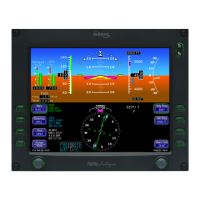
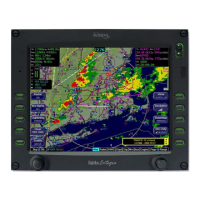
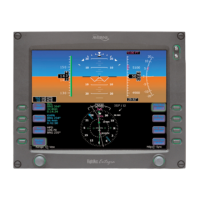
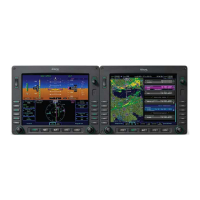
| Components | Primary Flight Display (PFD), Multi-Function Display (MFD) |


 To Next Page