Need help?
Do you have a question about the BIFFI F02 and is the answer not in the manual?
Identifies the manufacturer and relevant directives.
Defines the intended applications and scope for the actuator.
Outlines warranty, conditions, and responsibilities.
Specifies conditions under which the manufacturer disclaims liability.
Details how to identify actuator models and specifications.
Describes IP/NEMA ratings and label details for water/dust-proof versions.
Details specifications for hazardous areas.
Explains labeling for explosion-proof actuators.
Lists relevant industry standards and directives.
Provides an excerpt from a standard related to hazard zones.
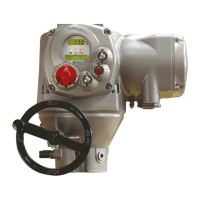
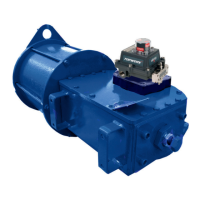
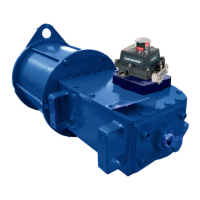
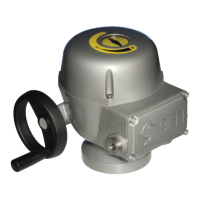
Provides a general overview of the F02 quarter-turn electric actuator.
Explains how the actuator's internal gearing and position detection work.
Describes how electrical commands control valve open/close operations.
Details how to operate the actuator manually using the handwheel.
Identifies and describes the key components of the F02 actuator.
Lists essential checks upon receiving the actuator to ensure correctness and prevent damage.
Provides guidelines for proper storage to maintain actuator condition.
General storage considerations for maintaining IP rating and finish.
Specific instructions for short-term storage, indoor and outdoor.
Instructions for long-term storage, both indoor and outdoor.
Pre-installation checks for coupling, cables, tools, and valve stem preparation.
Specifies environmental temperature and humidity ranges for standard and special versions.
Describes the actuator's drive details and flange for valve installation.
Step-by-step guide for mounting the actuator onto the valve, including rotation direction.
Explains the use of the handwheel for manual override during power failure or setting.
Details how to adjust mechanical stops for fully open and closed valve positions.
Guides on checking supply voltage and making electrical connections safely.
Lists necessary protection devices from the customer for main lines.
Instructions on how to safely remove the terminal board enclosure.
Procedures for connecting cables, including using certified accessories and ensuring weatherproof/explosionproof fit.
Illustrates the base wiring diagram for power, remote commands, and output contacts.
Explains proper sealing of cable and conduit entries for weather and explosion protection.
Critical safety guidelines for installing actuators in hazardous zones.
Specific instructions for handling and reassembling explosionproof enclosures.
Special precautions for installing actuators in environments with explosive dusts.
States the actuator is grease lubricated for life and recommends specific grease for maintenance.
Steps to remove the control unit cover to access the setting panel.
Procedures for configuring actuator settings via the local control panel.
Details the default factory settings for parameters like limit switches and stroking time.
Instructions on selecting the correct actuator model using selector switches.
Setting close and open limit switches based on torque or position.
How to select the stroking time for closing and opening operations.
Setting the torque limit for closing and opening manoeuvres.
Configuring reverse mode and actuator settings via PDA/PC software.
Guidelines for routine and special maintenance, including checks and spare parts.
Comprehensive guide to diagnosing and resolving common actuator operational issues.
Troubleshooting electronics not switching on and DC output voltage problems.
Diagnosing issues with remote controls, motor operation, and valve movement.
Resolving problems with valve seating, excessive torque, and stopping at end positions.
Provides detailed lists of all components for different actuator models.
 General
| Brand | BIFFI |
|---|---|
| Model | F02 |
| Category | Controller |
| Language | English |

 To Next Page