Need help?
Do you have a question about the BIFFI F01-2000 and is the answer not in the manual?
Provides fundamental guidance for installing the electric actuator.
Introduces topics related to operating and setting up the actuator.
Covers essential procedures for maintaining and resolving issues with the actuator.
Information on obtaining replacement parts and visual documentation.
Defines the intended use and scope of the electric actuators.
Safety precautions for installing actuators in potentially explosive environments.
Lists relevant safety and machinery standards the actuators comply with.
Outlines Biffi's warranty policy and limitations for the product.
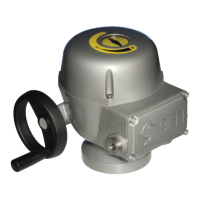
Illustrates and labels the key physical components of the electric actuator.
Procedures for verifying the actuator's condition upon delivery.
Guidelines for proper storage to maintain actuator integrity over time.
Essential checks before mounting and connecting the actuator.
Specifies the environmental temperature ranges for standard and special actuator versions.
Instructions for removing the coupling block for machining or assembly.
How to manually control the actuator using the handwheel safely.
Steps and considerations for securely attaching the actuator to the valve.
Details on connecting power and signal wires to the actuator terminals.
Guidelines for safely removing and reinstalling electrical enclosure covers.
Proper methods for sealing and securing cable entries for protection.
Instructions for making ground and power/control connections at the terminal board.
Specific procedures for handling and reassembling explosionproof enclosures.
Precautions for installing actuators in areas with explosive dusts.
Recommends oils and greases for actuator maintenance based on temperature.
How to manually operate the actuator using its handwheel.
Procedure for adjusting the actuator's end-of-travel limits.
Initial steps and checks before powering up the actuator electrically.
Using local pushbuttons to control the actuator's open, close, and stop functions.
Understanding the information shown on the actuator's local alphanumeric and numeric displays.
Method for securing the selector switch in a specific position using a padlock.
How to control the actuator remotely via various wiring configurations.
Initial start-up sequence and expected display messages for new installations.
Information on available optional interface and I/O cards.
Details about the actuator's main control board and its variants.
Detailed explanation of the buttons, display, and LEDs on the actuator's local interface.
How to access and modify actuator settings via the local interface menus.
Procedure to access read-only menus for viewing actuator status and configuration.
Steps to enter configuration mode, including password entry.
Methods for safely exiting the local interface's view and configuration modes.
Configuration options for actuator parameters like stroke limits, torque, and ESD.
Entering specific data related to the valve the actuator is mounted on.
Accessing routines for password setting, alarm log clearing, and date settings.
Viewing the current configuration of actuator settings.
Accessing and reviewing the actuator's identification and specification data.
Accessing and checking the data entered for the connected valve.
Accessing logs and dates related to actuator maintenance history.
Configuring the actuator's open and close travel limits by position or torque.
Setting the torque limits for opening and closing operations.
Configuring the Emergency Shut Down (ESD) function and its priorities.
Configuring how the actuator responds to remote control signals (4, 3, or 2 wires).
Configuring local pushbutton behavior and LED colors.
Setting up monitor and auxiliary relays for status and diagnostic purposes.
Configuring the actuator's positioning behavior based on input signals.
Defining actuator response during loss of input signals (4-20mA or bus).
Setting up the analog output signal for position or torque.
Configuring inputs to inhibit actuator movement based on external signals.
Adjusting travel time using pulsed motor operation for opening/closing.
Configuring fieldbus communication parameters like node address.
Setting time, date, and other miscellaneous parameters.
Restoring the actuator to its default factory configuration.
Setting specific torque thresholds for different points in the valve stroke.
Configuring settings related to the presence and function of a lithium battery.
Configuring torque alarm masking during specific operational phases.
Setting the time threshold for detecting a jammed valve condition.
Accessing and reviewing configured actuator parameters without making changes.
Reviewing the actuator's identification and technical specifications.
Accessing and checking the data entered for the connected valve.
Accessing alarm logs, warnings, and other maintenance-related data.
Analyzing actuator performance by comparing current torque profiles to references.
Examining detailed torque measurements across the valve stroke.
Reviewing general and recent data logs for operational history.
Demonstrates the procedure for viewing torque set-up parameters.
Recommended periodic checks and actions for routine actuator upkeep.
Guidance for situations requiring specific maintenance beyond standard procedures.
Step-by-step instructions for safely changing the actuator's internal lithium battery.
Diagnosing and resolving problems related to the actuator's electronics not powering on.
Troubleshooting when the expected DC output voltage is not present.
Identifying issues preventing the actuator from responding to remote commands.
Diagnosing and addressing causes for the motor becoming excessively hot.
Troubleshooting steps when the motor runs but the valve does not operate.
Diagnosing and resolving problems with the valve not seating correctly.
Identifying and rectifying causes of excessive torque during valve operation.
Troubleshooting when the actuator fails to stop at fully open or closed positions.
Resolving the "E01" error code, typically related to stroke limit calibration.
Understanding and responding to actuator warning and alarm messages.
Overview of the chapter containing component diagrams and part numbers.
 General
| Brand | BIFFI |
|---|---|
| Model | F01-2000 |
| Category | Controller |
| Language | English |

 To Next Page