EasyManua.ls Logo

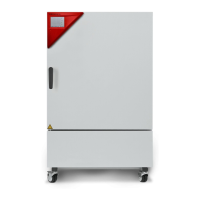
Binder KBF 1020 - User Manual

Default Icon
161 pages
Print Icon
To Next Page IconTo Next Page
Loading...
Issue 09/2021 Art. No. 7001-0319
Operating Manual
Translation of the original operating manual
KBF / KBF-UL (E6)
Constant climate chambers with program control
Model Model version Art. No.
KBF 115 KBF115-230V 9020-0320, 9120-0320
KBF 115-UL KBF115UL-240V 9020-0321, 9120-0321
KBF 240 KBF240-230V 9020-0322, 9120-0322
KBF 240-UL KBF240UL-240V 9020-0323, 9120-0323
KBF 720 KBF720-230V 9020-0324, 9120-0324
KBF 720-UL KBF720UL-240V 9020-0325, 9120-0325
KBF 1020 KBF1020-230V 9020-0326, 9120-0326
KBF 1020-UL KBF1020UL-240V 9020-0327, 9120-0327
KMF (E6)
Constant climate chambers
with enlarged temperature and humidity range
with program control
Model Model version Art. No.
KMF 115 KMF115-230V 9020-0341, 9120-0341
KMF115-240V 9020-0342, 9120-0342
KMF 240 KMF240-230V 9020-0343, 9120-0343
KMF240-240V 9020-0344, 9120-0344
KMF 720 KMF720-230V 9020-0345, 9120-0345
KMF720-240V 9020-0346, 9120-0346
BINDER GmbH
Address: Post office box 102, 78502 Tuttlingen, Germany Phone: +49 7462 2005 0
Fax: +49 7462 2005 100 Internet: http://www.binder-world.com
E-mail: info@binder-world.com Service Hotline: +49 7462 2005 555
Service Fax: +49 7462 2005 93 555 Service E-Mail: customerservice@binder-world.com
Service Hotline USA: +1 866 885 9794 or +1 631 224 4340 x3
Service Hotline Asia Pacific: +852 390 705 04 or +852 390 705 03
Service Hotline Russia and CIS: +7 495 988 15 16

Table of Contents

Questions and Answers

Summary

1. Safety

1.1 Personnel Qualification

Requirements for qualified personnel for chamber installation and operation.

1.7 General Safety Instructions on Installing and Operating the Chambers

General safety guidelines for chamber installation and operation.

1.8 Intended Use

Specifies the intended applications and limitations of the chambers.

1.9 Foreseeable Misuse

Lists potential misuses and associated risks of the chambers.

1.10 Residual Risks

Identifies unavoidable risks and necessary precautions during operation.

1.12 Measures to Prevent Accidents

Manufacturer's measures and user precautions to prevent accidents.

3. Completeness of Delivery, Transportation, Storage, and Installation

3.2 Guidelines for Safe Lifting and Transportation

Procedures for safe lifting, moving, and transporting chambers.

3.4 Location of Installation and Ambient Conditions

Requirements for installation site, ambient temperature, humidity, and distances.

4. Installation and Connections

4.3 Freshwater Supply

Procedures for connecting freshwater supply and water quality requirements.

4.4 Electrical Connection

Details on connecting the chamber to the power supply and voltage specifications.

5. Functional Overview of the MB2 Chamber Controller

5.1 Operating Functions in Normal Display

Overview of controls and displays in the normal operating mode.

5.2 Display Views: Normal, Program, and Chart-Recorder

Explains different display modes for chamber data.

5.4 Operating Modes

Details on available operating modes: Idle, Fixed Value, Timer, Time, Week.

5.5 Controller Menu Structure

Overview of the controller's menu hierarchy and navigation.

6. Start Up

7. Set-Point Entry in “Fixed Value” Operating Mode

7.1 Set-Point Entry via “Setpoints” Menu

How to enter setpoints for temp, humidity, and fan speed via the menu.

8. Timer Program: Stopwatch Function

9. Time Programs

9.4 Creating a New Time Program

Guide to creating and naming new time programs.

9.5 Program Editor: Program Management

Managing programs, including editing, copying, and deleting.

9.6 Section Editor: Section Management

Editing, copying, inserting, deleting, and adding program sections.

9.7 Value Entry for a Program Section

Entering values for duration, setpoints, and transitions in program sections.

10. Week Programs

10.3 Creating a New Week Program

Guide to creating and naming new week programs.

10.4 Program Editor: Program Management

Managing week programs, including editing, copying, and deleting.

10.5 Section Editor: Section Management

Editing, copying, inserting, deleting, and adding sections to week programs.

10.6 Value Entry for a Program Section

Entering values for weekday, start time, and setpoints in week program sections.

11. Notification and Alarm Functions

11.1.2 Alarm Messages

Details of alarm messages, their causes, and start times.

11.2 State of Alarm

Visual and audible indications of alarm states.

11.3 Resetting an Alarm, List of Active Alarms

How to acknowledge and view active alarms.

12. Temperature Safety Devices

12.1 Over Temperature Protective Device (Class 1)

Description of the internal class 1 over-temperature protection.

12.2 Overtemperature Safety Controller Class 3.1

Details on the electronic overtemperature safety controller.

12.2.1 Safety Controller Modes

Explanation of "Limit" and "Offset" modes for the safety controller.

12.2.2 Setting the Safety Controller

How to configure the safety controller's mode and setpoint.

12.3 Temperature Safety Device Class 3.3 (Option)

Description of optional over/under temperature safety devices.

12.3.1 Temperature Safety Device Class 3.1

Detailed guide on setting and checking the class 3.1 safety device.

12.3.2 Temperature Safety Device Class 3.2

Detailed guide on setting and checking the class 3.2 safety device.

13. User Management

13.1 Authorization Levels and Password Protection

Explanation of user authorization levels and password protection.

13.2 Log In

Steps for logging into the controller with user credentials.

13.5 Password Assignment and Password Change

How to assign and change passwords for authorization levels.

14. General Controller Settings

14.5 Network and Communication

Settings for network and communication interfaces.

14.5.2 Ethernet

Ethernet configuration including IP address and DNS settings.

14.6 USB Menu: Data Transfer via USB Interface

Transferring data and software updates via USB.

15. General Information

15.5 Self-Test Function

Performing automated checks for chamber functionality and fault analysis.

17. Humidification; Dehumidification System

17.1 Function of the Humidifying and Dehumidifying System

Explanation of how the humidity system works, including freshwater supply.

18. Defrosting at Refrigerating Operation

19. Options

19.1 APT-COM 4 Multi Management Software (Option)

Description of the APT-COM™ software for chamber management.

20. Cleaning and Decontamination

20.1 Cleaning

Guidelines for cleaning the chamber interior and exterior surfaces.

20.2 Decontamination; Chemical Disinfection

Procedures for decontamination and chemical disinfection of the chamber.

21. Maintenance and Service, Troubleshooting, Repair, Testing

21.2 Maintenance Intervals, Service

Recommended maintenance intervals and service requirements.

21.3 Simple Troubleshooting

Basic troubleshooting steps for common chamber issues.

23. Technical Description

23.4 KBF; KBF-UL Technical Data

Technical specifications for KBF/KBF-UL models.

23.5 KMF Technical Data

Technical specifications for KMF models.

Summary

1. Safety

1.1 Personnel Qualification

Requirements for qualified personnel for chamber installation and operation.

1.7 General Safety Instructions on Installing and Operating the Chambers

General safety guidelines for chamber installation and operation.

1.8 Intended Use

Specifies the intended applications and limitations of the chambers.

1.9 Foreseeable Misuse

Lists potential misuses and associated risks of the chambers.

1.10 Residual Risks

Identifies unavoidable risks and necessary precautions during operation.

1.12 Measures to Prevent Accidents

Manufacturer's measures and user precautions to prevent accidents.

3. Completeness of Delivery, Transportation, Storage, and Installation

3.2 Guidelines for Safe Lifting and Transportation

Procedures for safe lifting, moving, and transporting chambers.

3.4 Location of Installation and Ambient Conditions

Requirements for installation site, ambient temperature, humidity, and distances.

4. Installation and Connections

4.3 Freshwater Supply

Procedures for connecting freshwater supply and water quality requirements.

4.4 Electrical Connection

Details on connecting the chamber to the power supply and voltage specifications.

5. Functional Overview of the MB2 Chamber Controller

5.1 Operating Functions in Normal Display

Overview of controls and displays in the normal operating mode.

5.2 Display Views: Normal, Program, and Chart-Recorder

Explains different display modes for chamber data.

5.4 Operating Modes

Details on available operating modes: Idle, Fixed Value, Timer, Time, Week.

5.5 Controller Menu Structure

Overview of the controller's menu hierarchy and navigation.

6. Start Up

7. Set-Point Entry in “Fixed Value” Operating Mode

7.1 Set-Point Entry via “Setpoints” Menu

How to enter setpoints for temp, humidity, and fan speed via the menu.

8. Timer Program: Stopwatch Function

9. Time Programs

9.4 Creating a New Time Program

Guide to creating and naming new time programs.

9.5 Program Editor: Program Management

Managing programs, including editing, copying, and deleting.

9.6 Section Editor: Section Management

Editing, copying, inserting, deleting, and adding program sections.

9.7 Value Entry for a Program Section

Entering values for duration, setpoints, and transitions in program sections.

10. Week Programs

10.3 Creating a New Week Program

Guide to creating and naming new week programs.

10.4 Program Editor: Program Management

Managing week programs, including editing, copying, and deleting.

10.5 Section Editor: Section Management

Editing, copying, inserting, deleting, and adding sections to week programs.

10.6 Value Entry for a Program Section

Entering values for weekday, start time, and setpoints in week program sections.

11. Notification and Alarm Functions

11.1.2 Alarm Messages

Details of alarm messages, their causes, and start times.

11.2 State of Alarm

Visual and audible indications of alarm states.

11.3 Resetting an Alarm, List of Active Alarms

How to acknowledge and view active alarms.

12. Temperature Safety Devices

12.1 Over Temperature Protective Device (Class 1)

Description of the internal class 1 over-temperature protection.

12.2 Overtemperature Safety Controller Class 3.1

Details on the electronic overtemperature safety controller.

12.2.1 Safety Controller Modes

Explanation of "Limit" and "Offset" modes for the safety controller.

12.2.2 Setting the Safety Controller

How to configure the safety controller's mode and setpoint.

12.3 Temperature Safety Device Class 3.3 (Option)

Description of optional over/under temperature safety devices.

12.3.1 Temperature Safety Device Class 3.1

Detailed guide on setting and checking the class 3.1 safety device.

12.3.2 Temperature Safety Device Class 3.2

Detailed guide on setting and checking the class 3.2 safety device.

13. User Management

13.1 Authorization Levels and Password Protection

Explanation of user authorization levels and password protection.

13.2 Log In

Steps for logging into the controller with user credentials.

13.5 Password Assignment and Password Change

How to assign and change passwords for authorization levels.

14. General Controller Settings

14.5 Network and Communication

Settings for network and communication interfaces.

14.5.2 Ethernet

Ethernet configuration including IP address and DNS settings.

14.6 USB Menu: Data Transfer via USB Interface

Transferring data and software updates via USB.

15. General Information

15.5 Self-Test Function

Performing automated checks for chamber functionality and fault analysis.

17. Humidification; Dehumidification System

17.1 Function of the Humidifying and Dehumidifying System

Explanation of how the humidity system works, including freshwater supply.

18. Defrosting at Refrigerating Operation

19. Options

19.1 APT-COM 4 Multi Management Software (Option)

Description of the APT-COM™ software for chamber management.

20. Cleaning and Decontamination

20.1 Cleaning

Guidelines for cleaning the chamber interior and exterior surfaces.

20.2 Decontamination; Chemical Disinfection

Procedures for decontamination and chemical disinfection of the chamber.

21. Maintenance and Service, Troubleshooting, Repair, Testing

21.2 Maintenance Intervals, Service

Recommended maintenance intervals and service requirements.

21.3 Simple Troubleshooting

Basic troubleshooting steps for common chamber issues.

23. Technical Description

23.4 KBF; KBF-UL Technical Data

Technical specifications for KBF/KBF-UL models.

23.5 KMF Technical Data

Technical specifications for KMF models.

Binder KBF 1020 Specifications

General IconGeneral
BrandBinder
ModelKBF 1020
CategoryLaboratory Equipment
LanguageEnglish

Related product manuals