59BOC Smootharc Multi 180/200 Operating manual
Typical defects due to faultytechnique
Manual metal arc welding, like other welding processes, has welding
procedure problems that may develop which can cause defects in the
weld. Some defects are caused by problems with the materials. Other
welding problems may not be foreseeable and may require immediate
corrective action. A poor welding technique and improper choice of
welding parameters can cause weld defects. Defects that can occur
when using the shielded metal arc welding process are slag inclusions,
wagon tracks, porosity, wormhole porosity, undercutting, lack of
fusion, overlapping, burn through, arc strikes, craters, and excessive
weld spatter. Many of these welding technique problems weaken the
weld and can cause cracking. Other problems that can occur which can
reduce the quality of the weld are arc blow, nger nailing, and improper
electrode coating moisture contents.
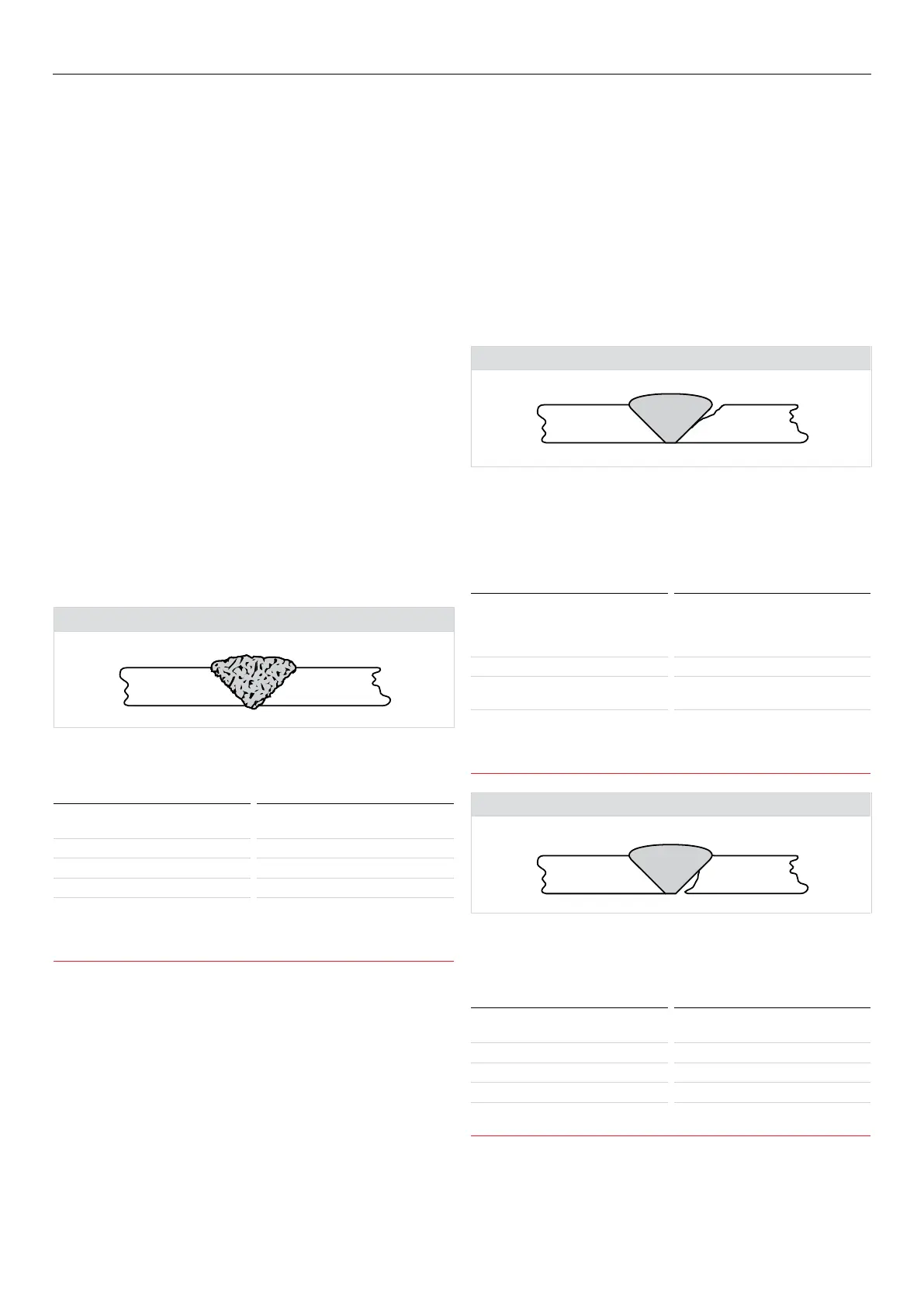
Slag Inclusions
Slag inclusions occur when slag particles are trapped inside the weld
metal which produces a weaker weld.
Cause Prevention
Erratic travel speed Uniform travel speed
Too wide a weaving motion Tighter weaving motion
Slag left on the previous weld pass Complete slag removal before welding
Too large an electrode being used Use a smaller electrode
Letting slag run ahead of the arc Keep the slag behind the arc by
shortening the arc, increasing
the travel speed, or changing the
electrode angle.
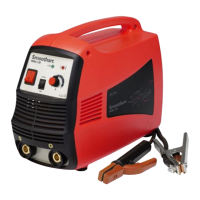
Undercutting
Undercutting is a groove melted in the base metal next to the toe or
root of a weld that is not lled by the weld metal. Undercutting causes
a weaker joint and it can cause cracking. On vertical and horizontal
welds, it can also be caused by too large an electrode size and incorrect
electrode angles.
Cause Prevention
Excessive welding current Choosing the proper welding current
for the type and size of electrode and
the welding position
Too long an arc length Holding the arc as short as possible
Slag left on the previous weld pass Pausing at each side of the weld bead
when a weaving technique isused
Excessive travel speed Using a travel speed slow enough so
that the weld metal can completely
ll all of the melted out areas of the
base metal
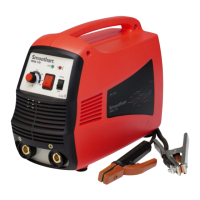
Lack of fusion
Lack of fusion is when the weld metal is not fused to the base metal.
This can occur between the weld metal and the base metal or between
passes in a multiple pass weld.
Cause Prevention
Excessive travel speed Reducing the travel speed
Electrode size too large Using a smaller diameter electrode
Welding current too low Increasing the welding current
Poor joint preparation Better joint preparation
Letting the weld metal get ahead of
the arc
Using a proper electrode angle.






 To Next Page