28 4327 • X5 04/2015
MAN OVERBOARD
In the event that someone falls overboard, understanding what to do is important. Chapman Piloting publications publish
emergency procedures, and the U.S. Coast Guard or the local marine authorities offer instruction.
Hypothermia may be an immediate concern if a person falls overboard. Hypothermia occurs when a person’s body loses
heat faster than the body can replace it. The person will become exhausted or likely drown if not rescued in a timely
manner. The colder the water, the faster the body loses heat. Personal otation devices increase survival time because
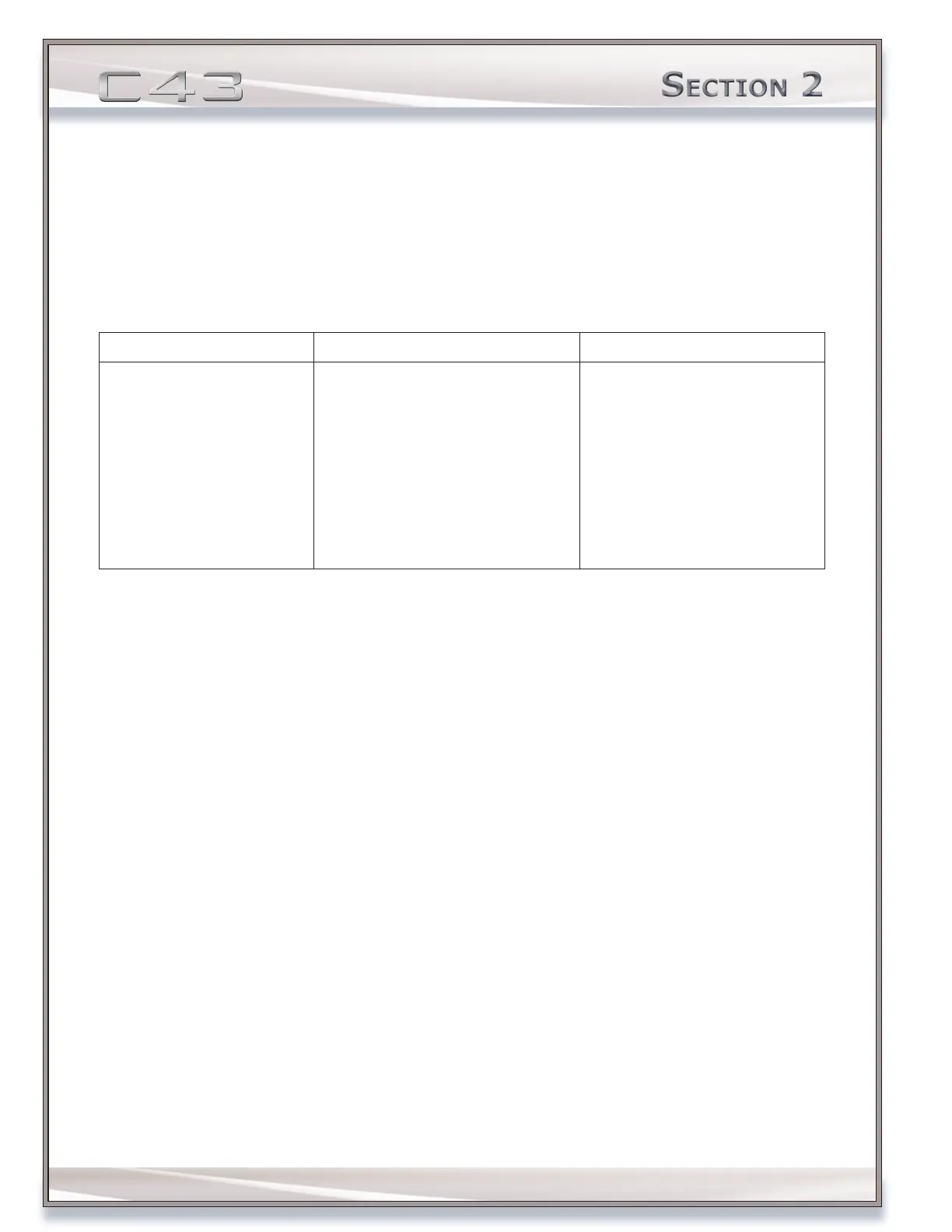
they provide insulation. To understand the survival time to water temperature ratio, consult the following chart.
WATER SURVIVAL CHART
WATER TEMPERATURE EXHAUSTION, UNCONSCIOUSNESS EXPECTED TIME OF SURVIVAL
32.5°F (0.3°C) Under 15 min. Less than 30 min.
32.5-40°F (0.3-4.4°C) 15-30 min. 30-90 min.
40-50°F (4.4-10°C) 30-60 min. 1-3 hr.
50-60°F (10-15.6°C) 1-2 hr. 1-6 hr.
60-70°F (15.6-21.1°C) 2-7 hr. 2-40 hr.
70-80°F (21.1-26.7°C) 3-12 hr. 3 hr.- Indenite
Over 80°F (26.7°C) Indenite Indenite
MEDICAL EMERGENCY
• No one should act as a doctor if he/she not properly trained.
• Someone onboard should know rst aid. First aid training is available through your local Red Cross.
• Keep a fully stocked rst aid kit onboard at all times.
EQUIPMENT FAILURE
• Prevent failure of steering, propulsion and control by having the yacht maintained and checked periodically.
• Radio for help or signal with ags and wait for help if the systems fail.
RADIO COMMUNICATION (U.S. ONLY)
It is the yachter’s responsibility to obtain a radio operator’s permit and to follow and understand proper rules and
procedures. Private yachts are not required to have a radio onboard at all times. However, if a radio is available, tune it to
channel 16 unless the channel is actively in use. Channel 16 is the frequency for emergency calls or initial calls between
yachts. Once contact is established on channel 16, visit www.navcen.uscg.gov or go to a different unused channel.
For more information on radio communications, see Chapman’s Piloting publications.
DISTRESS SIGNALS
The yacht operator is required, by law, to provide assistance to a craft in distress. Assist as long as your life or yacht is not
put in harm’s way in the process. In the United States, Good Samaritan laws protect the public from liability incurred while
giving aid.



 To Next Page