20
Available Ports Installation
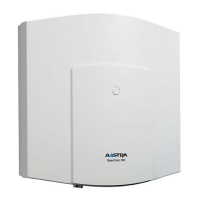
OpenCom 110
■ Four analogue a/b ports, de-
signed as pressure terminals (a/
b1 to a/b4)
■ Two actor ports for connection
to a door opener and entrance
intercom system, designed as
pressure terminals (Actor1 for
activating a door opener and
Actor2 for activating an en-
trance intercom)
■ One sensor port for connection
to the bell of an entrance inter-
com system, designed as a pres-
sure terminal (sensor)
■ One PCM port for the connection
of two systems, designed as an
RJ45 socket (PCM)
■ Two S
0
ports for connection to
an external S
0
bus (usually the
NTBA), designed as RJ45 sockets
(S
0
1 and S
0
2)
■ Two switchable S
0
ports (S
0
2
and S
0
3), which can be con-
nected to either an internal or
an external S
0
bus. The internal
port is designed as a pressure
terminal, the external one as an
RJ45 socket
■ One S
0
port for an internal S
0
bus, designed as a pressure ter-
minal (S
0
5). S
0
5 can also be
wired externally (as a master)
when networking two
OpenCom 100 communications
systems in a Q.SIG trunk (also re-
fer to PBX Networking starting
on page 73).
■ Eight U
pn
ports, designed as
pressure terminals (U
pn
1 to
U
pn
8)
■ One LAN port (10BaseT), de-
signed as an RJ45 socket
■ One sync port for synchronisa-
tion with another telecom sys-
tem, designed as a pressure ter-
minal (Sync)
■ One COM port for connection to
a PC for configuration or transfer
of call data, designed as a 9-pin
submin D port (V.24)
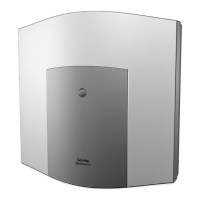
OpenCom 120
■ Four analogue a/b ports, de-
signed as pressure terminals (a/
b1 to a/b4)
■ Two actor ports for connection
to a door opener and entrance
intercom system, designed as
pressure terminals (Actor1 for
activating a door opener and
Actor2 for activating an en-
trance intercom)
■ One sensor port for connection
to the bell of an entrance inter-
com system, designed as a pres-
sure terminal (sensor)


 To Next Page