6
Features
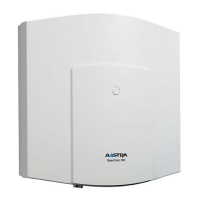
Configuration and programming of
the OpenCom 100 is performed by
means of a special Web browser
(known as the “Web console”),
which can be run on a connected PC.
The OpenCom 100 can also be con-
figured at the customer service cen-
tre and maintained by means of re-
mote configuration.
A PC can be connected via a COM
port for the purpose of configuring
the system or transferring connec-
tion data.
To connect the OpenCom 100 with
the existing company hardware,
there are two actor ports (output)
and one sensor port (input) availa-
ble. These can be used to operate a
door opener and a doorbell via the
system, for example (this requires
additional equipment).
The OpenCom 100 allows you to use
CTI (computer telephony integra-
tion) applications made by other
manufacturers. This requires instal-
lation of a TAPI driver (supplied on
the system CD-ROM) on a Windows
PC. The OpenCom 100 also has an in-
tegrated dialling wizard, the
OpenCTI 50, with which users can
call up and use telephone functions
on PCs without first having to install
a special TAPI driver.
The OpenCom 100 complies with the
regulations for telecommunications
equipment. The DSS1 protocol is im-
plemented.
Packet data in the D channel
Some business applications, for in-
stance POS terminals, cash registers
or creditcard terminals, require a
permanent data connection over the
X.25 packet data network. Packet
data transfer through the ISDN D
channel (according to X.31 via SAPI
16) can also be established between
several S
0
interfaces of the
OpenCom 100. Simultaneous con-
nections are distinguished by means
of a TEI (Terminal Endpoint Identi-
fier).
X.31 packet data can be forwarded
between two S
0
interfaces (for in-
stance an internal and external S
0
in-
terface). Equally, data can be for-
warded (“routed”) over permanent
QSIG lines. Data can also be routed
over an S
2M
interface.
The routing table for X.31 packet
data is set in the Configurator under
PBX Configuration: X.31. Addi-
tional information can be found in
the Configurator online help files.
Internet Access
It is possible to connect individual
PCs to the OpenCom 100 via the in-
ternal S
0
ports, or to connect an en-
tire LAN to the OpenCom 100 via the
Ethernet port. These PCs can access
the Internet via the OpenCom 100.
For this purpose, several call-by-call
providers are preset on the


 To Next Page