95
Call Queue Examples of Use
tors”. Allocate each user the
telephone number of the trunk
key of their system telephone.
■ Activate
Call wait. prot.
(call waiting protection) on all
three terminals in the
Protection
menu.
■ Program a function key with the
function “Sign on/sign off from
hunt group” on the three system
telephones (in the menu
Calls: Hunt group
).
Use
Incoming calls are signalled in paral-
lel to all signed-on attendant termi-
nals. If the attendant terminals are
busy, the incoming call joins the
queue on each of the terminals in
the hunt group. If one of the attend-
ant terminals accepts a call from the
queue, the call is removed from the
queues of all the other attendant
terminals. The display on each at-
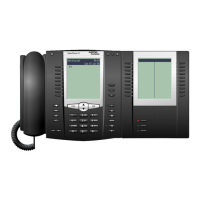
tendant terminal (OpenPhone 65)
indicates how full the queue is.
If attendants leave the terminal,
they sign off from the hunt group by
means of a function key. In contrast
to Example 1, further calls do not
have to be processed after the sign-
off, as the calls are also registered in
the queues of the other signed-on
attendant terminals.
Note: The last attendant terminal
remaining in the hunt group should
not sign off, so that incoming calls
can always be signalled to at least
one terminal.



 To Next Page