UTM-00339 | Rev 19
Page 29 of 253
DetNet South Africa Copyright © 2021
•
Over current,
•
Electrostatic Discharge,
•
Electromagnetic Pulse.
Capacitor:
The capacitor is an energy storage device that stores the required energy for the detonator to
function
independently after the blast signal has been sent and the connection between the control
equipment and detonator
has been destroyed.
The Fusehead is an incendiary explosive device that acts as the interface between the electronics and the
explosives base charge of the detonator.
An anti-static H-plug that is used to centralise the PCB separates the base charge from the circuitry and
prevent
powder migration into the circuitry. It also protects the PCB from dynamic shock and static discharge.
The second crimp is situated around the H-Plug and provides the seal which separates the explosive
powders from
the circuit board.
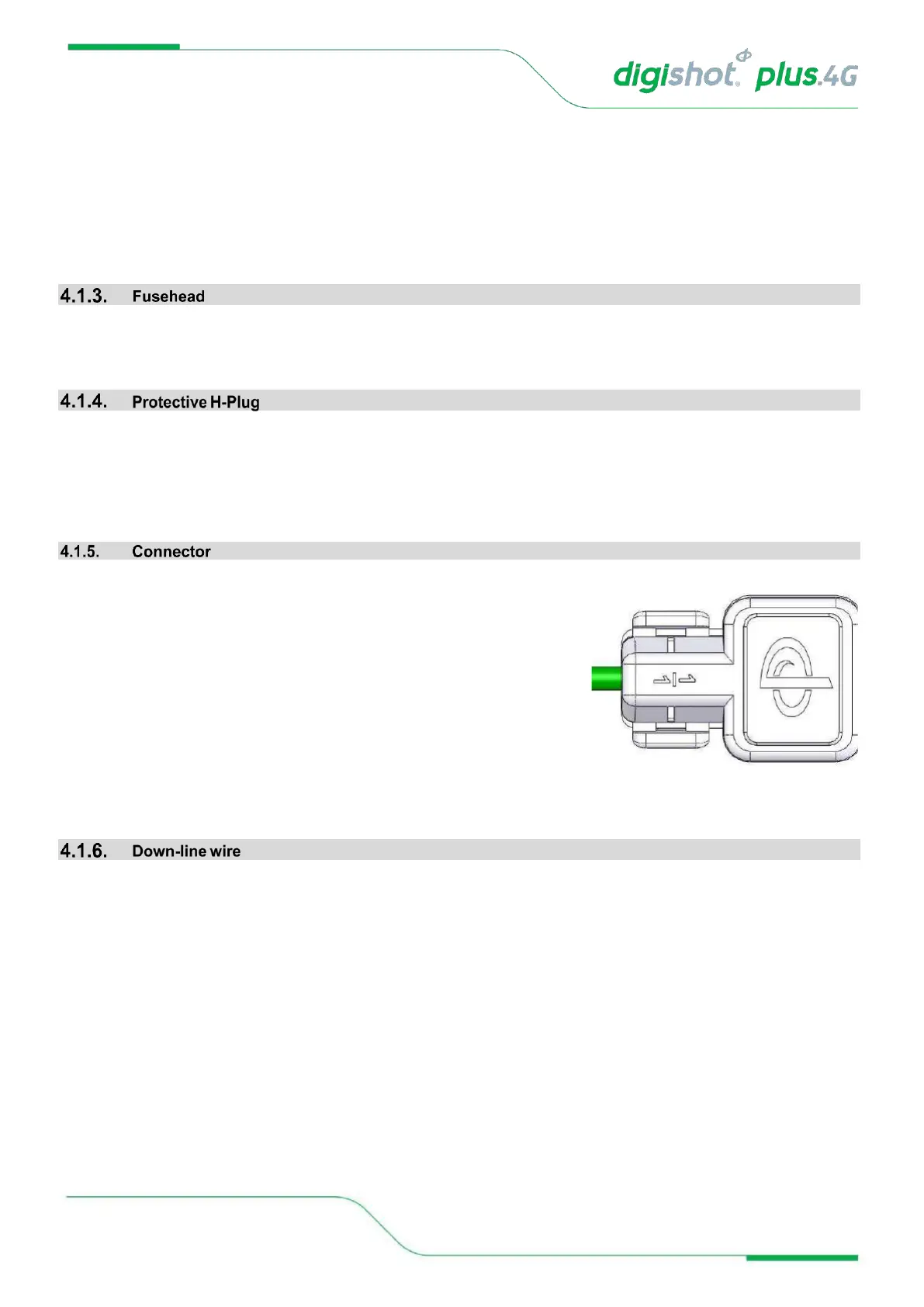
The Connector is used to connect the detonator down-line onto
the surface
harness-wire bus of the installation.
The Connector has two spade connectors that ensures a
secure
connection on each harness-wire and has two grooves
enabling the user
to align each wire with these connectors and
also facilitates ease of use.
These connections are not polarity
sensitive and can be connected in any
configuration.
The transparent polycarbonate connectors allow for improved
visual
inspection of the wires inside the connector to ensure
correct connection.
The connector is filled with a transparent gel to facilitate water resistance
during use. It is advisable not to
submerge connectors in water.
The down-line wire is a cable comprising Bi-metal wire conductors which are individually sheathed and an outer
black and green insulation.
The down-line wire is manufactured in various lengths and can be supplied to the user’s requirements.



 To Next Page