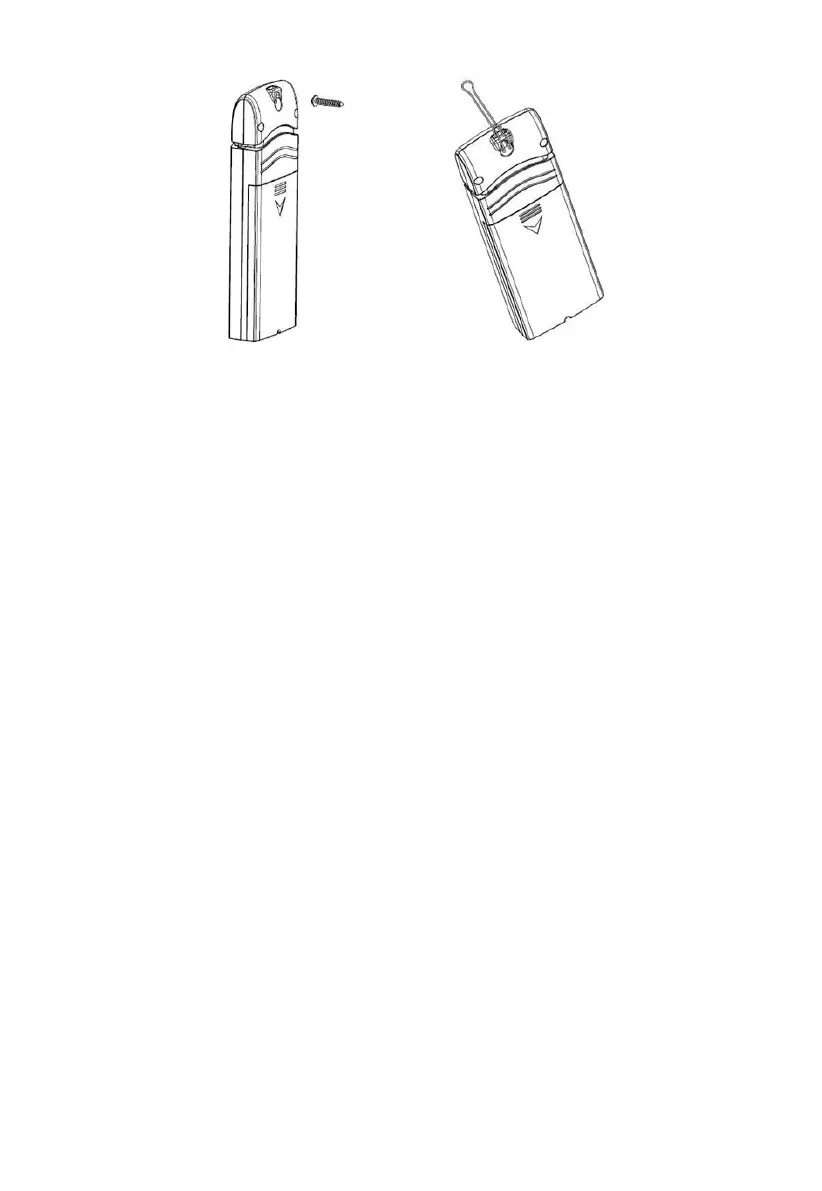
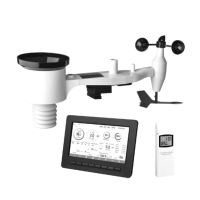
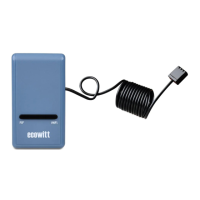
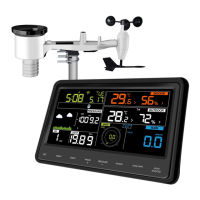
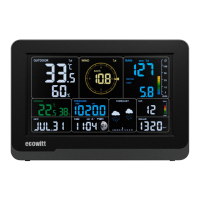
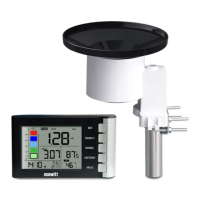
Figure 19: Indoor sensor mounting
Note: Make sure the sensor is mounted vertically and not lying down on a
flat surface. This will insure optimum reception. Wireless signals
are impacted by distance, interference (other weather stations,
wireless phones, wireless routers, TVs and computer monitors), and
transmission barriers, such as walls. In general, wireless signals will
not penetrate solid metal and earth (down a hill, for example).
4.5 Outdoor Temperature and Humidity Sensor Operation
The operation for the outdoor temperature and humidity sensor is similar
with the indoor sensor.
4.6 Best Practices for Wireless Communication
Wireless (RF) communication is susceptible to interference, distance, walls
and metal barriers. We recommend the following best practices for trouble
free wireless communication between both sensor packages and the console:
Indoor/outdoor sensor placement: The sensor will have the longest
reach for its signal when mounted or hung vertically. Avoid laying it
down on a flat surface.
Electro-Magnetic Interference (EMI). Keep the console several feet
away from computer monitors and TVs.


 To Next Page