8
forward, neutral and reverse. Careful use of the controls provides smooth, responsive and safe
operation.
Do not bring the throttle back abruptly to stop the boat unless it is an emergency. Allow
time for the engine RPM to come down to idle before shifting to reverse or severe gearbox
damage could occur. PLEASE REFER TO YOUR ENGINE OWNER’S MANUAL FOR
FURTHER OPERATIONAL PROCUDURES FOR YOUR OUTBOARD.
Engine Stop Switch
This device is designed to shut down the engine in the event that the operator is thrown away
from the helm station. The operator should always wear the engine stop switch lanyard while the
boat is in motion. Pulling the lanyard from the control will stop the engine. If the engine will not
crank properly, the lanyard may not be properly attached to the engine stop switch.
Do not use the engine stop switch to stop the boat unless it is an emergency as it may
impair your ability to quickly re-start the engine.
**NOTE** Each ignition key has a 3 digit number stamped on it. Please record this number
for future reference on the service information page in the front of this manual.
3/Propulsion System
3.1 General
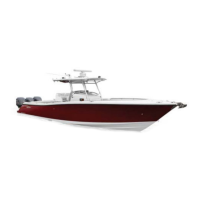
Your new EdgeWater 388CC is designed to be powered by dual or triple outboard motors. Most
2-cycle outboards currently use an automatic system to mix the oil with the engine before the
engine uses it. If equipped with 2-cycle engines, there will be oil tanks located inside the
mechanical access space and the oil fills will be located on the motorwell side of the aft deck.
Make sure the oil tanks always have a sufficient amount of the recommended 2-cycle oil for your
cruise, plus some reserve. Most 4-cycle engines require oil be maintained in the crankcase.
Always check the crankcase oil level before each day’s run.
Always follow the manufacturer’s recommendations and use only the recommended oil
types.
Don’t attempt to service your outboards or any of their components unless you are
thoroughly familiar with its operation and dangers. Many of the moving part components
are exposed and can pose an extreme danger to anyone unfamiliar with their operation.
Always leave the servicing to a qualified technician.
Each manufacturer provides manuals designed to assist you in the proper operation and
maintenance of your new engine(s). Follow their guidance and schedules for proper operation of
your new engine(s). With a modern outboard there is little to do as long as proper maintenance is
performed, in accordance with the manufacturer’s recommendations. If the boat is to be kept in
saltwater for an extended period, electrolysis and marine growth can become a problem. When
leaving your boat in salt water overnight or for an extended period, tilt the engine(s) as high out of
the water as possible. This will decrease the possibility of marine growth on the outside of the
engine(s), as well as reduce the potential of marine growth compromising the cooling water inlets
in the lower unit(s), which can cause overheating.



 To Next Page