Video
A = X when Z exceeds 1V
B = Y when Z exceeds 1V
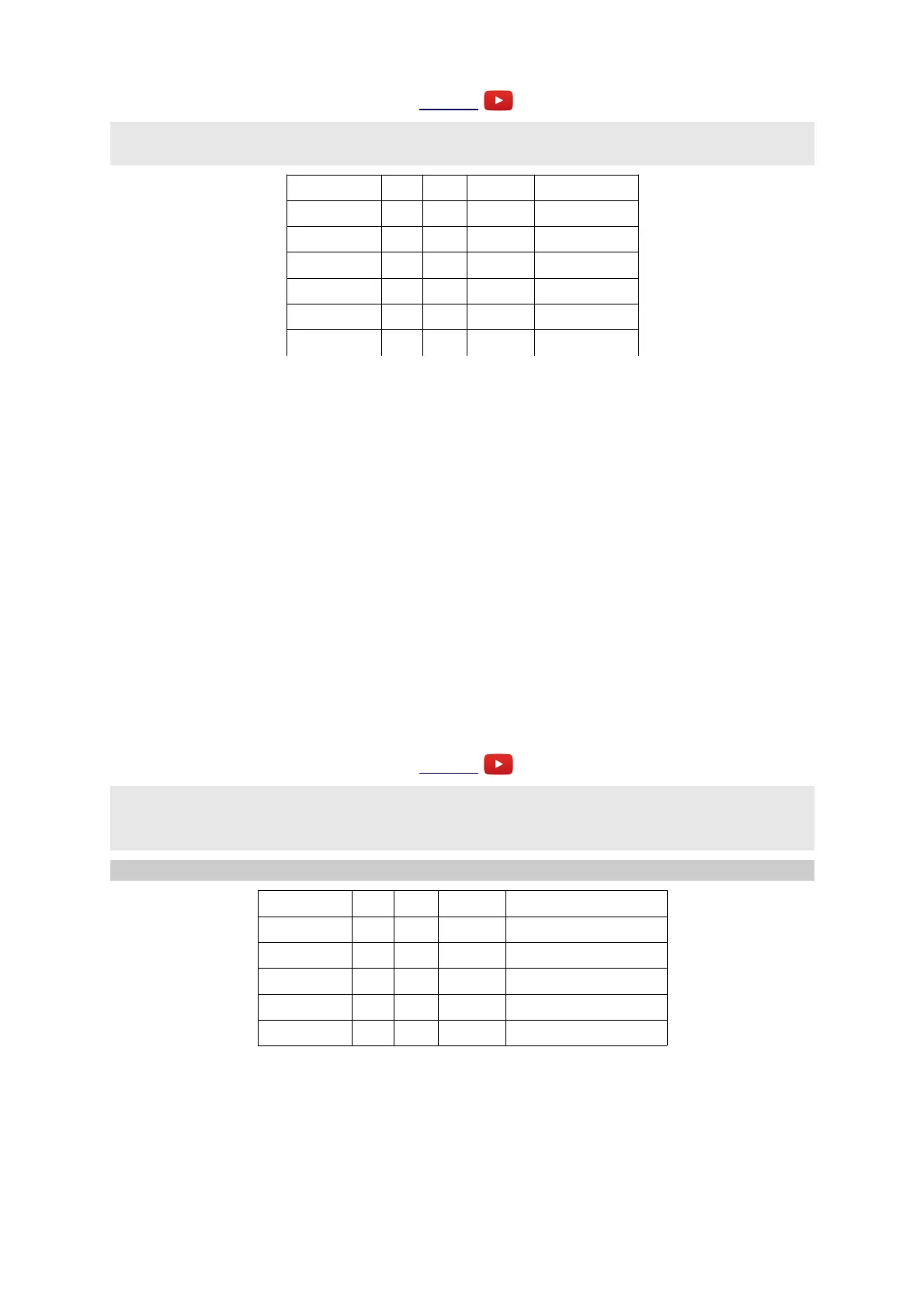
Parameter Min Max Default Description
0 0 1 0 Mode.
1 0 31 0 Offset.
2 0 64 0 Noise X.
3 0 64 0 Noise Y.
4 0 32 0 Slew A.
5 0 32 0 Slew B.
If parameter 0 is 0 (the default):
Output A is a sample of input X, taken when the trigger input Z goes over 1V. (Sample and Hold)
If parameter 0 is 1:
Output A follows input X while input Z is over 1V. When Z falls below 0.5V, output A is held until
Z goes over 1V again. (Track and Hold)
Similarly for output B/input Y.
Pressing the Z knob triggers a sample manually.
Parameter 1 sets an offset between the timing of the X/Y & Z inputs (in sample frames). If X/Y & Z
are being driven together, for example by a sequencer's pitch and gate, it is often a good idea to
delay the trigger slightly to allow time for the sampled CV to settle before the sample is taken.
Parameters 2 & 3 add white noise into the signal from inputs X & Y respectively, allowing you to
use the algorithm as a source of random voltages without having to patch anything into the inputs.
Parameters 4 & 5 control the amount of slew applied to outputs A & B respectively.
H-3 Dual Quantizer (Z scale)
Video
A = quantized( X )
B = quantized( Y )
Z chooses scale
Outputs MIDI
Parameter Min Max Default Description
0 0 32 32 Input X attenuation.
1 0 32 32 Input Y attenuation.
2 -31 31 0 X transpose.
3 -31 31 0 Y transpose.
4 -31 31 0 Key.
Output A is a quantized version of input X; the closest whole-semitone value to the unquantized
V/octave pitch CV X. Similarly output B is a quantized version of input Y.
As well as providing a chromatic scale, this algorithm can also constrain the quantized values to a
musical scale or chord. This is controlled by the Z knob/CV.
Page 67


 To Next Page