Multi-DENCO Medium Connections
FläktGroup DC-2013-0101-GB • Subject to modifications • R5-08/2020 81
6.6.3 Water quality
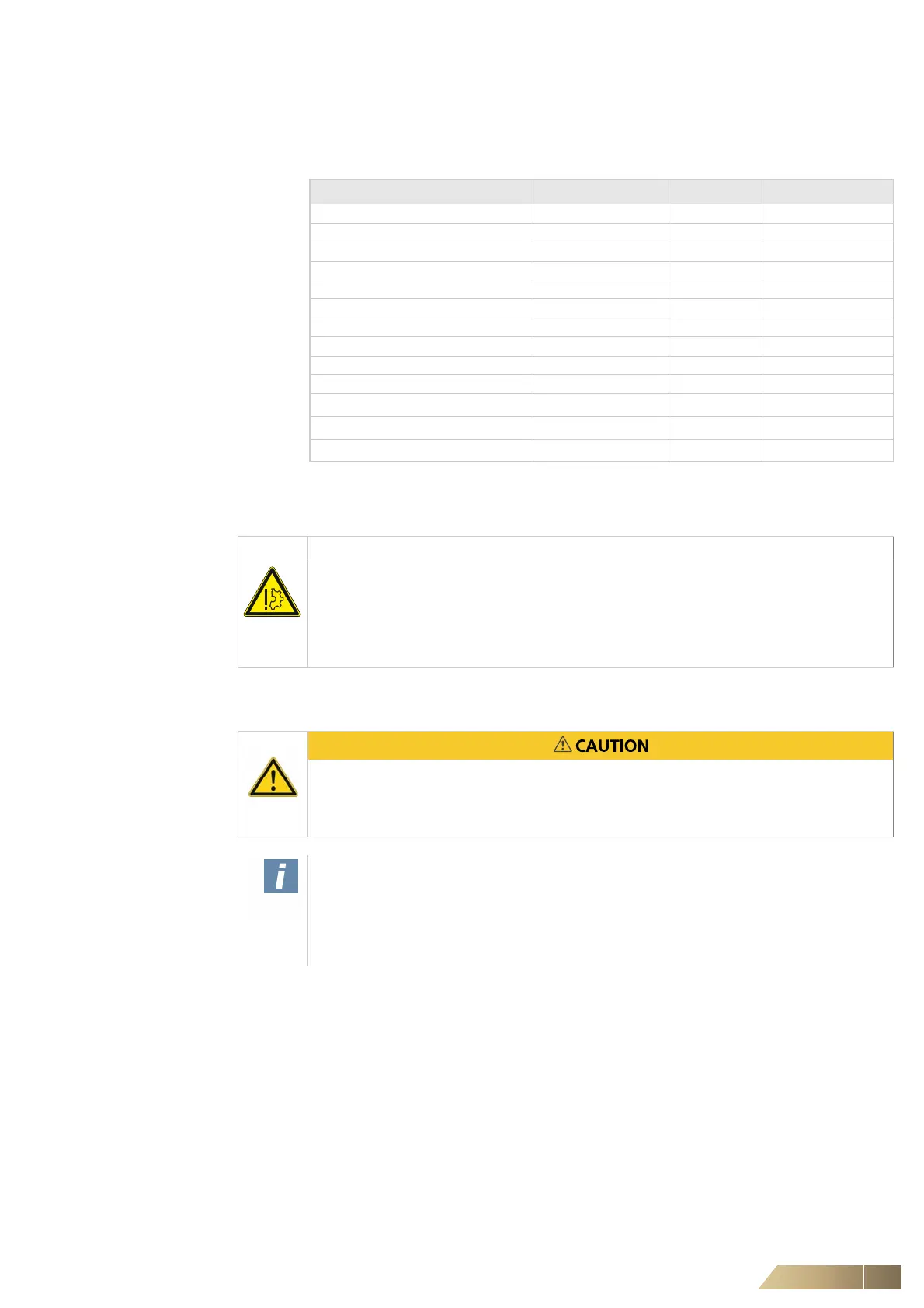
Recommendation on water quality for chilled, warm and condensing water circuits/heat
exchanger:
6.6.4 Glycols
Water-glycol mixtures have different thermodynamic and physical properties to water-
only chilled water systems. If glycol is mixed with a medium, the resultant mixture has:
– Lower specific heat capacity
– Higher viscosity
– Increase flow rate
– Increased pressure drops
– Increased power and current consumption of a pump
– Lower cooling capacity
– Larger thermal expansion when compared with water-only
Parameter Unit Value
pH-value (at 20 °C) 7.5 - 9
Conductivity (at 20 °C) PS/cm < 700
Dissolved solid materials (cR) O
2
mg/l < 0.1
Total hardness (TH) °dH 1 - 15
Dissolved sulphur S
not detectable
Sodium
Na
+
mg/l < 100
Iron Fe
2+
, Fe
3+
mg/l < 0.1
Manganese
Mn
2+
mg/l < 0.05
Ammonium content
NH
4
+
mg/l
< 0.1
Chloride Cl
-
mg/l < 100
Sulphate
SO
4
2-
mg/l
< 50
Nitrite
NO
2
-
mg/l
< 50
Nitrate
NO
3
-
mg/l
< 50
Tab. 6-9
NOTICE
A good water quality – e.g. salt and lime free drinking water – considerably
increases the service life and efficiency of the unit and the connected secondary
system.
• Check the limit values in the table once a year to avoid damage to the hydraulic
system components.
Glycols and other anti-freeze materials can be harmful for humans and animals.
• Prior to use, refer to the supplier's Material Safety Data Sheet (MSDS).
• If ingested, seek urgent medical help.
NOTE!
The following recommendations are based on using the brands Antifrogen® N for
ethylene glycol and Antifrogen® L for propylene glycol. Other suppliers and variety
may have different properties or hazard warnings.
• Always refer to the supplier's information and the MSDS.


 To Next Page